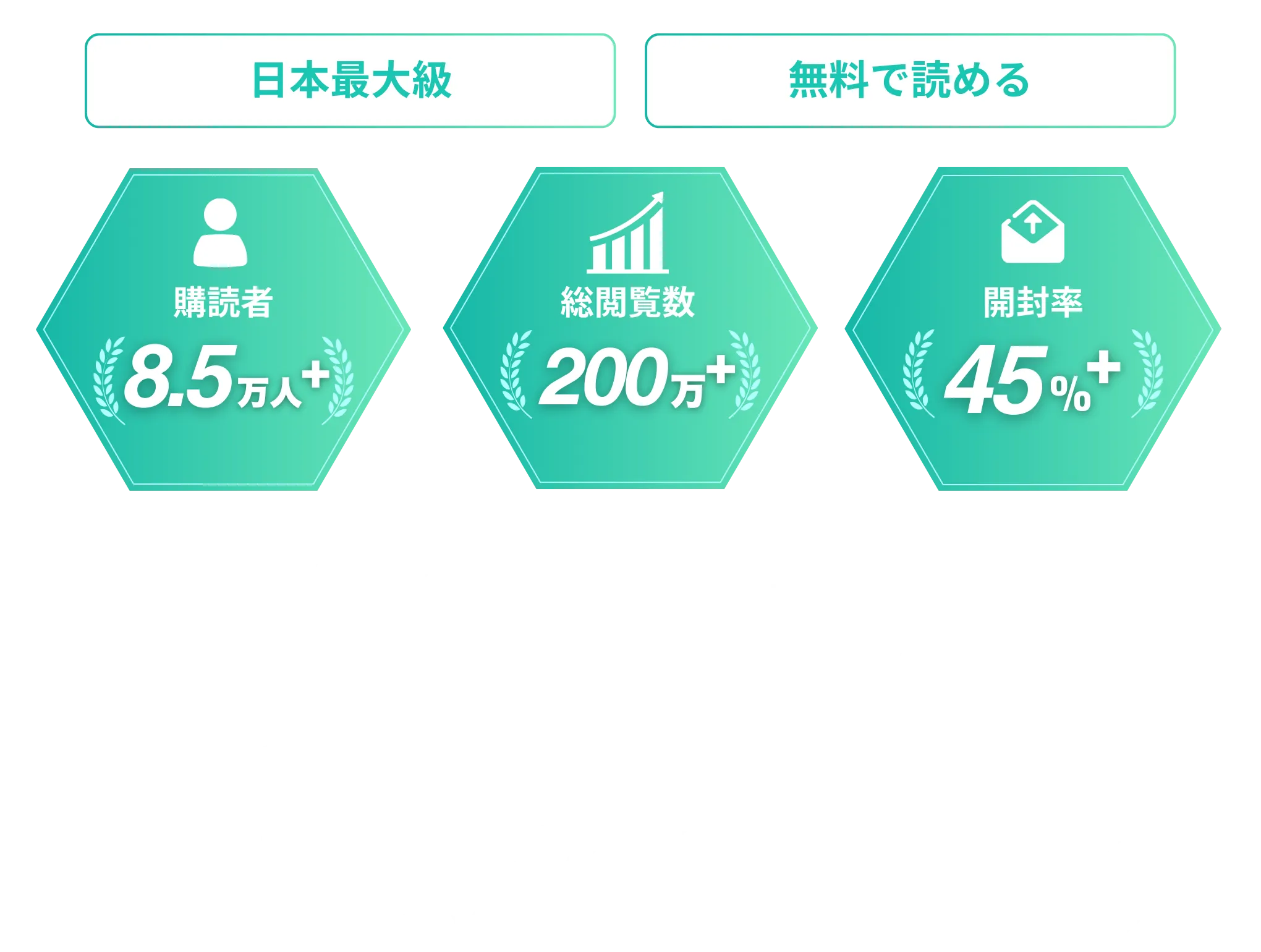
Mavericks, Inc., the developer of the video generation AI “NoLang” and other advanced AI products, has published the latest issue of “Mavericks AI News,” a newsletter with one of the largest subscriber bases in Japan1. “Mavericks AI News” is curated by a team of AI professionals who build and operate AI products every day, and it selects only the most important stories from a huge volume of news: the services that the market is genuinely paying attention to right now, and the technologies likely to become tomorrow’s standard.
80,000 subscribers: “Mavericks AI News,” delivered by a generative AI product team
Mavericks, Inc. is a Japanese startup that offers the generative AI product “NoLang.” Within one year of launch, NoLang passed 150,000 registered users and has been adopted by more than 60 companies, and the team runs its own product on the front line of AI-driven development. Generative AI moves extremely fast, so a team that follows product development up close picks the stories that matter — what generative AI can do today, which AI services the market is watching, and what kinds of AI are coming next — and publishes them as “Mavericks AI News” every Monday.
In “Mavericks AI News,” the team applies the perspective that comes from working on AI products daily and selects information that is substantive and directly useful at work. The newsletter goes beyond introducing technology: it aims to show readers with no background in AI what they could concretely do with it starting tomorrow. Each story comes with original commentary grounded in the team’s professional knowledge of AI product development.
Subscribe hereHighlights from this week’s issue (published December 8)
Here is a short introduction to the topics covered in the December 8 issue.
Feature 1: Lovart releases a new image editing feature that can fix AI-generated diagrams
Google’s Nano Banana Pro made high-quality diagram generation possible, but problems such as broken characters remained. Against that backdrop, the design AI tool Lovart has released a notable new feature that edits text inside an image without breaking the design or the fonts. Combined with the layer separation feature released a few days earlier, images with a simple background can now be adjusted intuitively, much like working in PowerPoint — from repositioning and resizing objects to rewriting text.
The issue explains how practical Lovart’s new feature is for editing text while preserving the design, and why personalization matters in image generation AI.

Feature 2: Kling O1, “the world’s first unified multimodal video model,” is released
After image editing, change is now reaching video editing as well. Kling, a Chinese company, has released its new model “Kling O1” as “the world’s first unified multimodal video model.” By including images or videos directly in a text instruction, users can seamlessly handle local fixes, style changes, and even the creation of new cuts based on a story. A model that removes the boundary between video generation and video editing is a major step toward fully unified multimodal AI.
The issue describes what makes a “unified multimodal model” that erases the line between video editing and generation innovative, and where the industry’s move toward fully unified AI is heading.

Feature 3: ChatGPT’s voice mode gets an update — where is voice conversation AI heading?
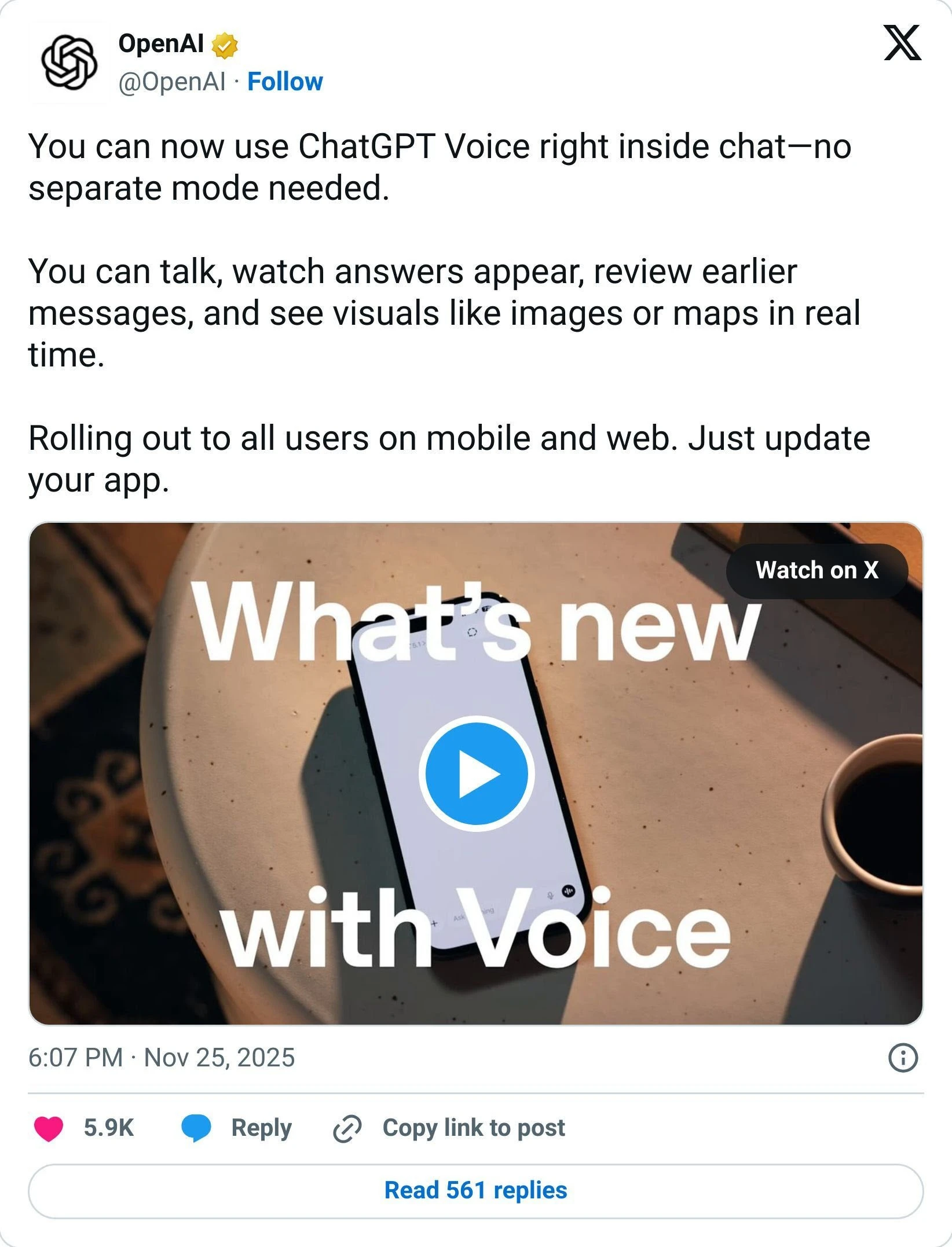
ChatGPT’s voice mode has been updated so that users can hold a seamless conversation directly in the chat screen, with images and maps shown along the way and no screen transition. At the same time, processing times have trended upward this year as AI agents grew more sophisticated, which makes progress hard to feel in voice conversation, where immediacy matters. Even so, the rapid fall in LLM costs and the improvement in processing speed suggest that the next generation of voice conversation AI is close at hand.
The issue looks at the technical reasons why voice conversation AI has stalled, and at the breakthrough that lower costs and faster processing could bring.
Looking ahead
As a product-led generative AI startup, Mavericks, Inc. considers it an important mission to return to society the knowledge gained from developing advanced products in-house. Through “Mavericks AI News,” the company will continue to deliver reliable, practical information to every business professional, developer, and digital transformation lead working to open up the AI era.
Footnotes
-
Based on research by Mavericks, Inc. ↩