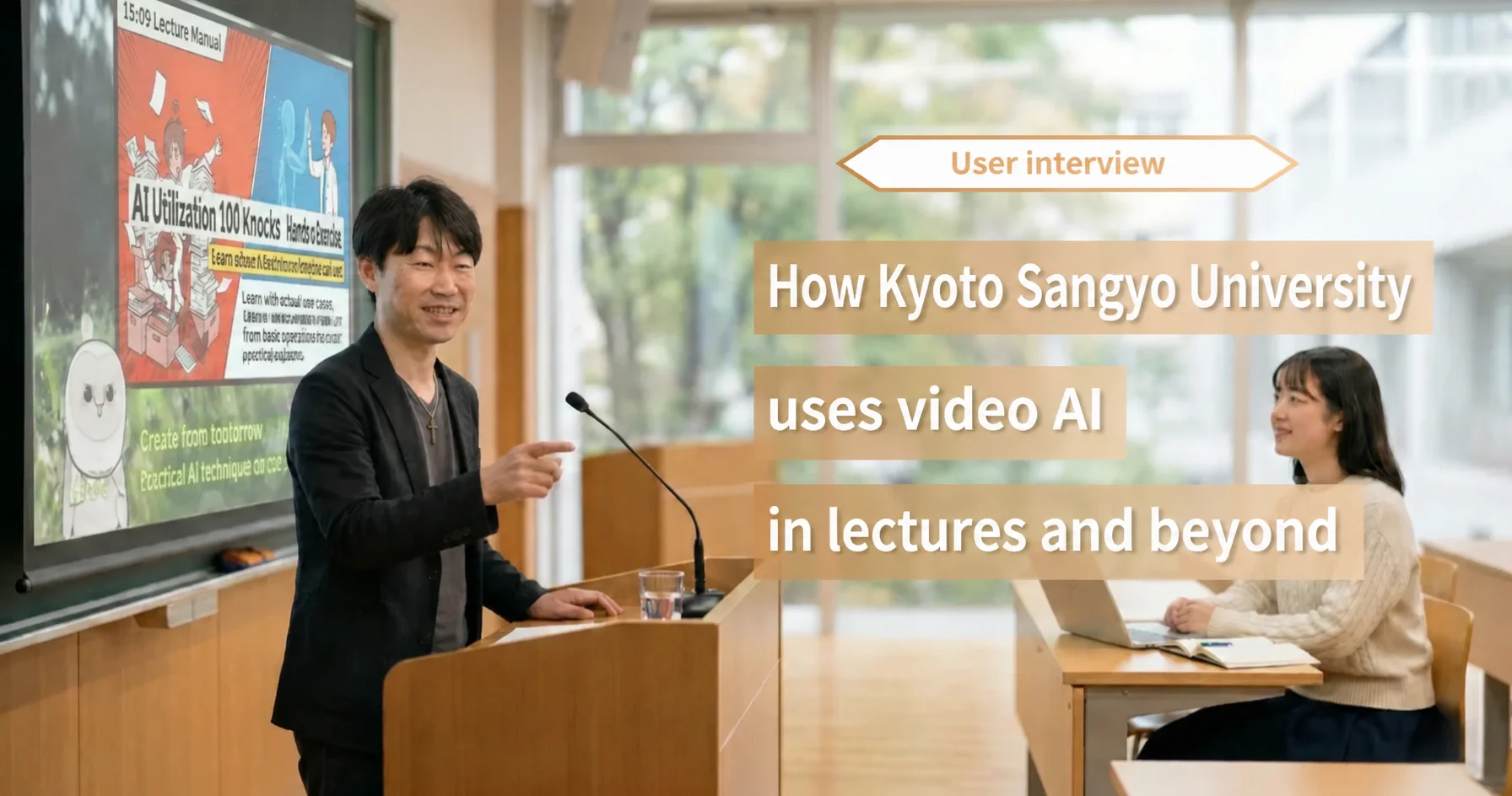
Mavericks, Inc., which develops and provides advanced AI products including the video generation AI NoLang, has published an interview with Mr. Kei Hamaguchi, an adjunct lecturer who teaches career design, job-hunting support, and business psychology at Kyoto Sangyo University and several other universities, about how he uses NoLang.
Generative AI is spreading through education, and what Mr. Hamaguchi found over more than a year and a half with NoLang was that “it is not only the content of a lecture or the skill of the explanation that draws students’ eyes, but the movement and the sound that video brings.” The interview covers practical examples of generative AI in education, from turning teaching materials into video, to posting vertical short videos on Facebook, to using video in study sessions with fellow career-support professionals.
Read the full interview (in Japanese)Background to using NoLang
Mr. Kei Hamaguchi is an adjunct lecturer who teaches career design, job-hunting support, and business psychology at Kyoto Sangyo University and other universities. More and more of his students have grown up with video content. In a university class where slides are shown and the explanation continues out loud, students tend to keep their eyes on their notes and let the lecturer’s words pass by.
The problem Mr. Hamaguchi faced was how to hold students’ attention during a class. He found his answer over more than a year and a half of using the video generation AI NoLang.
How NoLang is used
Mr. Hamaguchi uploads lecture slide decks created with Google’s NotebookLM to NoLang to produce videos, and has replaced part of what he used to explain with slides with video.
He also embeds the videos in PowerPoint slides for use as teaching material, and publishes them as YouTube links on the LMS (learning management system) so that students can go back to them at any time.
The interview describes the rest of his work with NoLang in detail, including how he produces longer lecture videos, posts vertical videos to Facebook, and creates content for study sessions with fellow career-support professionals.
Read the full interview (in Japanese)The effect of NoLang
Bringing video into his classes visibly changed how students responded. When he says, “I am going to explain this keyword in a one-minute video now,” and plays it, students who had not lifted their heads during a spoken explanation naturally look up at the screen. Mr. Hamaguchi described this power to gather students’ eyes during a class as the effect of video he can feel most clearly.
The most important thing he learned while using NoLang is that “what draws students’ attention is not the difficulty of the material or the skill of the teaching alone, but the movement and sound that video brings.” That observation is a useful one for the many educators who struggle to hold concentration and interest in the classroom.
The interview goes into more detail, including the learning effects he noticed over more than a year and a half of use and his assessment of how accurately NoLang reads kanji aloud.
Read the full interview (in Japanese)What is the video generation AI NoLang
NoLang is a Japanese video generation AI service that generates video in as little as a few seconds from text, PDF and PPTX documents, a website URL, or even image, audio, and video files.
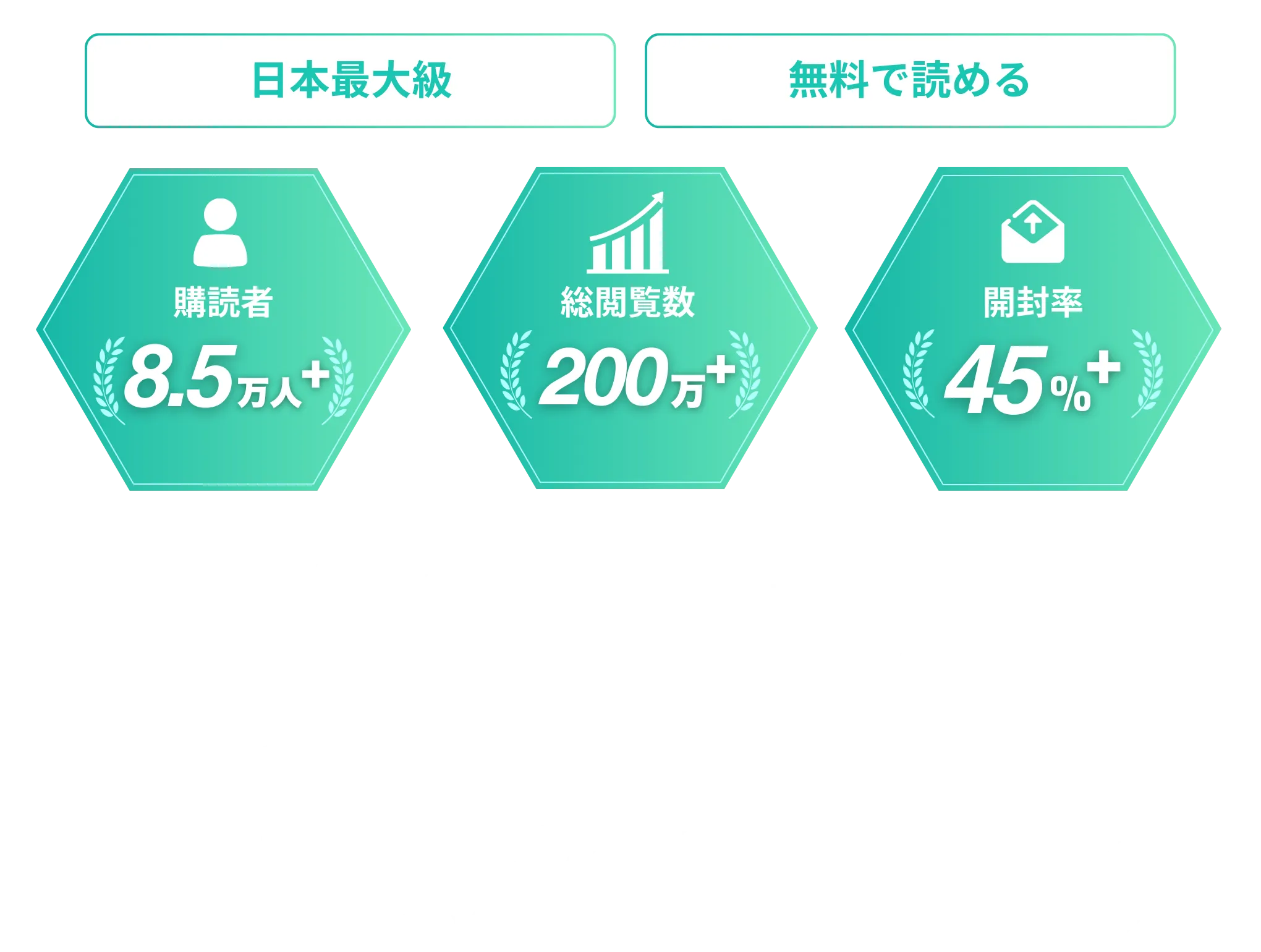
Since its release in July 2024, it has passed 150,000 registered users and 60 companies on business contracts. It is used for a wide range of purposes, including summary videos of news articles, content for social media, and turning internal training materials into video, and it is one of the largest video generation AI products originating in Japan1.
Along with a library of more than 100 avatars and more than 300 voices, it offers a feature for creating original avatars and expressive speech synthesis, so anyone can produce high-quality video instantly without specialist knowledge.
Try creating a video with NoLangMaterials and inquiries
| NoLang for Business official site | https://no-lang.com/en/business |
|---|---|
| Same-day application for the NoLang Business plan | https://no-lang.com/en/biz-form/apply |
| Request materials on the NoLang Business plan | https://no-lang.com/en/biz-form/request-doc |
| Inquiries about NoLang | https://no-lang.com/en/biz-form/contact |
From support with adopting NoLang to running a PoC (proof of concept), consulting on AI training, and system development shaped around your own issues, Mavericks makes proposals directly as a team that works at the front line of AI product development every day. Please feel free to get in touch.
Company profile
| Company name | Mavericks, Inc. |
|---|---|
| Head office | Core Hongo Building 1F Room A, 3-43-16 Hongo, Bunkyo-ku, Tokyo 113-0033, Japan |
| Representative | Shota Okuno |
| Founded | September 12, 2023 |
| Business | The real-time video generation AI NoLang, and Mavericks AI News, a newsletter that delivers the latest information on AI |
| Website | https://www.mvrks.co.jp/ |
Mavericks, Inc. is a product-out generative AI startup. It owns a number of advanced in-house products, including the real-time video generation AI NoLang and the super-resolution technology Kakudai. It is a development-focused team that keeps up with the front line of engineering in the generative AI era.
If you are interested in NoLang, if you work at an operating company, if you are considering rolling out AI services to your customer base, or if you are responsible for DX in your organization, please write to the address below.
Contact: nolang-corporate@mvrks.co.jp
Footnotes
-
As of March 2026. Compared by number of registered users (Mavericks research). ↩