Mavericks, Inc. (headquarters in Bunkyo City, Tokyo; Founder and CEO Shota Okuno), the provider of Japan’s first (per company research) AI video generation service NoLang, is launching full-scale delivery of the solution to local governments and central government agencies. Staff simply feed in data from an existing municipal public relations magazine, a procedure manual published on the web, or content from a tourism site, and the AI automatically generates videos that explain a local government’s initiatives to residents, clarify how a public program works, or promote the area to visitors. By turning everything from hard-to-follow administrative procedures to local tourist attractions into videos that can be understood at a glance, the service helps residents understand public services, reduces the load on service counters, and supports city promotion on social media, advancing digital transformation in the public sector in a way that produces real results.
Try NoLangDigital transformation for the public sector with NoLang, a widely adopted Japanese AI video generator that creates videos in seconds
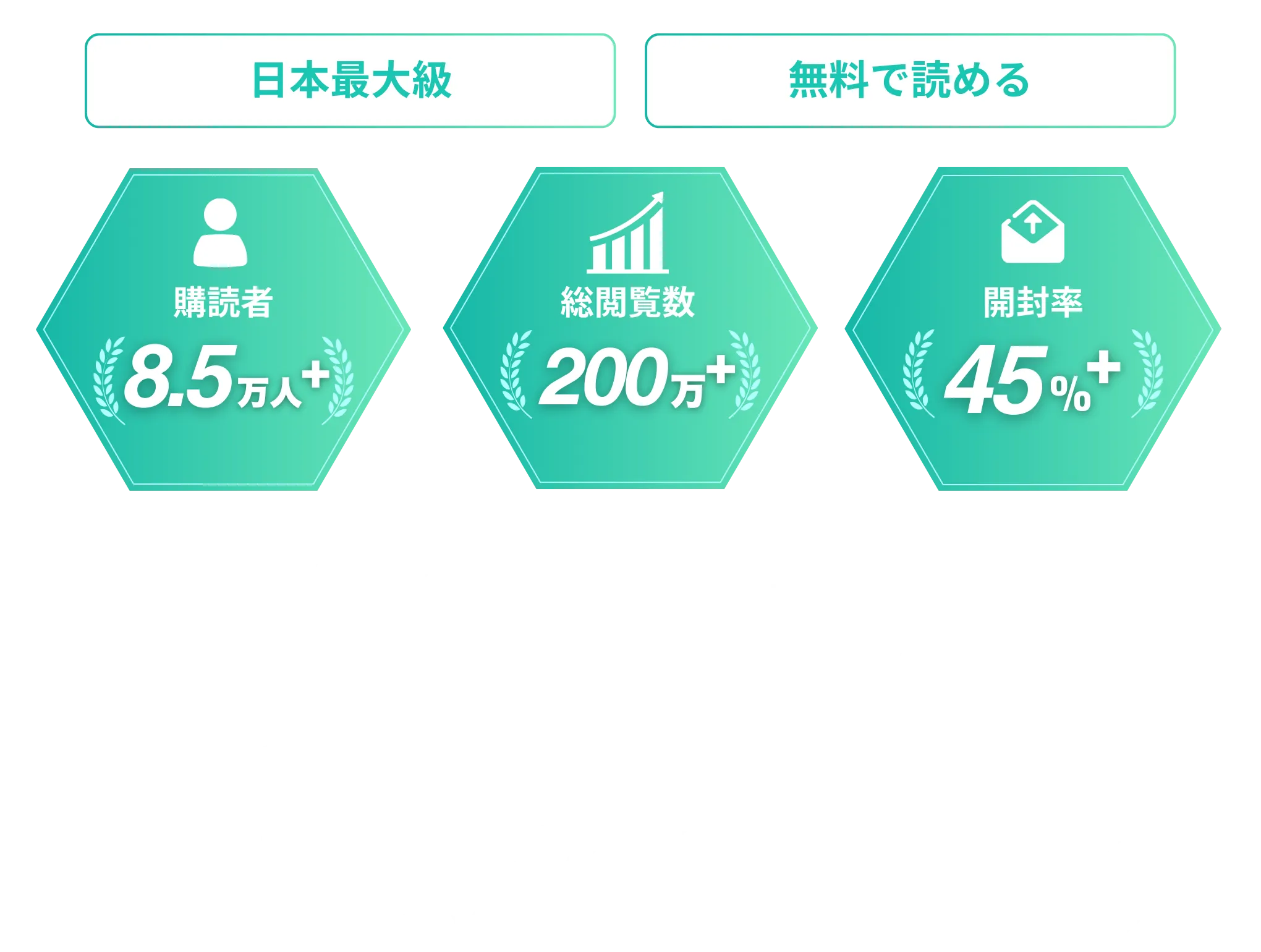
NoLang is Japan’s first (per company research) AI video generation service: users enter text, a PDF document, a website URL, or an image, and the service generates a high-quality video in as little as a few seconds. Since its release in July 2024, registered users have passed 150,000 and more than 60 companies have adopted it, making it one of Japan’s largest1 domestically developed generative AI products (as of December 2025). Mavericks, Inc. is now bringing this proven NoLang solution to local governments and central government agencies at full scale.
In practice, NoLang can automatically and immediately produce a wide range of video content that improves the quality of resident services. It can summarize public relations magazines and long articles on municipal websites into videos that reach younger and older residents alike. It can create explainer videos that visualize the whole flow of complicated procedures such as benefit applications or My Number card processing, so that residents avoid mistakes in their applications. It can also turn overlooked local tourism resources and timely event information into vertical short videos designed to spread on social media.
Traditional text-centered public information poses a psychological barrier for younger residents, who read less long-form text, and for older residents, who find small type hard to read. The result is information that never arrives, and inquiries driven by misunderstanding. Turning that information into video with NoLang reaches people through both sight and hearing, which makes the content far easier to grasp than text alone. That clarity deepens residents’ understanding of public programs, which in turn reduces rework caused by incomplete applications and cuts the time staff spend handling counter inquiries.
Use case 1: Turning unread public relations magazines into videos that get through, and raising awareness of public information
In municipal communications, text-centered media such as public relations magazines and city newsletters have reached a turning point. Younger residents avoid reading long text, and older residents struggle to read small print because of declining eyesight, so printed materials and PDFs alone no longer deliver important public information. However useful a support program or piece of daily-life information may be, residents never learn about it, and they lose the chance to use the services on offer.
NoLang addresses this by instantly converting existing public relations text and web articles into video. Complex municipal policies and city event information can be reassembled as videos that are understood intuitively through both sight (captions and images) and hearing (narration). This makes it possible to reach audiences who dropped off with text media, and raises awareness of what the local government is doing.
The biggest benefit of adopting NoLang is that it maximizes the asset value of existing information while keeping the workload on communications staff to a minimum. Because it reuses public relations data that has already been written, there is no need to draft a new script for the video from scratch. Production time drops sharply, and municipalities can publish far more frequently on Instagram, YouTube, TikTok, and their own websites. The result is greater resident interest in city government and higher participation in applications and events.
NoLang is also built so that staff without video editing expertise can use it intuitively. Editing features let users adjust captions and structure directly, and AI avatars that viewers warm to, together with AI voices that avoid a monotone delivery, turn public information that easily feels impersonal into content with warmth and credibility, as if a staff member were speaking to residents in person.
Use case 2: Turning complex application manuals into video to cut incomplete paperwork and inquiries
At local governments and central government agencies, guidance materials for residents keep growing as programs become more complex, covering My Number card applications, subsidies, benefit payments, and more. For residents today, long text and PDF manuals full of technical terms are a high hurdle: people give up partway or skim, which leads to application mistakes and incomplete paperwork. Service counters and phone lines are then flooded with basic questions such as how to fill in a form, squeezing the time staff have for their core work.
NoLang answers this by instantly converting existing application guidelines and manuals into video. Explaining complicated application flows and points to watch for in a format that addresses sight and hearing at the same time lets residents intuitively grasp the overall sequence of steps, something text alone failed to convey. This sharply reduces the number of cases sent back because of entry errors or missing attachments, cuts the hours staff spend responding, and improves convenience for residents, delivering public-sector digital transformation with substance.
NoLang also has strong features for public-sector use, where accuracy is a strict requirement. With the Dictionary feature unique to NoLang, staff can register and fix the pronunciation of hard-to-read place names, program names specific to their locality, and specialized administrative terms in advance. This prevents misreadings by the AI and removes the need for corrections. When laws or programs change, which happens often, the video can be regenerated immediately by editing the original text, so residents always receive the latest and most accurate information, with a speed and a cost that outsourcing cannot match.
Use case 3: Spreading tourism information on social media with vertical video, raising younger visitors’ intent to travel and maximizing timely opportunities to attract them
The official websites run by local governments and tourism associations hold a vast amount of information about local history, sights, and specialty products. For today’s travelers, and for younger people in particular, static pages dense with text take effort to read: even when people visit the page, it rarely translates into an actual desire to travel, and they leave. Timely information that changes by the hour, such as how far the cherry blossoms have opened or what is happening this weekend, also has little pull when it is only a text update, which means missed chances to attract visitors.
NoLang provides a solution that reads in the information on these existing websites and tourism articles and instantly generates a video summarizing it. Text-based tourism resources that used to stay buried are converted into the vertical videos that today’s users prefer on TikTok and Instagram Reels, extending reach to potential visitors who are browsing social media.
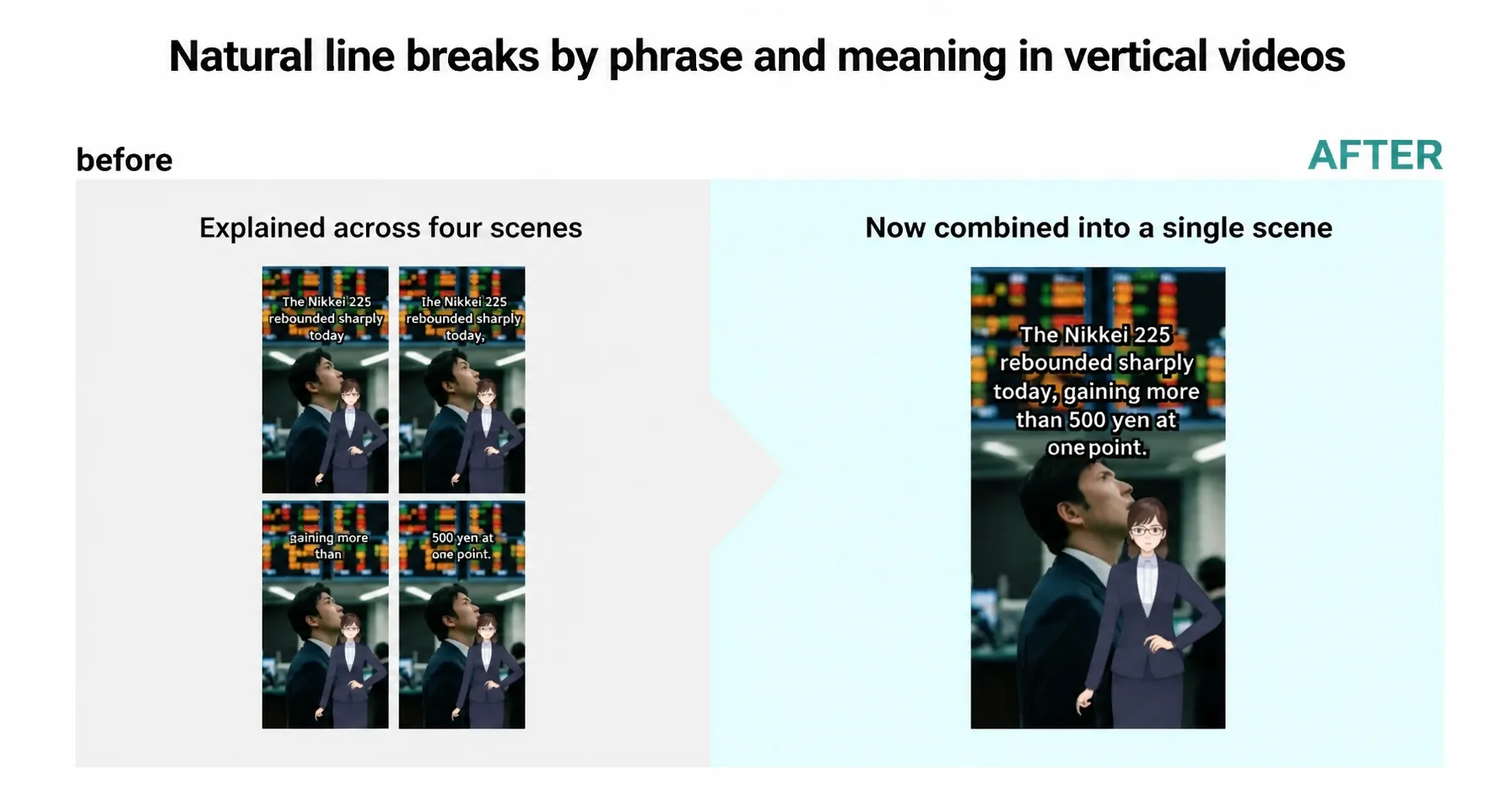
The new caption line-break function for vertical videos goes further: long explanations, such as the historical background of a tourist site or detailed access information, can be laid out to fit the width of a smartphone screen. Because a line break can be placed anywhere and the text shown across several lines, information fits without shrinking the type to an extreme, so viewers can understand the content intuitively from the text alone even where sound is not an option, such as while commuting. That keeps viewers watching and conveys the appeal of a destination in depth.
Because production cost and time shrink dramatically, information whose value depends on freshness, such as cherry blossoms at full bloom or a suddenly announced event, can be turned into video and published immediately. This prevents lost opportunities and gives a strong push toward an actual visit.
Outlook
Mavericks, Inc. plans to accelerate adoption by local governments across Japan and to establish video as a standard way of communicating public information. The company will also contribute to an information infrastructure that leaves no one behind, delivering accurate information quickly to every resident, through work such as strengthening multilingual support and enabling immediate response for disaster information.
Try NoLangFootnotes
-
By number of registered users among AI video generation services in Japan. As of December 2025, per company research. ↩