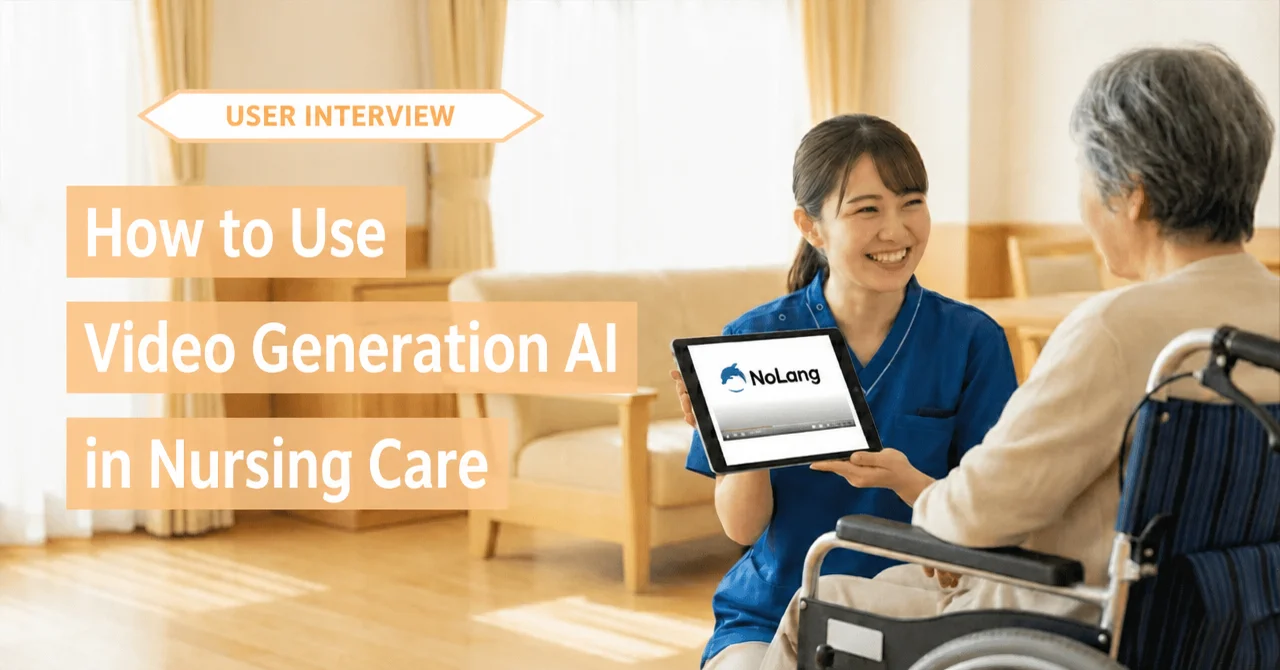
Miyabi works at Partclothes, Inc., the company behind “Relion,” an identity guarantor service for people who have no relatives to vouch for them.
Today he creates videos with NoLang, the Japanese AI video generation service, to share information about the nursing care industry and to build awareness of his company’s service. Day after day he produces and posts videos across four social platforms: YouTube, TikTok, X and Instagram.
Along the way, Miyabi found something that view counts on social media could never measure: an unexpected effect out in the field, in front of customers.
We asked him how he uses NoLang, and what video can do in an industry like nursing care.
How Miyabi started using NoLang
― Could you tell us what led you to start using NoLang?
To begin with, the nursing care industry isn’t really understood by the wider world. So we launched a YouTube channel, partly to promote our company’s service “Relion.”
I started using NoLang to make the videos we post on that channel.
Beyond that, I also thought it would be nice to be able to turn out short videos in my private time.
― How do you make the videos?
The first NoLang feature that struck me as useful was
being able to pull a news article off the web and turn it into a video.
That said, putting an article up as-is didn’t feel right, so I first bounce ideas off ChatGPT to build a script. I tell it, “Write me a script for a video that explains this article in about a minute.”
I also always add, “Please make it something I can drop straight into NoLang,” and it usually comes back with something close enough.
Then I paste that straight into NoLang as a prompt and have it make a video that fits inside one minute.
Sometimes I wonder whether the video has enough substance, but that’s basically how I do it.
▼ Here is one of the videos Miyabi has posted on YouTube Shorts
― Have you been making videos this way from the very beginning?
No. The first month was really a test period, and I made all sorts of videos however I felt like it. I tried using an avatar, I recorded my own voice and had the AI speak with it.
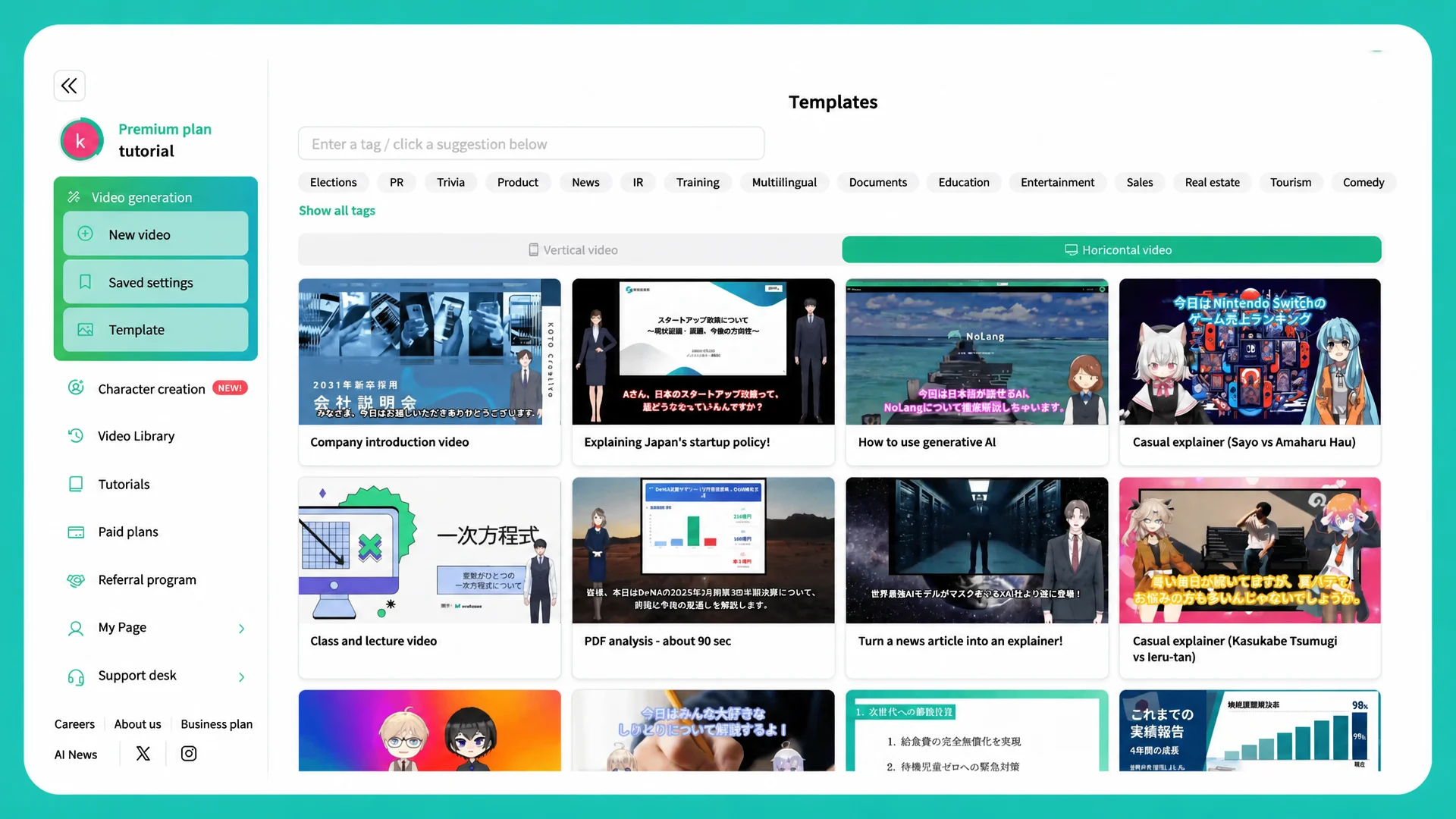
NoLang also has a template feature, so I used that as well and tried making several different kinds of videos.
After testing all sorts of things, I’ve settled on the way I work now, at least for the time being.
Running four social accounts at once
― I see, so you tested a lot at first. By the way, which social platforms do you post your NoLang videos to now?
Right now it’s four: YouTube, TikTok, X and Instagram. But running three or four social accounts at the same time is quite a lot of work.
The only one I actually manage to post to every day is YouTube. For the rest, I upload whenever the mood strikes me.
― Four platforms is a lot. Have you noticed anything while running them?
This one is a mystery to me, but on YouTube the view counts go up more when I upload from a computer. The ones I upload from my phone get almost no views at all.
With TikTok and Instagram it’s the opposite — uploading from my phone performs better.
So it’s a real hassle right now (laughs). It would be easier if I could upload everything at once from my computer, but for now I switch devices depending on the platform.
A UI that’s easy to operate by instinct
― Have you tried other video creation tools?
Yes. I still use Vrew from time to time. You can do quite a lot with it for free. But I’d say Vrew is stronger on editing videos that already exist.
Vrew does have a feature that generates AI video from text, but personally I found NoLang easier to look at, so I went with NoLang.
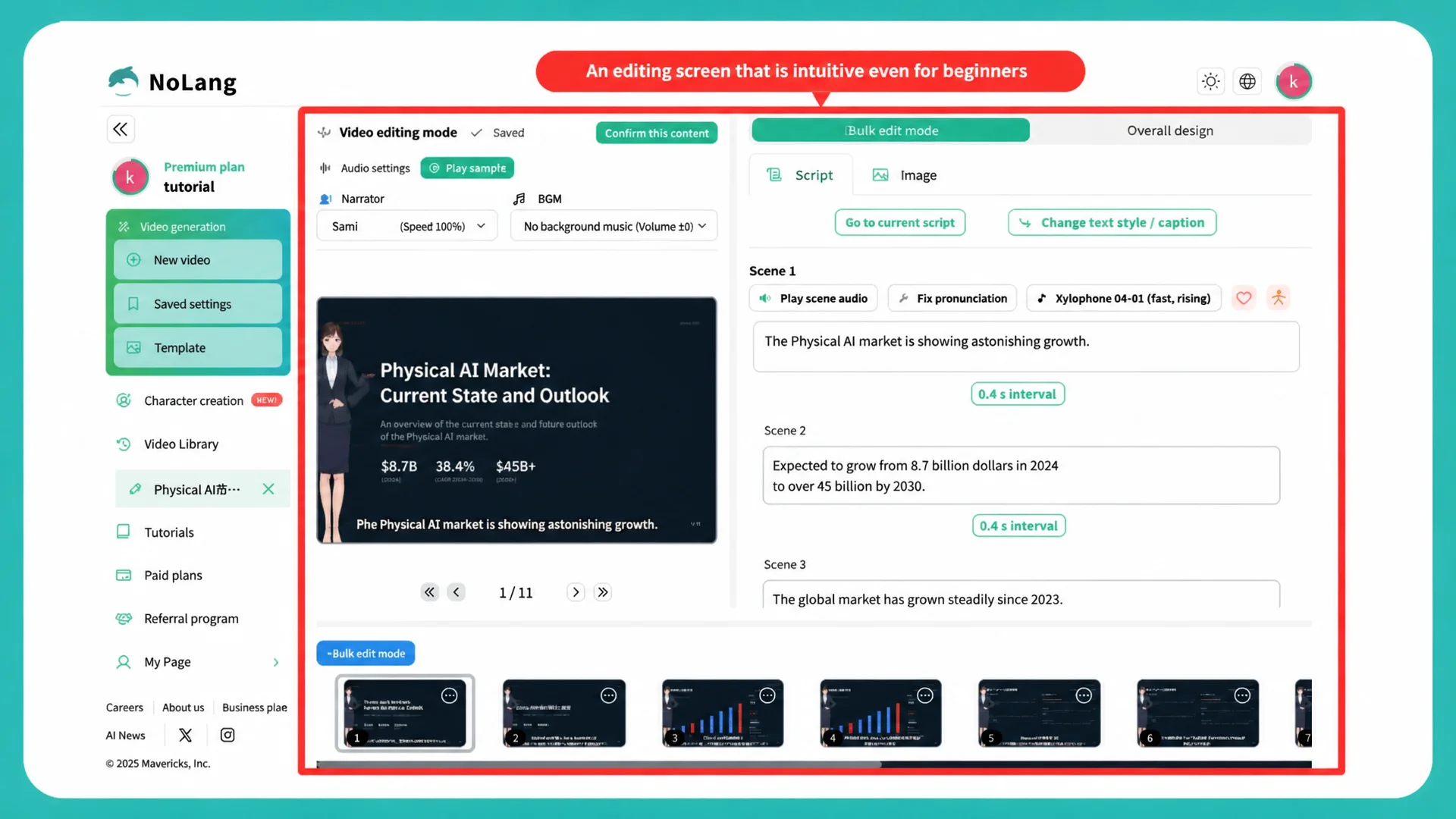
What struck me the first time I used it was how easy it is to operate by instinct. It’s approachable even for an amateur — even for someone who isn’t very used to computers.
I think the ideal would be something an elementary school child could operate by instinct and generate a video with, and I feel NoLang is pretty close to that.
― Is there a NoLang feature you found particularly good?
The one I liked best is the Chrome extension, which turns a website into a video as it is.
Originally I used it because I wondered whether I could feed it news articles about the nursing care industry, or guidebooks from the Ministry of Health, Labour and Welfare, and turn them into videos. That was incredibly easy.
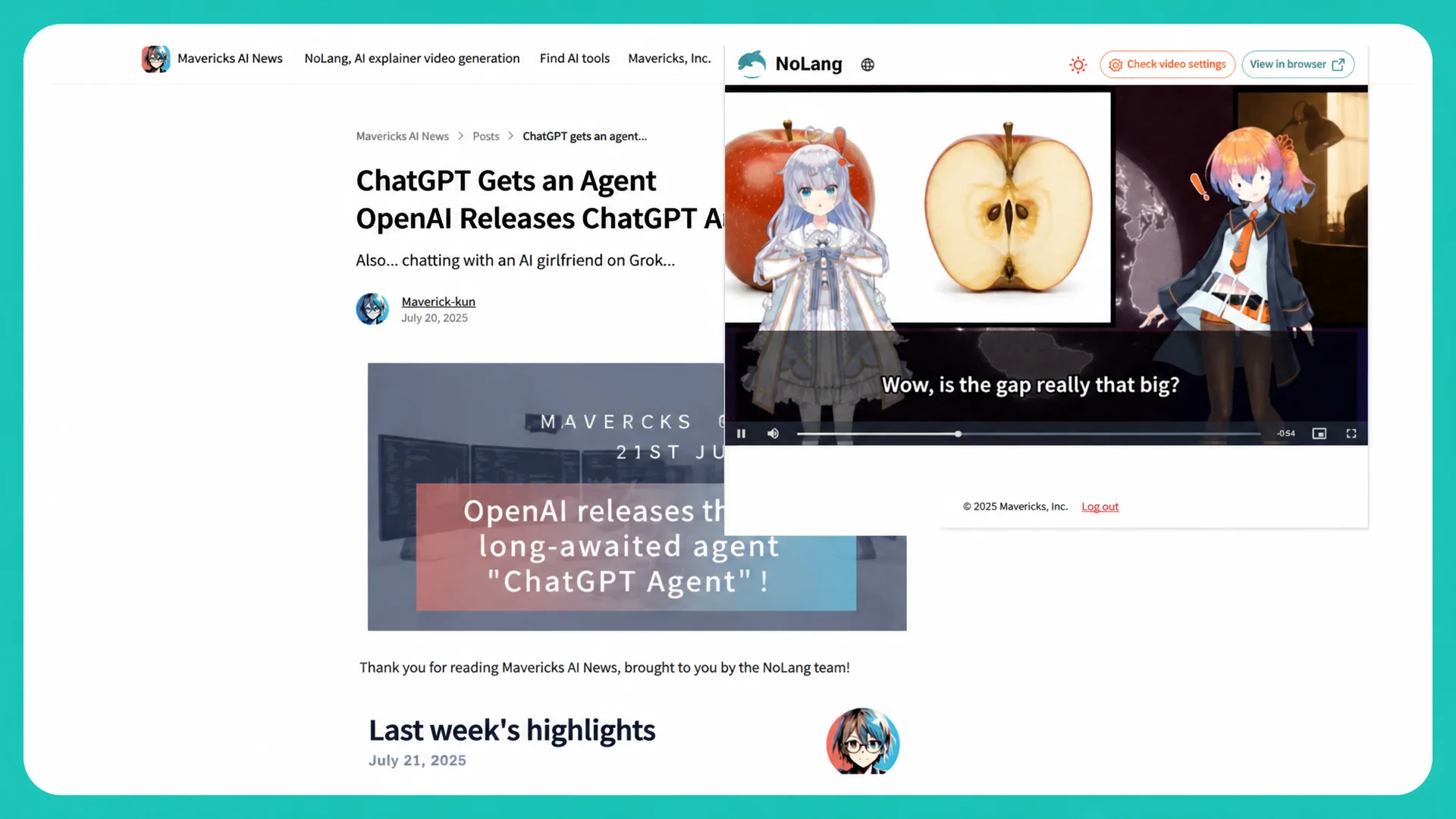
In the end, though, we realized there’s a copyright problem (laughs). If you want to monetize, using an article as-is runs into copyright.
So it turned out I couldn’t really use it for the videos I post on YouTube, and I don’t use it much these days.
That’s why I ended up with my current approach: feed the content of the article into ChatGPT once, generate a script from that, and go from there.
An unexpected effect in sales
― Since you started making videos with NoLang, have you felt any results?
For the company promotional videos I post on social media, there hasn’t been any particular result yet, but using them when I go out to make a sales call has worked out really well.
A lot of people don’t know much about nursing care insurance, so I made a video called “What nursing care insurance can and can’t do.”
Then, when I explain things to a customer, I say “we have a YouTube channel,” and have them watch the video I made as reference material.
▼ Here is the video “What nursing care insurance can and can’t do”
― That’s a great way to use it. How did the people who watched it react?
When I say “I made a video to explain this,” they react with something like “for me?” Even though it really only took me 40 seconds to make (laughs).
When I tell an elderly person “I made a video for you,” they react with something like, “Oh, you went to the trouble of making a video?” So I think it’s having quite a good effect.
I imagine elderly people in particular react that way when you tell them you’ve made a video for them.
― Amazing. Video can have that kind of effect too. Have the ways you use video expanded even further since then?
When I get questions in advance and someone tells me “this is what I’m curious about,” I throw that at ChatGPT.
I say, “I’ve got a question about this — can you write me an easy-to-understand script?” And it does come back with something pretty easy to understand.
Then I say, “Adjust it a bit for a NoLang video,” and it reworks it nicely, so I can just toss that script straight into NoLang and the video gets made.
By putting the finished video on YouTube, I can also point people to the channel — “you can always watch our videos there.” And lately it’s the other way around: questions are material for me, so I tell people, “keep the material coming” (laughs).
I’d say NoLang’s video generation is helping me out a great deal there.
― Thank you very much for sharing so much with us today. We’ll keep developing NoLang so that you can go on making videos with it. We look forward to working with you!
[Editor’s note]
Even though the video really only takes 40 seconds to make, for the person watching it becomes “a video made just for me.” That gap is what makes Miyabi’s use of video so interesting, and it came through clearly in the interview.
Precisely because AI makes videos easy to produce, he can have a video ready that matches each person’s question. Precisely because it’s easy, he can face the person in front of him with care.
Through this conversation, we were reminded once again that the possibilities of video combined with AI will keep on growing.
Partclothes, Inc. — Daifuku, a residential paid nursing home
Facility Director: Fujiko Nagano
7-86 Takada-cho, Tajimi, Gifu 507-0018
Daifuku, a residential paid nursing home
TEL: 0572-56-8858 (weekdays 9:00-17:00)
FAX: 0572-56-9668
E-mail: partclothes@gmail.com
★ Partclothes, Inc. website ★
URL: https://daifuku-kaigo.com/recruit/ (in Japanese)
★ Relion identity guarantor service website ★
URL: https://shukatsu.curapis.com/partclothes/ (in Japanese)

Unauthorized use, reproduction or duplication of the text and specific content published in this article is strictly prohibited.