Sato runs SAP Lab, a media site that specializes in information about SAP.
It publishes practical knowledge and technical information for SAP consultants and engineers, and today it draws roughly 2,000 visitors a day.
Sato now uses the AI video generation service NoLang to expand SAP Lab onto YouTube.
Articles from SAP Lab are turned into scripts and slides with AI, and Live2D characters read them aloud — a production process that does not depend on anyone’s video editing skills.
We asked Sato about how the team uses NoLang, and how running a media site pairs with publishing video.
Growing awareness of SAP Lab through video
― Could you tell us about the media site you run?
I run SAP Lab, an information site for consultants and engineers who work with the ERP system SAP.
SAP is software used around the world as a core business system for companies, and our site publishes information dedicated to it.
▼ SAP Lab is here


We publish knowledge people can actually use on the job, and right now about 2,000 people a day are reading it.
Through SAP Lab we recruit SAP freelancers, and since we also run a staffing business, we use it to reach people who want to move to a company that works with SAP.
As a business specialized in SAP, it works as our touchpoint with people working on SAP projects.
― So it serves recruiting and lead generation as well. You were running a written media site — what made you start publishing video on YouTube too?
We are a young company and no one knows us yet, so we decided that publishing on YouTube as SAP Lab would be the way to get our business noticed.
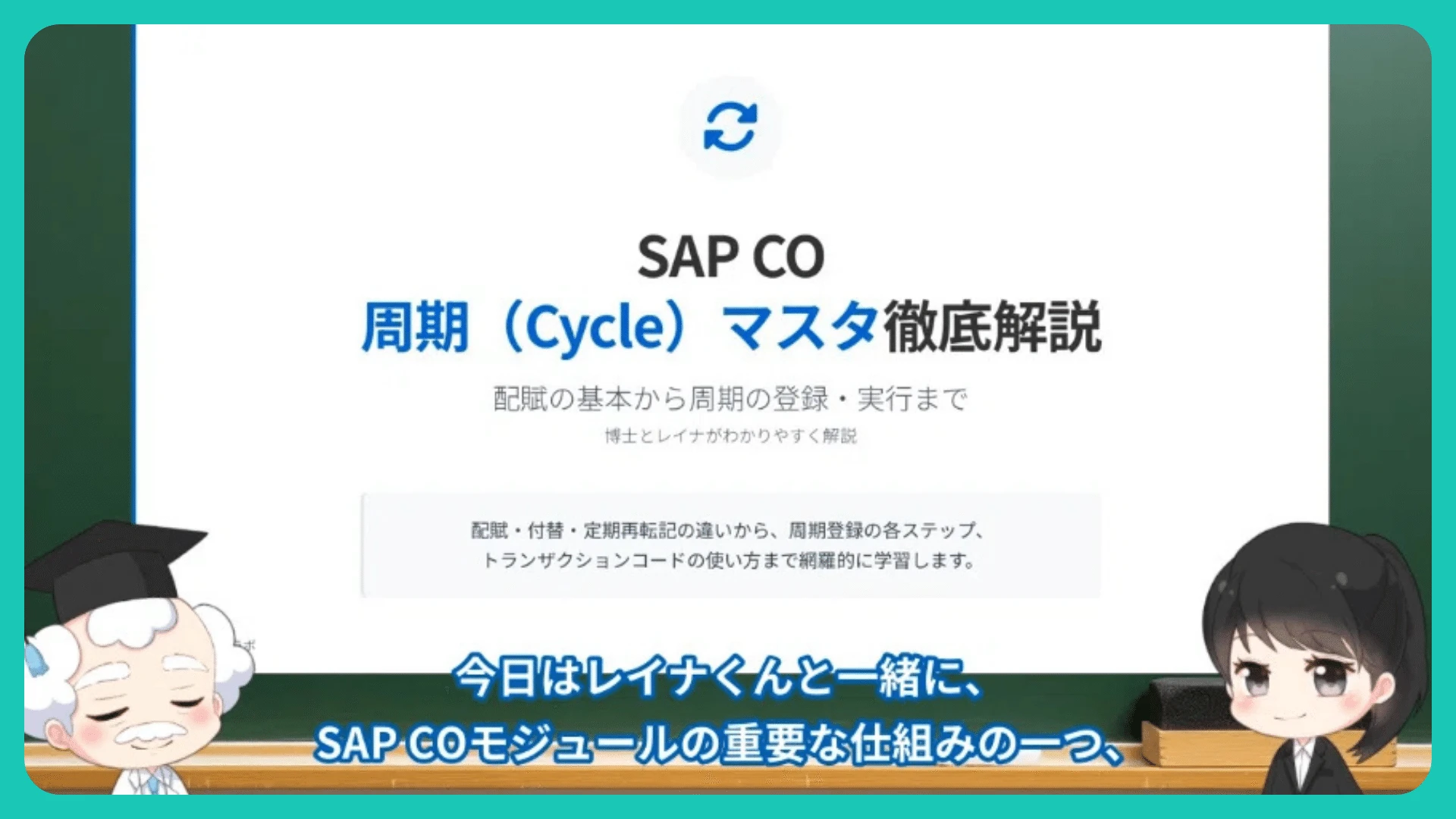
The site has two original characters, a professor and a young woman.
We decided to make videos where those two do the talking.
The content is business knowledge and technical information about SAP, explained as a dialogue between the two of them.
― So you brought the site’s own characters straight into the videos. How were those characters made?
We found out that Live2D avatars can be used inside NoLang, so we had them made by an outside contractor, uploaded those avatars to NoLang, and use them there.
When we post to YouTube, we put a link to SAP Lab in the description, and that is how we are currently increasing traffic to SAP Lab.

Turning existing articles into videos
― What does the process look like for the videos you post to YouTube?
First we use AI to turn the content of an article on SAP Lab into a script.
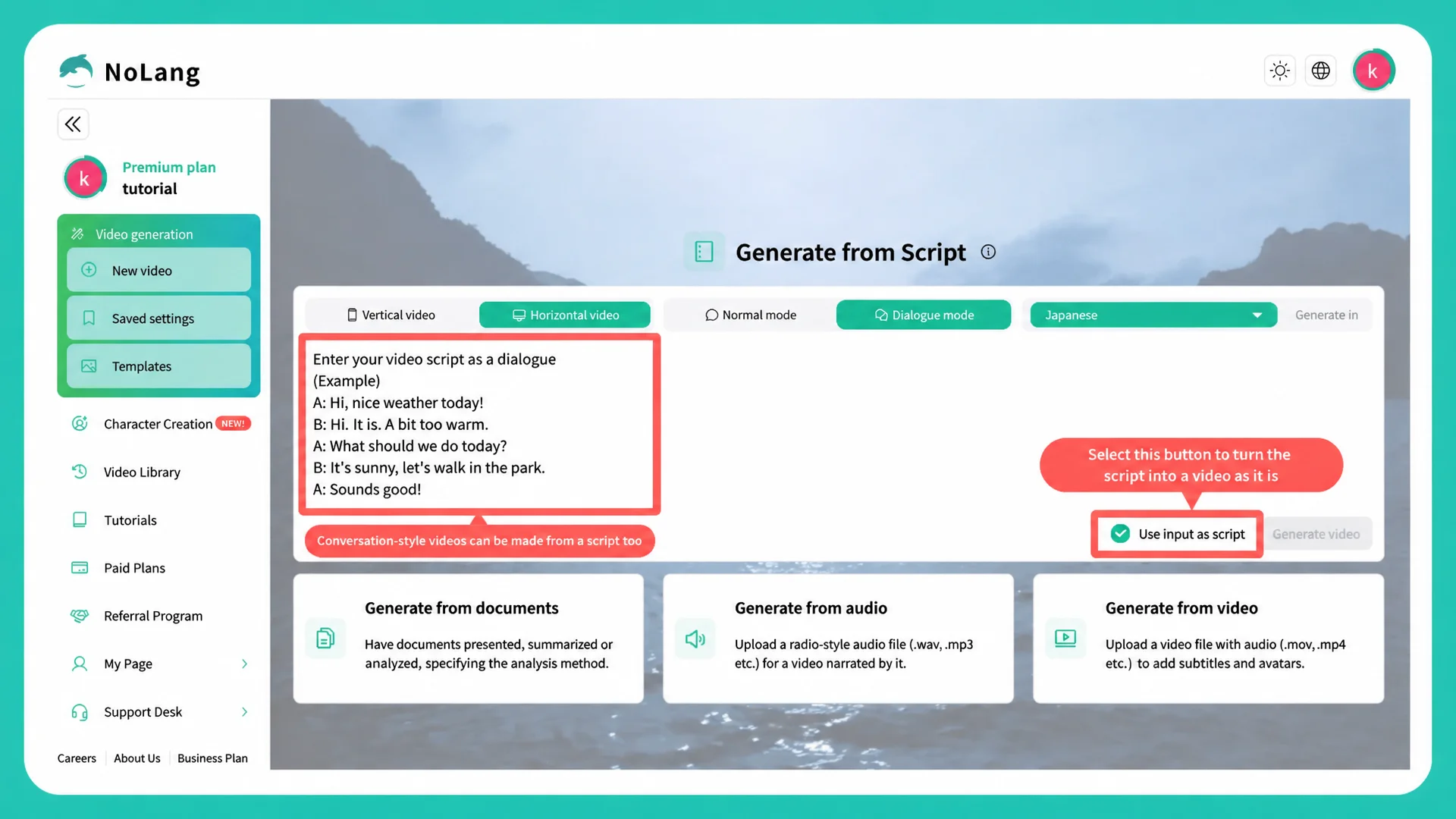
We check that script, and if there are no problems we tell NoLang, “Read this script as it is, do not change it,” and generate the video that way.
Besides the script we also need slides, and we make those with Genspark.
We feed the article content into Genspark as it is, generate the slides, tweak them a little, and use them.
Then, at the end, we check that the script and the slides are in the same order.
― So you have a solid production flow, from script through to slides. Is there anything difficult about the work?
The steps of the video production flow are split among different members, so someone has to check the whole video every time, and that is hard.
Other members are working on it too, so every single video goes through a full check.
I think the number of checking steps is our issue.
If even one step goes away, that is one less thing to check, and honestly even that much would be a big help.
― Do you upload the finished videos to YouTube as they are?
No — we download the finished video from NoLang, edit it a little in Canva, and then upload it.
We add an opening and an ending in Canva.
A few seconds of opening at the start, an ending at the finish. And sometimes we add an arrow, like “look here.”
We add that kind of editing in Canva, and then post to YouTube.
Video production that does not depend on individual skills
― Could you tell us why you chose NoLang?
The biggest reason is that making a video does not depend on individual skills.
You can make a video by having the characters speak, so as long as you check that the script is solid and the materials are solid, members with no video production experience can do the rest.
― It is great that you have built a production setup that does not depend on specific people. How has it been on the cost side, now that you are actually producing videos?
Being able to produce videos at minimal cost is a real help.
The way we work now, as long as the script and the slides are right, the work just moves along.
Right now we can produce one to three videos a week. We publish at a comfortable pace of one a week.
Where the channel goes next
― Is there anything you would like to try with video going forward?
Right now it is only explanatory videos on technical topics, but we plan to start making videos about careers as well.
Things like what a career as an SAP consultant or engineer looks like, or job-change information — I think putting that into video would let us reach a wider audience.
― So career information is coming to video as well. Are there other video formats you would like to try?
I would also like to try videos where a real person and a character have a conversation.
For example, replacing the professor character with an avatar that recreates a real person, and having them talk together with the character.
Also, I have wanted for a while to be able to link the script and the slides and go straight from there, and I hear that is planned as well, so I am looking forward to it.
― Thank you for sharing such valuable insights with us today. We will keep developing NoLang so that you can produce high-quality videos even more efficiently — we look forward to continuing to work with you!
[Editor’s note]
Video platforms have become the mainstream, and publishing on YouTube, TikTok and Instagram is now essential for building awareness.
Producing video, though, takes more time than writing an article and calls for specialized skills such as shooting and editing, so for many media sites it has not been something they could easily bring in-house.
NoLang lowers that barrier considerably.
Members with no video production experience can make videos easily. Sato’s case shows that possibility clearly.
What stood out even more was the approach of using existing articles as the raw material for video.
If a site already has high-quality content, simply converting it into video produces videos with a high standard from the start.
Combining media operations with video publishing struck us as a very sensible way to use NoLang.
Sato — profile
Operator of SAP Lab
Business: Running an educational media site on the SAP ERP system, and an SAP staffing business
Site scale: A specialist media site read by 2,000 people a day
Official site: SAP Lab (in Japanese)
YouTube channel: SAP Lab (in Japanese)
SAP Lab official site
SAP Lab channel


Unauthorized use, reproduction or duplication of the text and specific content published in this article is strictly prohibited.