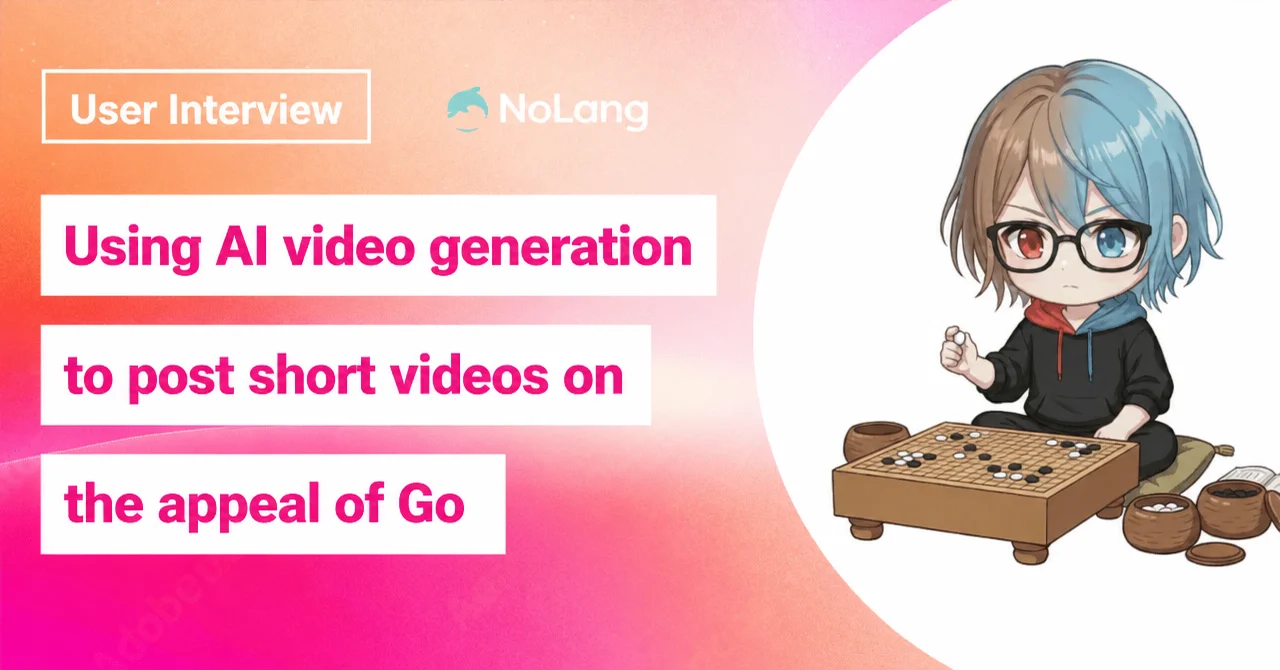
Alongside his work in education, Ohmori keeps making videos with the AI video generation service NoLang — not for his business, but to promote and popularize his hobby, the board game Go.
Doubling as promotion for a Go tournament that pairs professionals with amateurs, he posts seven-episode short-story videos on X.
These days he is working on a 100-episode run of the story and posting it on X as well.
Asked why he keeps using NoLang, the first thing Ohmori names is how natural the Japanese voice sounds. We talked with him about the full range of his NoLang use, from Go story videos to explainer videos for a vocational school.
Turning Go short stories into video
― What do you use NoLang for?
My business itself is education, but what I’m making with NoLang right now has nothing to do with education at all. It’s more of a hobby, you could say — videos aimed at spreading and promoting Go.
I sponsor the Y’s Academy Cup, a Go tournament with both professional and amateur players, so this doubles as promotion for that.
― So you make hobby videos separately from your business. What kind of videos are they, specifically?
Short-story videos with Go as the subject.
I’d build a story that wraps up in seven episodes and post them on X over the course of a week.
With seven episodes you can give it a proper beginning, development, turn and conclusion, and the rhythm works well. The response has been good, so I think this format is working.
― Seven episodes has become your standard format, then. I hear you’re now taking on a 100-episode story as well.
That’s right.
I’m somewhere in the thirties now, and it’s turning out to be quite hard (laughs).
A 100-episode arc in short videos may just be too much of a stretch, and I struggle with it every time.
With seven episodes the structure is clear, but at 100 episodes it inevitably starts to feel dull. I still haven’t worked out how to build the story arc.
If I give up, that’s the end of it, so I keep thinking there must be a good way to do it.
▼ A video Ohmori has actually posted on X
View post
What made him start using NoLang
― What tool were you making videos with before NoLang?
I originally used a video generation tool called Vrew. I made about four videos with it.
The quality itself was good, but the voice sounded a bit computer-like, and that bothered me.
― And that’s when you switched to NoLang.
I was attending a study group on AI, and someone introduced NoLang to me there.
They said that at least when it comes to the voice, it’s far more natural than Vrew — so I decided to give it a try and switched over.
Having actually used it, I feel that it may not be perfect, but it’s far more natural than Vrew.
― So the natural voice was the deciding factor. Were there differences in how you used Vrew and NoLang?
Yes. This is something I noticed as I went along, but with Vrew I had the sense that it works better if you don’t feed it a script and only give directions for where the story should go — it actually produces a better video when I don’t write out the details.
NoLang is the opposite. I get the feeling the result is better when I specify things down to the lines of dialogue.
So the approach I’ve settled on now is to build the script in ChatGPT and then paste it into NoLang.
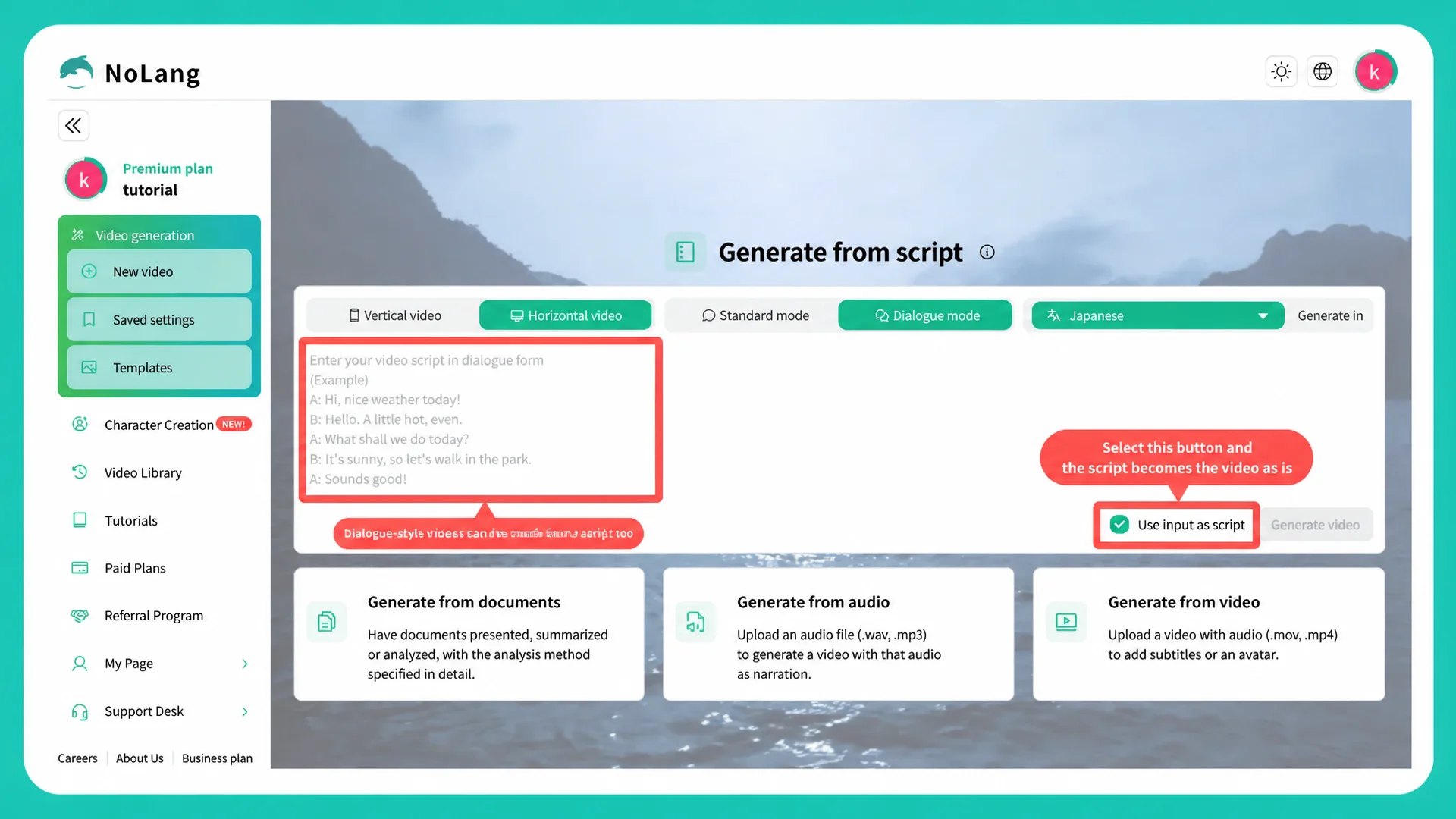
The thing is, as I write in the restrictions and the character settings, the overall text grows and the prompt gets longer.
That makes the video run longer, which is another headache, and I still find that adjustment a bit difficult.
Using it for vocational school information sessions
― Do you use NoLang anywhere other than the short-story videos?
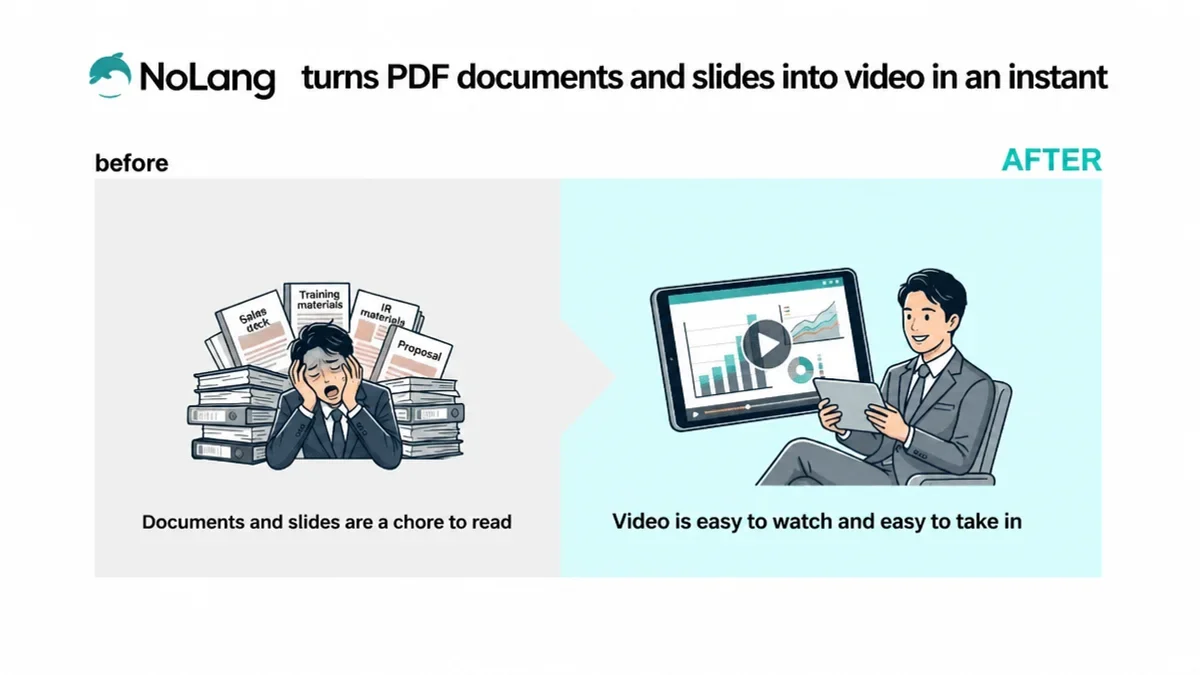
Yes. I take the roughly 30 minutes of material I present at the vocational school information sessions I run, turn it into a PDF, and when I put that into NoLang it produces a really beautiful explainer video.
It genuinely comes out splendidly, and I think that’s wonderful.
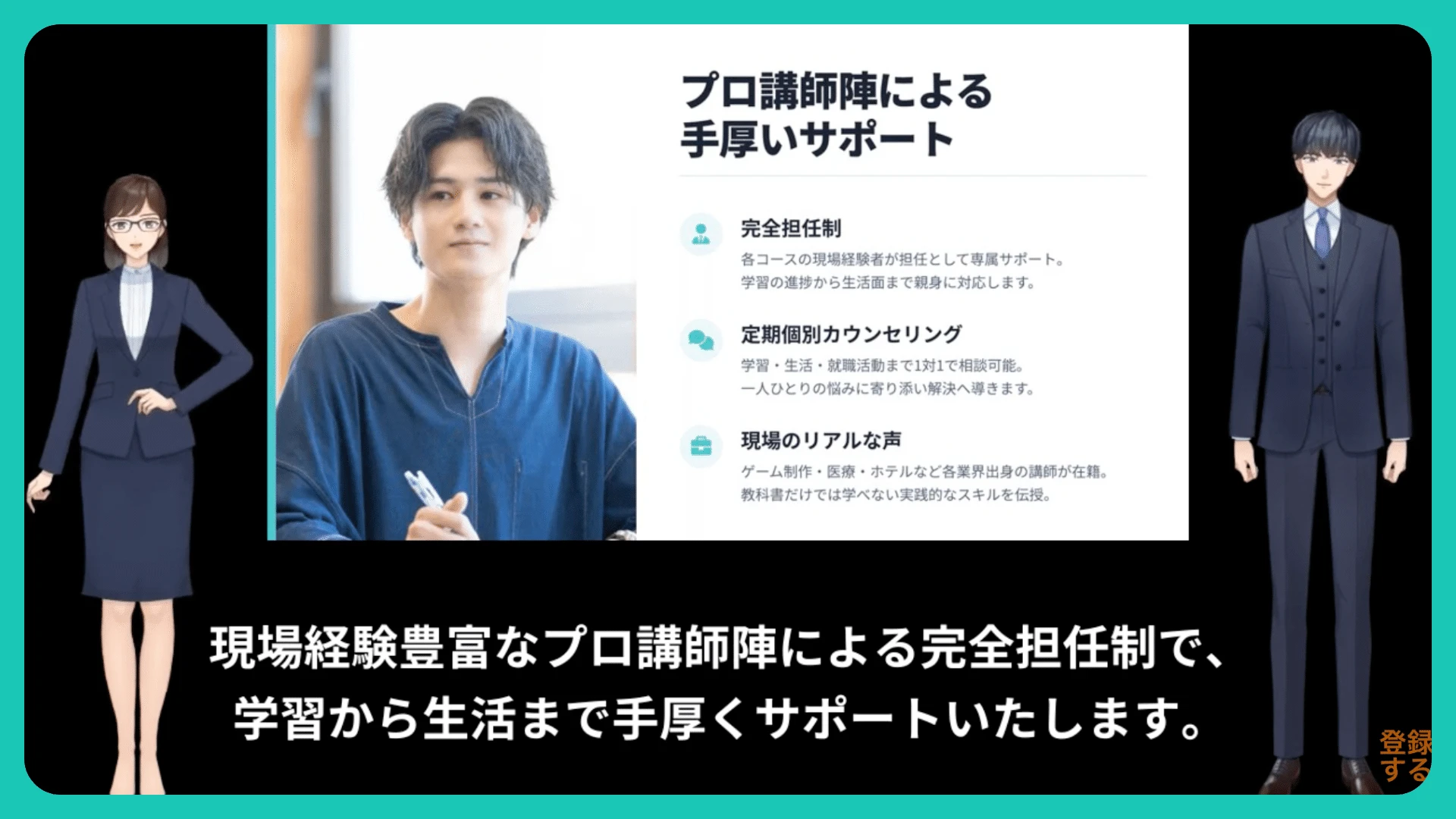
Until now all I did was hand out the materials to the students and talk them through it, so being able to make it a video with NoLang is just great.
I’d like to use it even more.
― Is there anything you pay particular attention to when making these explainer videos?
I do slow the voice down a little.
The standard narration speed feels slightly fast to me, and 0.7x speed strikes me as just the right tempo.
Beyond that, I feel a two-person dialogue format may work better than one person speaking, so I’m trying that out.
The best thing about using NoLang this way is how easy it is — you put in a PDF and it smoothly becomes a video.
Not having to work out all kinds of prompts, just handing over the session materials as they are and getting a video back, is simply easy and a big help.
Why he keeps using NoLang
― Could you tell us the single biggest reason you keep using NoLang?
It really is how natural the Japanese voice is.
Compared with Vrew and other tools, I think this is where it stands head and shoulders above the rest.
AI voices often keep a certain computer-like quality no matter what, but NoLang has very little of that, and it sits comfortably in your ear when you listen.
― Is there anything you’d like to see from NoLang going forward?
Consistency in the images.
When I’m making a short story, it bothers me that the characters’ appearance keeps changing partway through.
I’ll have set up a character as an eight-year-old girl and partway through she becomes a girl of about eighteen, or her face is completely different between the previous scene and the current one.
From the point of view of someone making story content, a character’s face changing every time breaks the world you’ve built — and I think it’s something viewers notice too.
― It’s a technically difficult area as well.
That’s right, I do think it may be hard in the short term.
But this is the age of AI, and it’s advancing practically every week, isn’t it.
The quality keeps going up compared with this year or last year, and on image consistency too, I’m watching with the expectation that it should become possible before long.
Of course, I think the naturalness of the Japanese voice is truly head and shoulders above anything else, so I’ll keep expecting good things there, but if the precision of the images improves as well, I’ll be able to make everything I want to make.
― Thank you very much for sharing such valuable insights with us today. We’ll keep improving the service, including the quality of the images NoLang generates, and we look forward to your continued support!
【Editor’s note】
Ohmori uses NoLang across a wide range of purposes, from videos posted on X to promote Go to turning vocational school information session materials into video. What stood out through the interview was his commitment to natural-sounding audio.
It came through clearly that precisely because his use case — Go story videos — is such a distinctive one, the quality of the voice makes or breaks the world of the story.
His very positive attitude toward the progress of AI was striking as well.
Even on the current limitation of image consistency, Ohmori said, “It’s advancing practically every week, so it should become possible before long” — words that carry the felt sense of someone who has kept using AI tools.
To live up to users who hold on to that kind of expectation, we felt anew and strongly that we want to keep developing and delivering a better service.
Profile: Yoshiro Ohmori
Representative, Y’s Academy / Education entrepreneur
Graduated from the School of Political Science and Economics, Waseda University, in 1981. After overseas postings in Belgium, the United Kingdom and the United States, he now runs Y’s Academy, a free school for junior high school students, and KG Kotogakuin, a support school for correspondence high schools, with campuses in Shinagawa, Meguro and Narita. Supporting young people who have stopped attending school or are struggling with their career path is his life’s work, and he also has a strong reputation for English instruction that draws on his own high proficiency (TOEIC score of 915).
In Go, a lifelong hobby (third dan), he organizes the Y’s Academy Cup, which supports children aiming to become professional players, under the banner of revitalizing the Go world and supporting young people.
【On using NoLang】 His motto is to flexibly bring the latest technology into education and the spread of culture. He uses NoLang to post short videos conveying the appeal of Go on X (formerly Twitter), and also puts it to work producing videos for school introductions and career guidance for students, practicing a new form of communication powered by AI.
X: https://x.com/cainarita
Facebook: https://www.facebook.com/yoshiro.ohmori
YouTube: https://www.youtube.com/@yoshiroohmori
Go (Y’s Academy Cup) (in Japanese): https://ys-cup15.com/
Y’s Academy Co., Ltd. (in Japanese): https://www.ys-academy.co.jp/
Free school website (in Japanese): https://yohmori.com/
Unauthorized use, reproduction or duplication of the text and specific content published in this article is strictly prohibited.