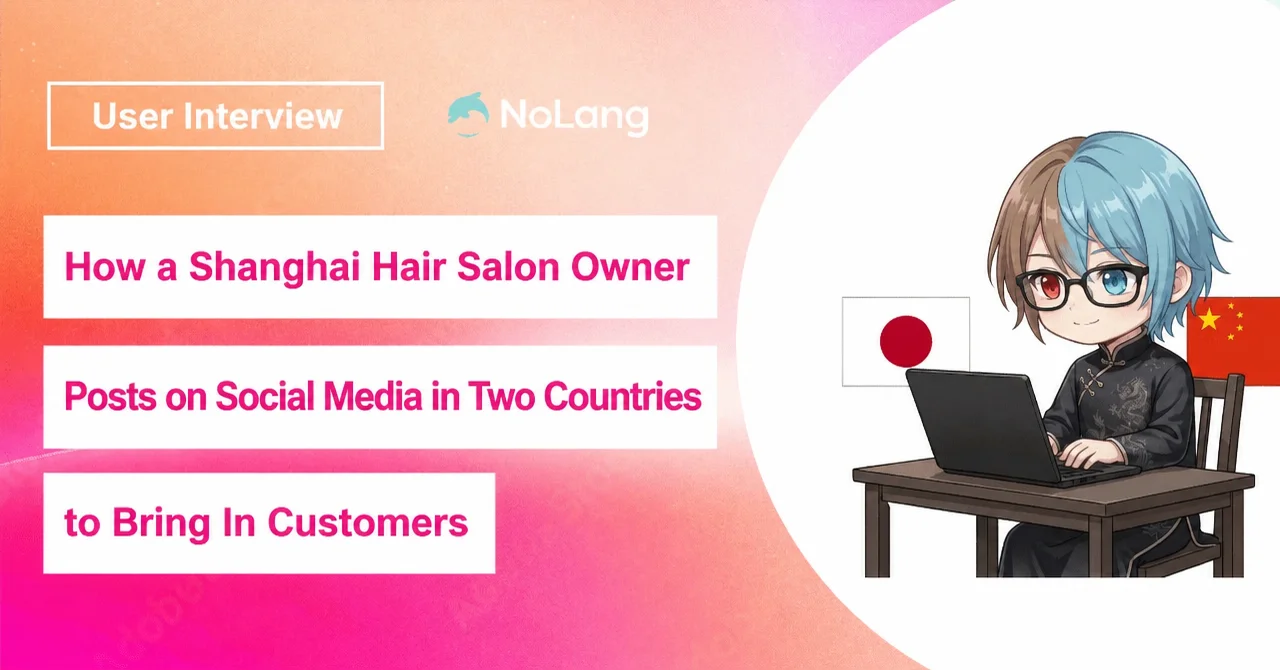
Posting in Japanese, and in Chinese too. The base is Shanghai, and YouTube is only one of the destinations.
Iwasa runs a hair salon in Shanghai. For more than ten years he has been publishing videos as “Shanghai no Iwatan,” and he also delivers content daily to Chinese social platforms such as WeChat, RED and Douyin.
Behind that output are the avatar videos he makes with NoLang.
The avatar and the subtitles come out finished together, so a script written with generative AI can become a video right away.
We asked Iwasa about how he uses NoLang and about the touches that come with publishing across two countries.
What pushed Iwasa to take video seriously
― What kind of work do you do now?
I run a hair salon in Shanghai. I own the place myself, and I work on the floor myself too.
As for video, I’ve been doing it for more than ten years now.
I’ve been running a YouTube channel called “Shanghai no Iwatan” all this time, and it has about 9,000 subscribers now.
I didn’t mean to take it seriously at first. I was just putting up random videos here and there.
▼ The channel he runs is here


― More than ten years already. Was there something that made the channel take off?
Around the time COVID started, I posted videos about what things were really like in China, and the channel grew quite a bit.
That’s when I thought, “Maybe I should do video properly.”
And just today, actually, someone came to the salon and said, “I saw your videos.”
I put my social accounts and the shop’s URL in the YouTube description, so I think they probably saw it there.
It really made me feel that the videos and the shop are connected.
― So the videos bring customers to the salon as well. What kinds of themes do your videos usually cover?
Rather than introducing the hair salon, it’s more like I turn what China is like right now, or whatever I’m interested in, straight into a video.
Salon videos I only put out now and then, when I feel like it.
Videos about life in China get more views, so naturally those became the main thing.
Right now my YouTube revenue has settled at around 3,000 yen a month, but for the moment, using video to get lots of people to watch and then come to the shop is the way that suits me.
Going from script to video smoothly with NoLang
― How did you make videos before you used NoLang?
At first I made simple things, just adding subtitles with free software on Windows.
Around the time of COVID I decided to make videos properly and tried Adobe Premiere Pro, but the monthly cost was pretty high and my YouTube revenue wasn’t much, so it didn’t add up.
So I looked for something I could do for free and started using CapCut.
I figured subtitles and trimming were all I needed, and it felt like plenty.
― So you’ve chosen your tools with an eye on cost. You use NoLang as your main tool now — what does your workflow look like?
Right, these days most of the videos I post are made almost entirely in NoLang.
The smoothest way is to first ask Gemini or Grok, “Write me a two-minute script for a YouTube video,” have them make the script, then paste that script into NoLang and turn it into a video. I’ve been doing it that way for a while now.
At first I only typed in a title and had NoLang make the video, but there would be places that needed some fixing, so I ended up deciding it’s better to write the script first and pour it in.
After trial and error on my own, writing the script with generative AI first and then making the video in NoLang is the best approach for me right now.
Other than that, I sometimes use Vrew as a supplement, when I want to add Chinese subtitles to a video going out on Chinese social platforms.
And when I add a logo or an ending screen, I finish it in CapCut.
I’d be happy if I could do all of it in NoLang alone, though.
Why he uses NoLang to make his videos
― What in particular has felt convenient about using NoLang?
The avatar speaks automatically and the video comes out with the subtitles already done — that’s really great.
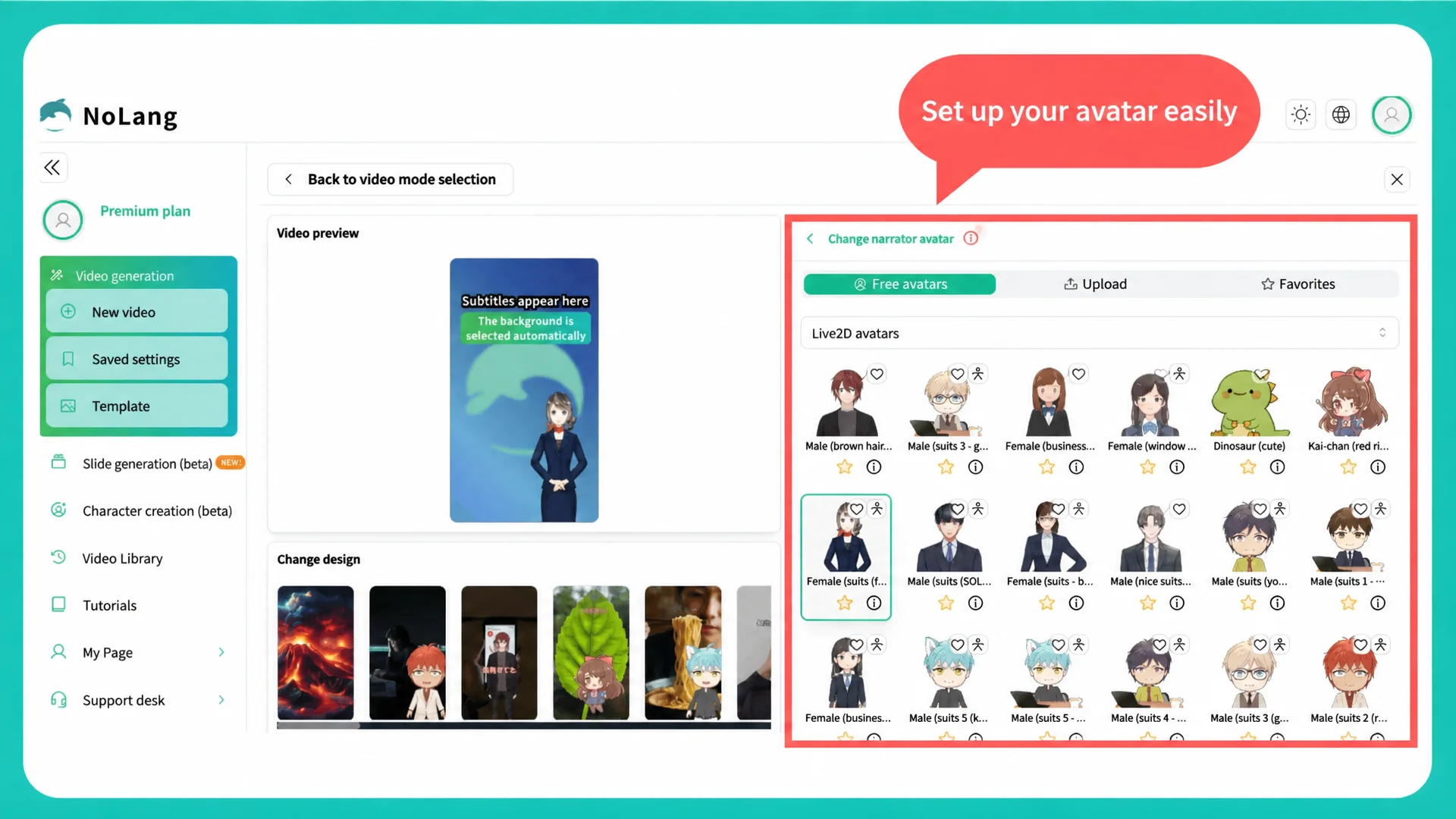
When you try to add subtitles in ordinary video software, even the automatic ones come out completely different from what was said, or you have to shift the timing yourself — all sorts of things, right?
With NoLang, since it starts from the script, the subtitle text is perfect from the beginning and only needs small fixes. That’s a completely different experience.
I had never used an avatar in videos I shot myself, but having the avatar speak on its own was a nice surprise.
That part was really good.
― Having the avatar and the subtitles come out as one piece really is a big difference. Do you distribute your videos outside YouTube as well?
Yes, I put them on Chinese social platforms too.
WeChat Channels, the video feature in WeChat, gets the most views, and then there’s RED (Xiaohongshu), and Douyin, which is TikTok in Japan. Those three.
For the Chinese audience I want Chinese subtitles, and that’s what I use Vrew for.
When I tried to put Chinese subtitles in NoLang, they came out garbled — kanji that don’t exist in Japanese turn into squares.
I wonder if there could be a way to choose a font that supports the kanji that aren’t used in Japanese. On a Mac or in CapCut you get a whole list of Chinese fonts to choose from, so I hope that gets sorted out somehow.
WeChat Channels gets the most views because I have more followers in China, I think, so Chinese subtitles matter.
If all of that could be done in NoLang, the production flow would get a lot simpler.
Using an avatar to give the videos originality
― You used to make videos that you appeared in yourself, I hear.
That’s right. I used to be in a lot of the videos, but I’ve gotten on in years, so I’d rather not show my face much these days (laughs).
So I switched to having an avatar speak instead.
― So it was a decision to stop appearing on camera and switch to an avatar. Do you have particular preferences when choosing an avatar?
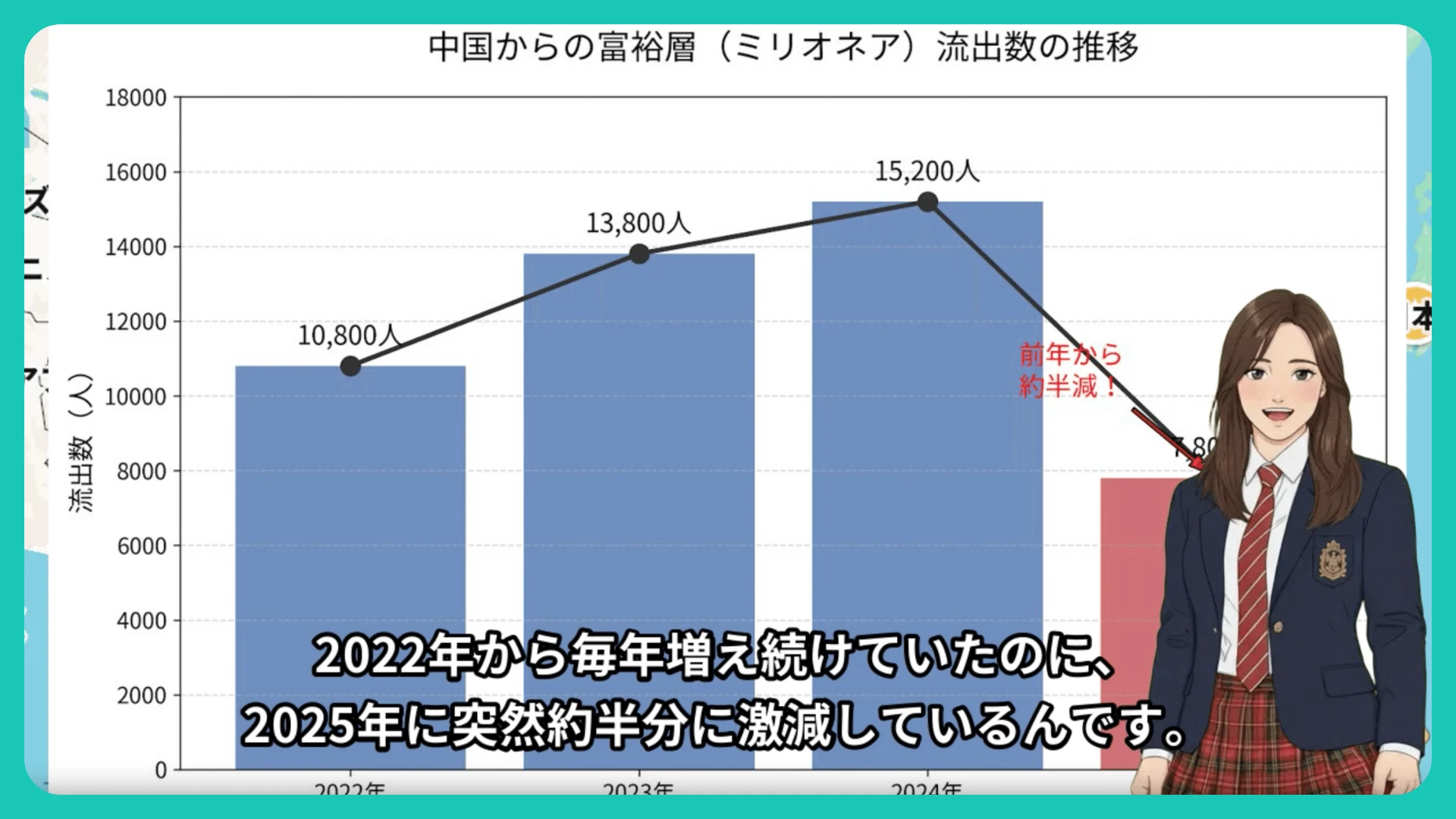
Right now I use a character I uploaded myself, but what I really want is to build my ideal character from scratch.
Since I’m in China, I’d like to make something like a cute character in a Chinese-style qipao myself, and have that character do the talking.
I figure a fictional character that everyone can like, rather than my own face, would reach a wider audience.
If I could upload an original character generated with AI and use it in my videos, that would make me really happy.
― Wanting to use a character that’s your own is a unique idea. What do you picture for your video work going forward?
Honestly, part of me would like to become a YouTuber if I could make a living from video alone, but I’ve come to realize that getting that far is hard in practice (laughs).
For now I think my way is to keep the shop and the videos going together — get lots of people to watch, and get them to come to the shop.
If I could complete a video in NoLang alone, I do hope production would get even easier.
― Thank you very much for sharing your story with us today! We’ll keep working on development so that posting videos to both Japanese and Chinese social platforms gets easier, and so that original avatars become simpler to use. We look forward to staying in touch!
[Editor’s note]
Publishing the short videos he makes on Chinese social platforms at the same time as Japanese ones is very skillful marketing, we felt.
It’s a style of publishing that became possible precisely because generative AI lowered the bar for video production, and it reminded us that the evolution of tools is opening up new possibilities.
His comment about wanting to make videos with an avatar of his own also stayed with us. As content grows more uniform in the age of generative AI, the wish to publish with a character that is your own is something many creators share, we think.
We’ll keep developing NoLang so that anyone can easily make videos with originality.
Profile: Katsuaki Iwasa
Hair salon owner and YouTuber
Living in Shanghai, China since 2010, owner of two hair salons.
Runs the YouTube channel “Shanghai no Iwatan.”
Japan-China meme messenger.
YouTube: Shanghai no Iwatan
Twitter: https://x.com/iwasa_183
Website: https://liberty-shanghai.com/ (in Japanese)
Unauthorized use, reproduction or duplication of the text and specific content published in this article is strictly prohibited.