Mavericks, Inc. (headquarters: Bunkyo City, Tokyo; representative: Shota Okuno), the Japanese company behind the video generation AI service NoLang, has expanded the service’s template feature with new English video templates. The templates support PR and communication aimed at inbound travelers in the retail, transportation, restaurant and lodging industries, as well as English-language service at tourist destinations. With the template feature, users can create videos that use appealing AI avatars or a dialogue format without having to think about prompts or video settings. The feature helps address the worsening shortage of staff, the high cost of production and the concentration of know-how in individual employees. It also uses the persuasive power of video to convey the full appeal of services that the language barrier previously kept hidden, strengthening the ability to attract customers in the inbound market.
Record inbound demand exposes a language barrier on site and a gap in social and video communication
Inbound demand has recovered and expanded rapidly in recent years, and the number of international visitors to Japan reached a record 36.87 million in 20241. Against this business opportunity, the tourism, restaurant and lodging industries face two main challenges.
The first is slow progress on multilingual service on site. In a Japan Tourism Agency survey, international visitors named “cannot communicate with facility staff” (26.1%) and “too little or unclear multilingual signage” (21.8%) among the top problems they faced during their trip, and “restaurants” (28.5%) was the place where they had the most trouble2. The data shows that smooth communication on site and clear multilingual guidance are still lacking. Yet many facilities and stores cannot hire enough staff who can handle it, and the growing cost of recruitment and training is a heavy burden.
The second is a gap in pre-arrival PR. According to a recent survey, “social media” (40.6%) and “video sites” (37.9%) ranked at the top among the information sources visitors found useful before their trip, and “English” (48.8%) was the most used language3. Information gathering has shifted from text to video and social media, which makes communicating in English all the more important. Producing English video content, however, takes considerable time and money for translation, narration arrangements and more. For operators with limited resources this is difficult to carry out and remains a major barrier.
Expanded NoLang templates strengthen support for inbound service in the tourism industry
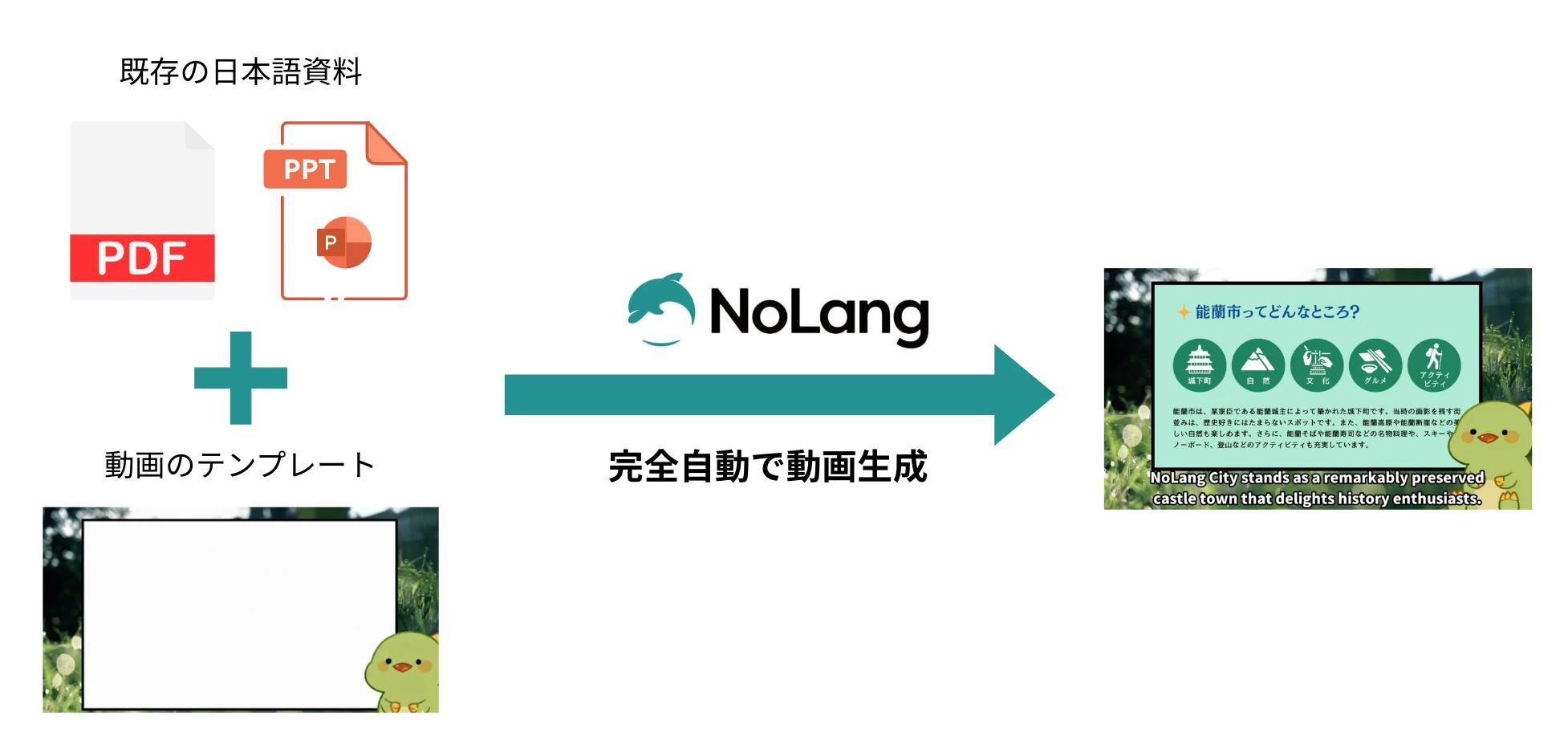
To address these challenges, the video generation AI NoLang has expanded its template feature and added English templates built for inbound service. The template feature lets users create high-quality videos more quickly.
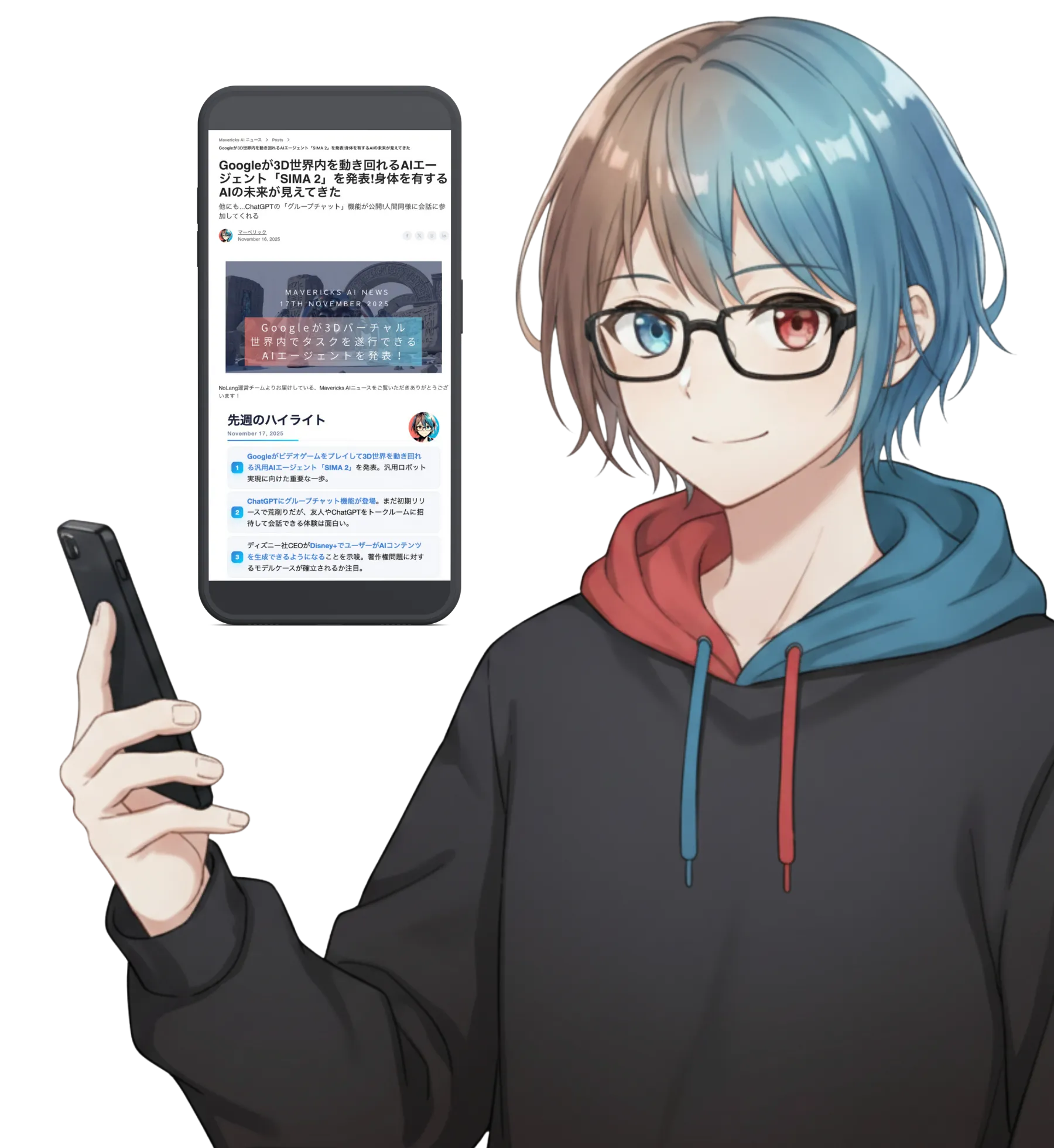
The new English templates make it easy to create videos featuring Japanese anime-style avatars, which are popular overseas. Using avatars also helps companies strengthen and unify their brand image. Because the templates make it simple to create videos in a dialogue format, they convey the full appeal of a service or the details of a destination to international visitors and strongly support understanding.
Specifically, the English templates include “facility guide” videos for hotels and inns, “tourism PR” videos in which an avatar introduces the appeal of a region, and “menu and service introduction” videos for restaurants. The same templates can also cover guidance on complex transfers and ticket machine operation at stations, instruction on how to worship at tourist facilities, and how to order from a touch panel or ticket machine at a restaurant. NoLang can deliver this kind of detail, which staff could never fully explain face to face, through an avatar around the clock. For social media and video sites, short videos in which an avatar introduces the appeal of a region can be created instantly from text and a template. FAQ videos in which an avatar answers, in dialogue form, the questions international visitors have before a trip — “When is the best time to see the cherry blossoms?” or “What local food do you recommend?” — can also be generated automatically and delivered to target audiences overseas.
This makes it possible to cut the cost of recruiting and assigning English-speaking staff at lodging and tourist facilities, restaurants and transportation hubs, and to run compelling PR aimed at international visitors.
Watch a sample videoMain use cases
Restaurants and lodging facilities
Turn Japanese menus and service documents into English videos. Play them on digital signage or in-room tablets to promote recommended menu items and communicate house rules smoothly.
Tourist facilities and local governments
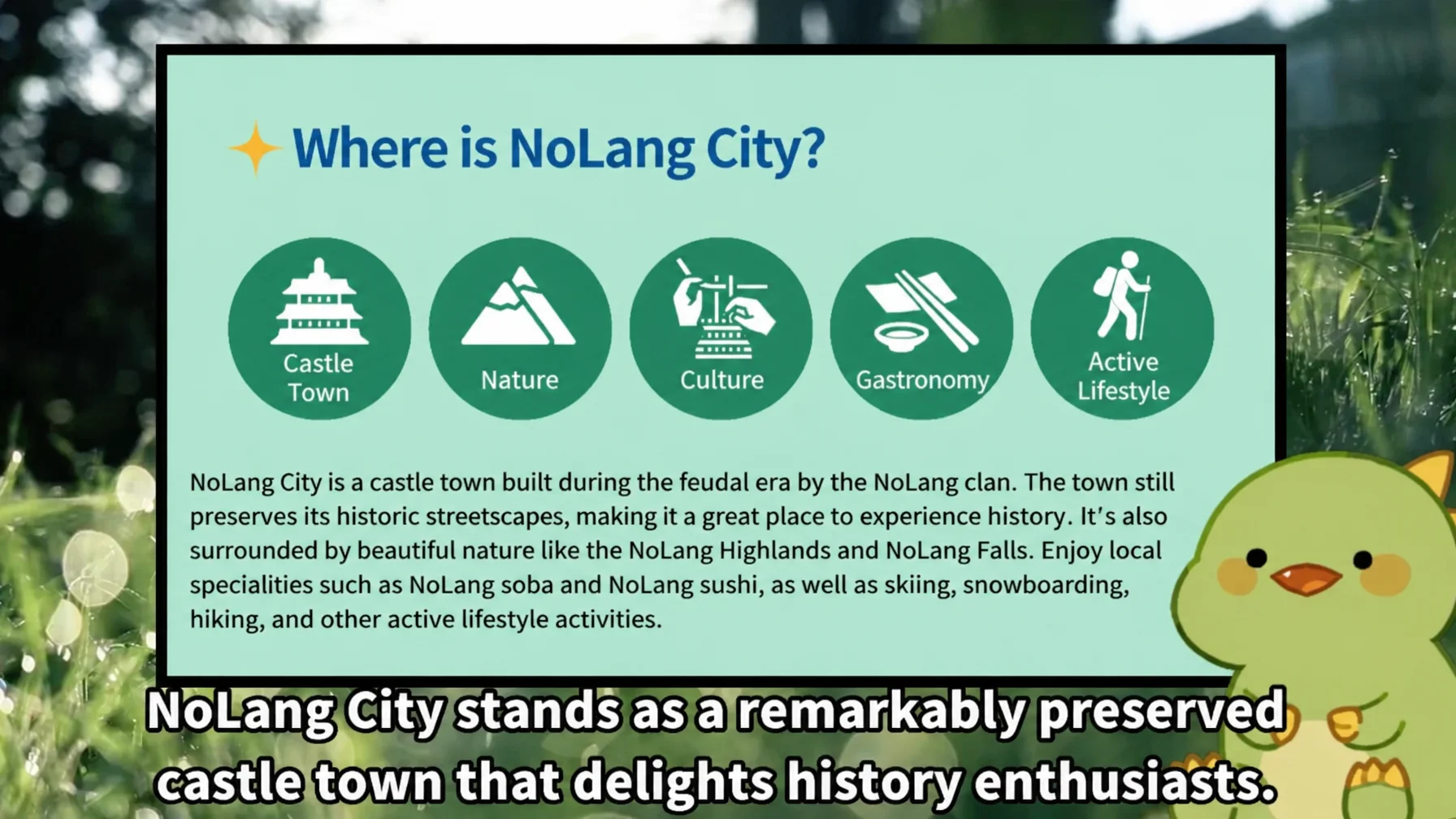
Convert tourism brochures (PDF and PPTX documents) into appealing English PR videos. Choose from the more than 100 AI avatars available in NoLang to create distinctive, engaging videos. Publishing them on social media and websites helps attract international travelers by building awareness.
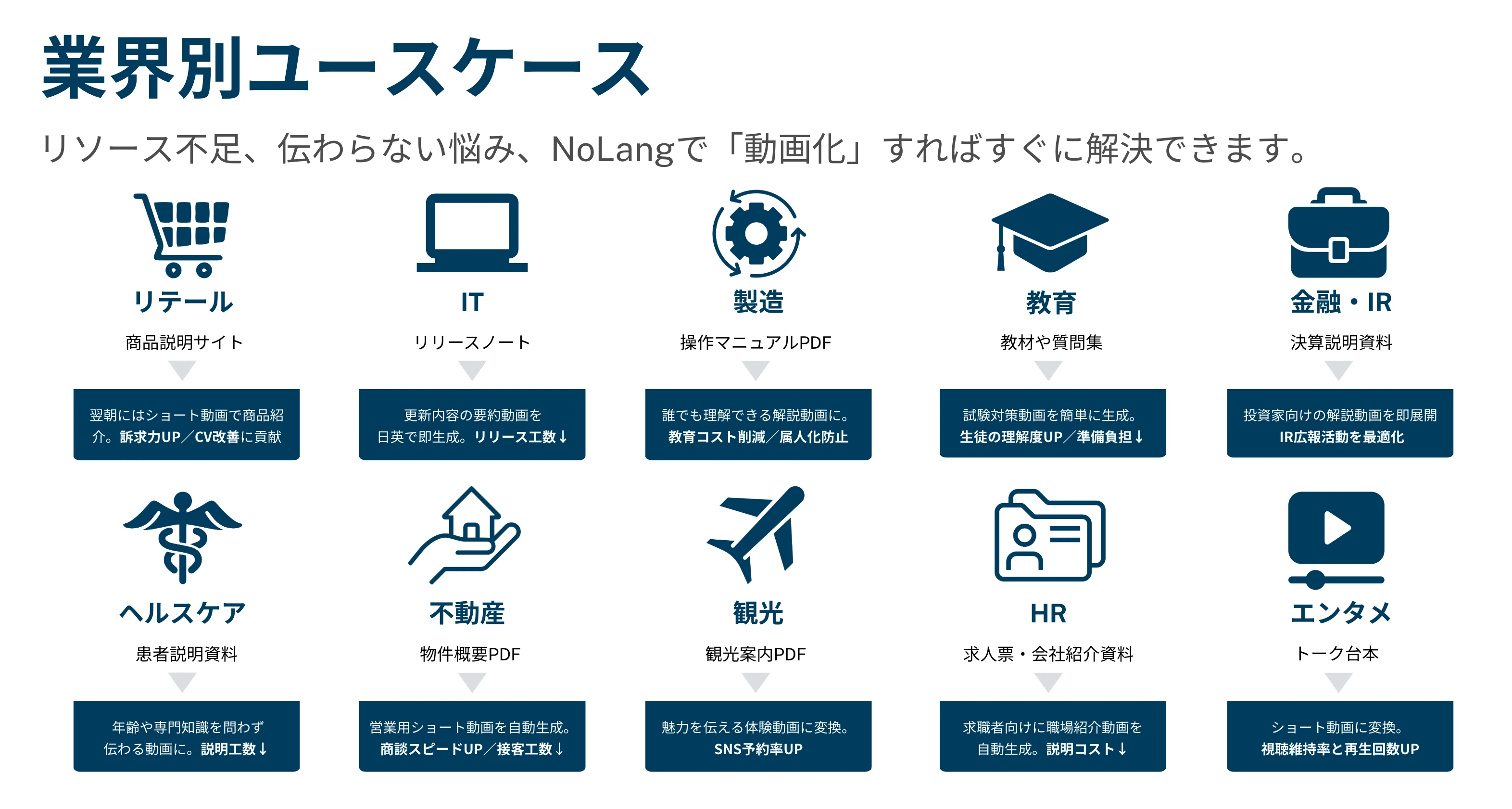
NoLang can also be used across a wide range of other industries, as shown below.
Looking ahead
Mavericks, Inc. plans to further strengthen NoLang’s multilingual support and to expand coverage beyond English to other major languages in stages. Through the development of advanced AI products, including the real-time video generation AI NoLang, the company aims to remove language barriers around the world, energize Japan’s inbound market and contribute to global communication at companies of every kind.
Contact usFootnotes
-
Source: Japan National Tourism Organization (JNTO), “Visitor Arrivals to Japan” ↩
-
Source: Japan Tourism Agency, “Survey on Multilingual Support and Other Aspects of Japan’s Reception Environment for International Visitors” ↩
-
Source: Japan Tourism Agency, “Consumption Trend Survey for Foreigners Visiting Japan, July–September 2024 Report” ↩