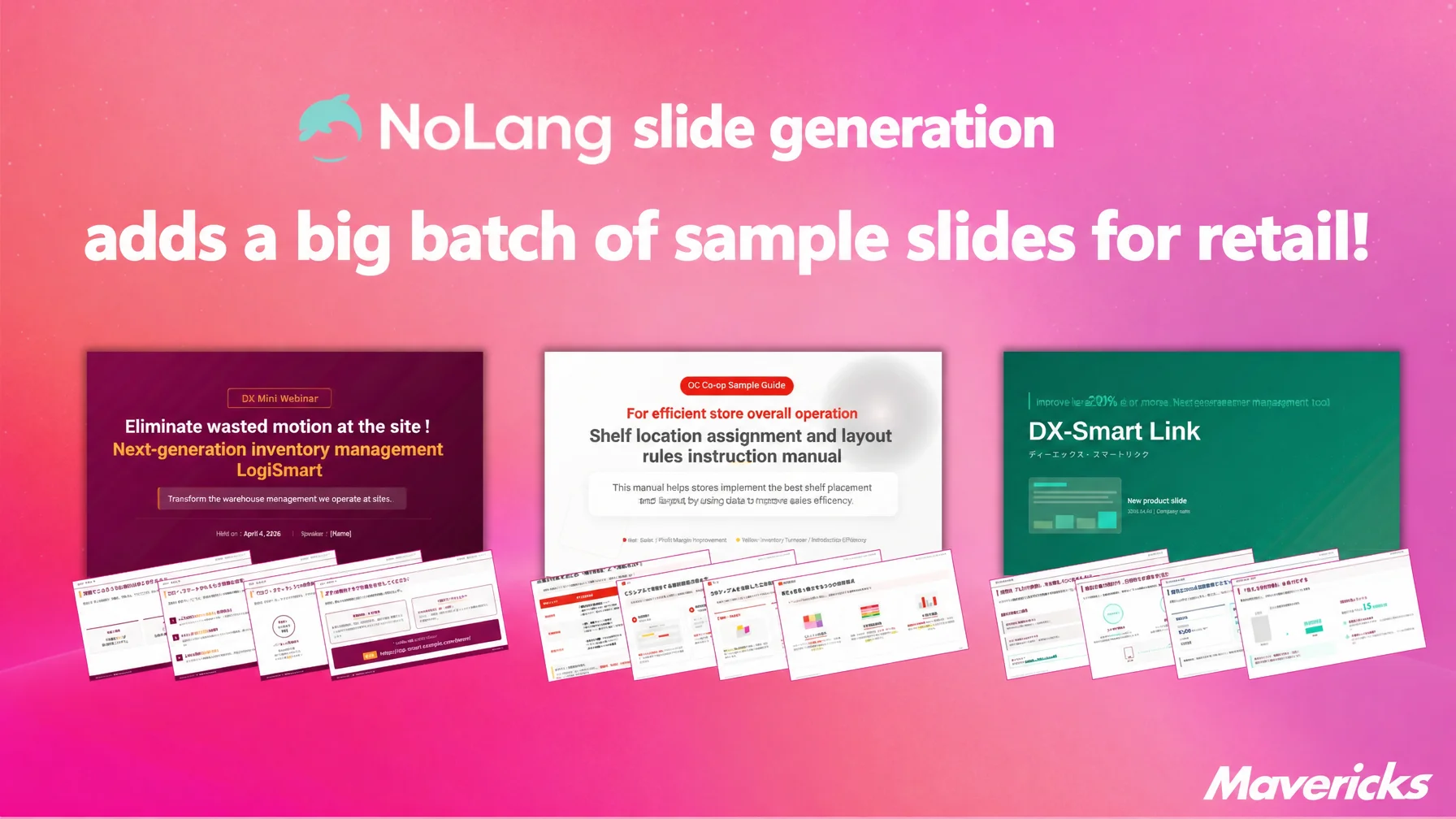
Mavericks, Inc., the Japanese company behind the AI video generation service NoLang, has added a set of retail-oriented sample slides to the NoLang slide generation feature. Users upload existing materials such as product catalog PDFs, promotional plans, or brand guidelines, and NoLang automatically builds slides that organize the key points, then exports them as a narrated video. The sample slides are provided as templates for five situations: product introductions, webinars, internal sales training, chain-wide proposals, and planogram instructions. In retail, where product lineups turn over quickly and staffing is limited, they are intended to reduce the workload of producing promotional and training materials and rolling them out to every store in a consistent format.
The document workload in retail, where fast product turnover meets staff shortages
Retailers and wholesalers create and update materials constantly in step with product movement: new arrivals, seasonal fairs, planogram changes, and sales campaigns. The materials vary widely in audience and purpose, from product introduction slides and webinar decks to planogram instructions for every store and product explainers for sales teams. Yet the number of people who produce these promotional and sales enablement materials is limited, and more and more sites cannot keep pace with product turnover.
One reason for the workload is how often products change. A convenience store carries roughly 3,000 items at any time, adds about 100 new products every week, and replaces more than 70 percent of the items in the store over the course of a year1. Supermarkets, drugstores, and other retail formats also have to update introduction materials and planogram instructions each time seasonal products change or a promotional fair begins. A 2021 survey of 400 sales and sales planning staff on their day-to-day work found that “preparing materials” was the single most time-consuming task at 30.5 percent, accounting for 619 hours per person per year, or about 1.67 million yen when converted to labor cost2. Where a small promotions team handles a steady stream of these requests, it easily becomes the norm that materials cannot be prepared for the full product range, nor rolled out to every store in a single design.
The staffing that has to absorb this work is also getting tighter each year. In a survey of retail and service establishments by the Japan Institute for Labour Policy and Training (JILPT) in February 2024, with 2,652 valid responses, 57.7 percent of establishments reported a shortage of full-time employees and 56.3 percent a shortage of part-time and casual staff; 69.3 percent of the full-time shortages were described as unlikely to be resolved for the time being3. The Ministry of Health, Labour and Welfare’s 2024 Employment Trends Survey adds that wholesale and retail recorded about 1.427 million separations in the year, the highest of any industry, exceeding the roughly 1.384 million people who joined4. When hiring itself is difficult, distributing head-office promotional materials and planogram instructions to every store in a uniform format, and maintaining explainers for the entire product range for sales teams, becomes a heavy load for the few people assigned to it.
To meet these needs on the ground, NoLang has added retail-oriented sample slides to its slide generation feature. Sites with fast-moving product lineups and limited staff can now build slides and videos efficiently from the product catalogs and promotional materials they already have.
From existing promotional materials to slides and video in one pass, now for retail
The NoLang slide generation feature takes source material such as text or PDFs and automatically produces slides with charts, graphs, and headings, then exports them directly as a narrated video. Everything from building the deck to turning it into video happens in a single service, which combines steps that previously required separate document and video tools, each with its own learning curve. Product catalog PDFs, promotional plans, brand guidelines, planogram data, and other documents already accumulated in retail operations can be fed in as they are, so existing materials can be carried forward into promotional decks, training content, and store instructions.

Sample slides built specifically for retail have now been added to this feature. Selecting a sample slide as a template gives users a design and structure suited to the task from the outset. To create a product introduction deck for a new arrival, for example, a user picks the matching sample slide, uploads the product catalog PDF, and NoLang generates slides that organize the key points, ready to use as a customer-facing introduction or as an explainer video for internal sharing.
The sample slides cover a range of retail situations, including product introductions, webinars, internal sales training, planogram instructions, and rolling out a single proposal deck across all stores, so high-quality promotional and training material can be produced without specialist design skills.
From product introductions to webinars and chain-wide rollout: four retail examples
Below are representative examples from the retail sample slides added in this release. Each addresses a need that comes up frequently in retail and wholesale operations, whether producing promotional materials, running sales training, or deploying to stores.
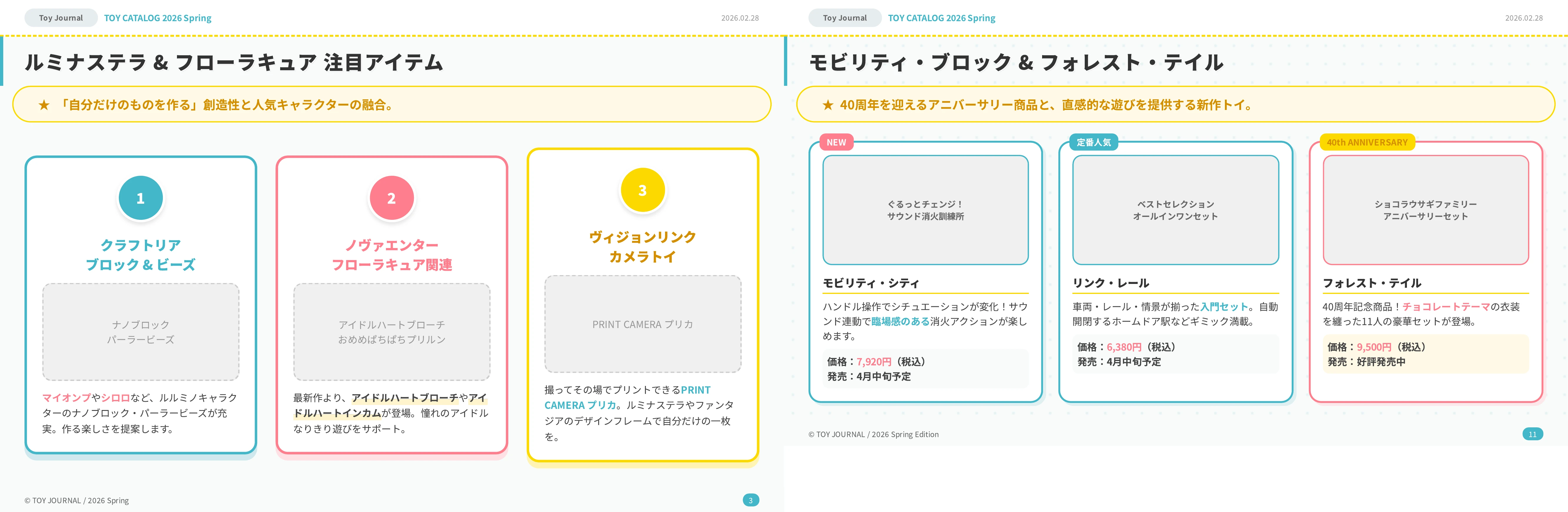
The first is the product introduction deck. Aimed at suppliers and customers, this sample generates an introduction deck that pulls the key points out of a product catalog. Many teams want a new deck for every new arrival or seasonal fair but find it time-consuming to extract the essentials from a catalog and restructure them as slides. Feeding in a product catalog PDF or manufacturer-supplied material produces an introduction deck in a short time, so materials can be released on schedule even where products turn over quickly.
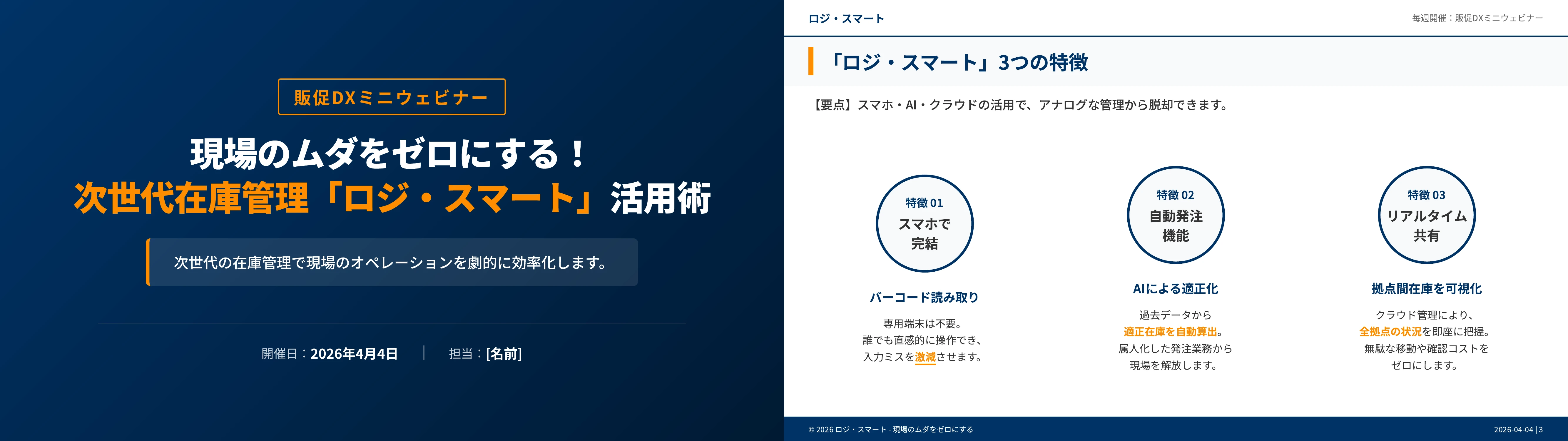
The second is the weekly webinar deck. Aimed at customers and prospects, this sample generates slides for a 15-minute webinar. Teams that want to run a webinar every week often struggle to keep the deck consistent, because design and structure vary when presenters take turns preparing the material. Feeding in a product master PDF or a promotional plan keeps webinar decks at an even quality as the presenter changes, which supports stable webinar operations.
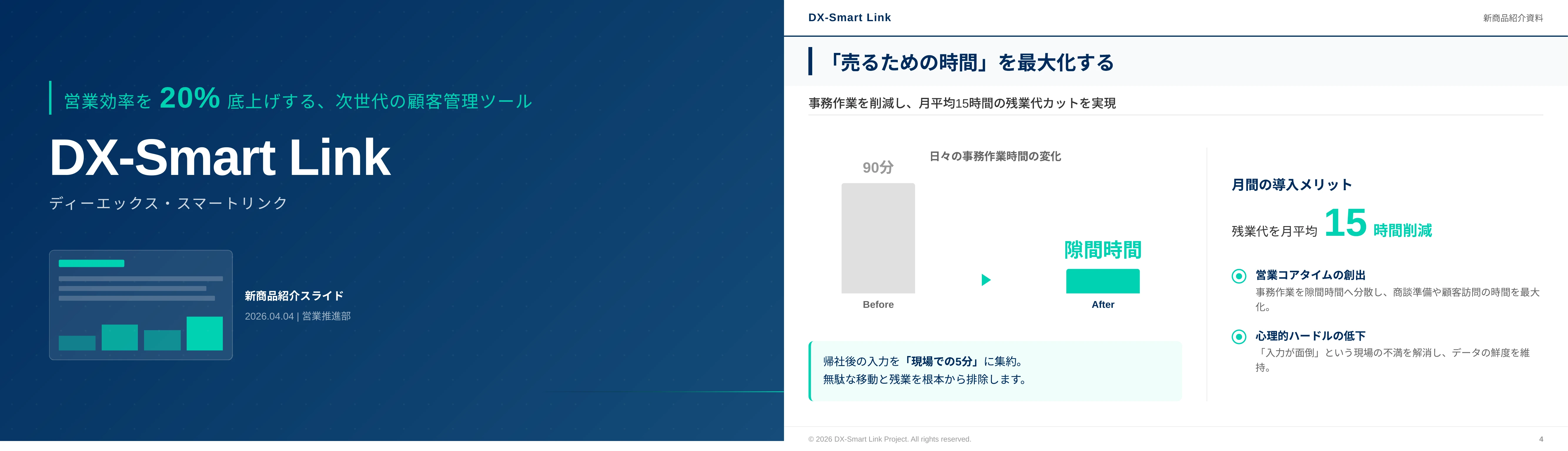
The third is the solution introduction deck for internal use. Aimed at in-house sales teams, this sample generates slides that explain the products the company handles, with charts and illustrations. Teams may want introduction materials for the entire product range to deepen the sales team’s product knowledge, but a small promotions team cannot realistically cover every product. Feeding in manuals or datasheet PDFs produces product explainers for the sales team efficiently, raising the whole team’s product knowledge and evening out proposal quality.
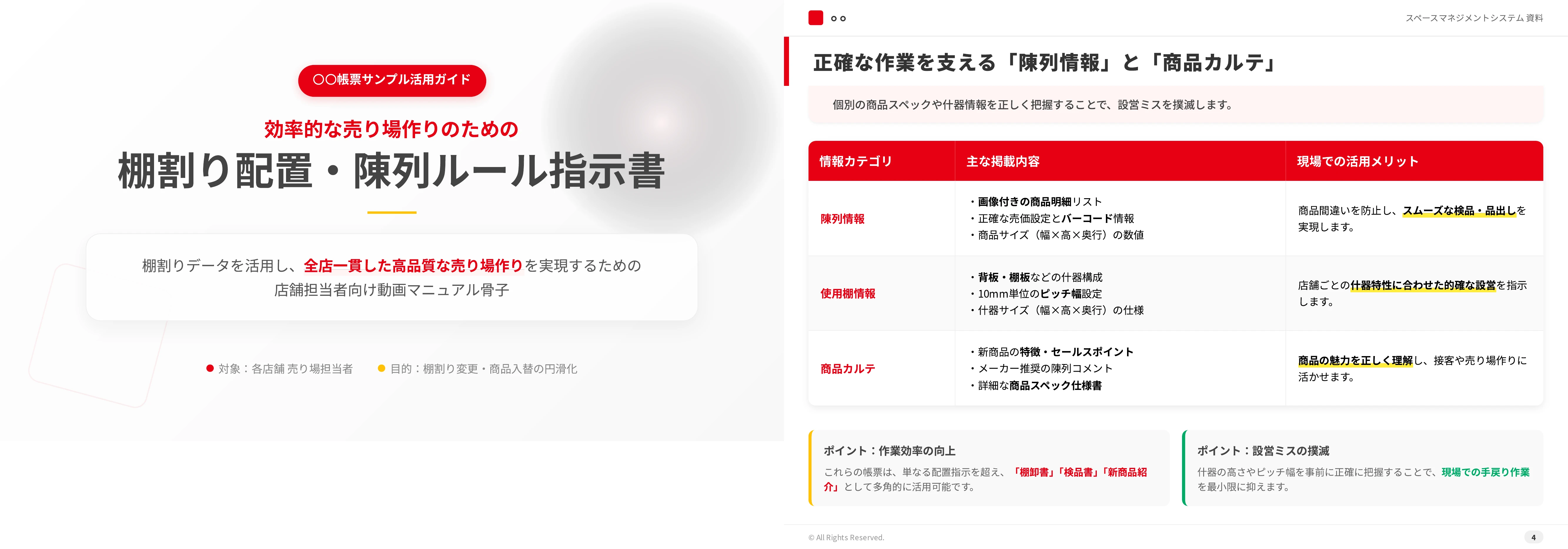
The fourth is the chain-wide planogram instruction deck. Aimed at the sales floor staff at each store, this sample generates slides that give planogram layouts and display rules visually. Instructions have to go out to every store each time seasonal products change or the planogram is revised, and adapting a single planogram policy to each store’s floor takes effort. Feeding in a merchandising report or planogram data produces chain-wide planogram instructions efficiently, reducing the work of issuing instructions to every store after each planogram change and making sales floors more consistent.
Looking ahead
The retail sample slides added in this release cover representative situations selected from interviews with retail and wholesale sites. Mavericks plans to keep reflecting that feedback and to expand the sample slides by business format and by task.
NoLang will continue to strengthen its features to help reduce the load of producing promotional materials, running sales training, and deploying to every store in retail.
Footnotes
-
Toyo Keizai Online, “Behind the convenience store hits, where 70% of items change in a year” (in Japanese) ↩
-
Smart Slide, “Survey on day-to-day work in sales, 2021” (in Japanese; 400 sales and sales planning staff, conducted October 2021) ↩
-
JILPT Research Series No. 248, “Survey on labor shortages and responses to them (establishment survey): retail and service establishments” (in Japanese; conducted February 2024, 2,652 valid responses) ↩
-
Ministry of Health, Labour and Welfare, “Overview of the results of the 2024 Employment Trends Survey” (in Japanese; 2024) ↩