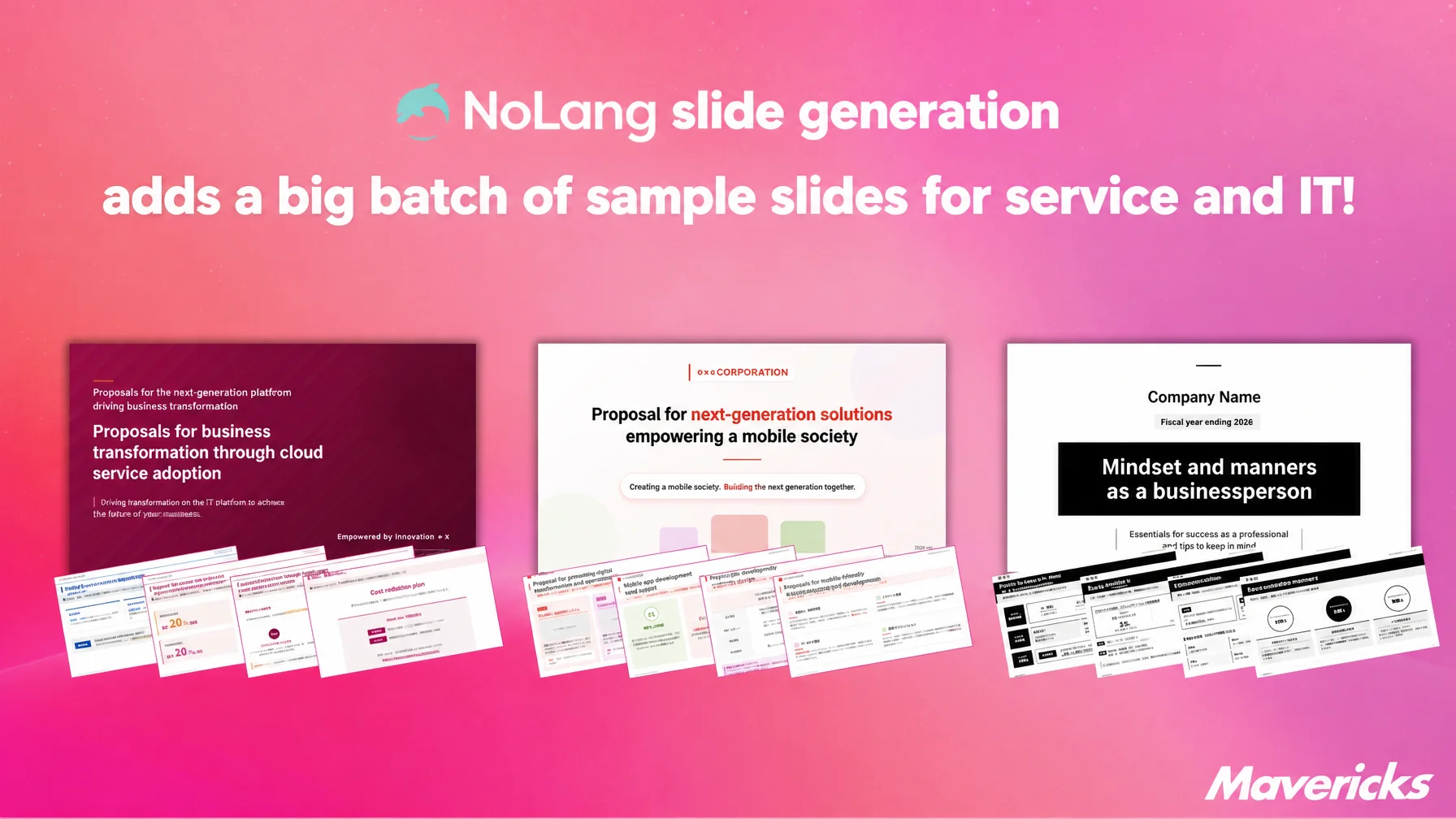
Mavericks, Inc., the Japanese company behind the video generation AI NoLang, has added a new set of sample slides for service-sector and IT companies to NoLang’s Slide Generation feature. The set covers five templates for the document work that comes up most often at BtoB companies: service overview decks for sales meetings, seminar presentations, recruiting decks, and internal training slides. Users upload existing material such as a service overview PDF or a training text, and NoLang generates slides complete with headings and diagrams, then turns them into a narrated video in the same flow. No specialist design skill is required, so small teams can produce polished material quickly and spend less time on document preparation.
Small teams juggling sales and training, with slide work as a constant load
At service-sector and IT companies, sales proposals, seminar sessions, recruiting briefings and internal training all run in parallel through the year, and every one of them needs slides. Few companies can assign staff to that work full time. In practice, sales representatives also cover marketing and recruiting, and slide preparation becomes a permanent bottleneck.
The burden is not limited to one industry. A 2021 survey of 400 sales professionals found that “preparing documents” was the single most time-consuming task, cited by 30.5% of respondents, and reported 619 hours per person per year spent on it, equivalent to roughly 1.67 million yen in labor cost1. Outsourcing sales and proposal decks is not cheap either: the going rate is 3,000 to 15,000 yen per slide, so a single 10- to 15-slide deck costs around 70,000 yen2. Service-sector and IT companies customize their material for each deal and each client, which makes both in-house and outsourced production expensive.
The staff who would absorb that work are also getting harder to find. A Tokyo Shoko Research survey of 4,619 companies in April 2024 put the share of information and communications firms short of full-time employees at 76.3%, behind only construction (84.4%) and transportation (77.9%)3. The Ministry of Economy, Trade and Industry estimates that Japan’s shortage of IT professionals will grow to as many as approximately 790,000 people by 20304. As the shortage deepens, it has become normal for a handful of people to cover sales, marketing, recruiting and training at once, leaving no time for slide design or structure and pushing teams toward text-only documents.
NoLang has added the new service-sector and IT sample slides to its Slide Generation feature in response to this problem.
Slides and video from existing material, now with templates for service and IT companies
NoLang’s Slide Generation feature takes source material such as text or a PDF, builds slides with diagrams, charts and headings, and can then output the result as a narrated video. Everything from the slides to the finished video happens in one service. Previously this meant running a document tool and a video tool separately and learning both; NoLang handles the whole sequence. Service overview PDFs, company profiles, training texts and other documents that service-sector and IT companies already hold can be used as the source material, so there is no need to write anything from scratch.

The new sample slides in this release are built specifically for service-sector and IT companies. Selecting a sample slide as a template gives users a design and structure that already fits the intended use. To prepare a service overview deck for a sales meeting, for example, users pick the matching sample slide and upload a service overview PDF; NoLang lays out the headings and diagrams automatically, and the result can be used directly as a sales deck or an explainer video.
Without specialist design skill, teams can produce high-quality slides for sales, marketing, recruiting, training and other situations.
Five sample slides for sales meetings, seminars, recruiting and training
Here are five representative examples from the new sample slides for service-sector and IT companies. Each addresses document work that comes up regularly in BtoB sales, marketing, recruiting and training.
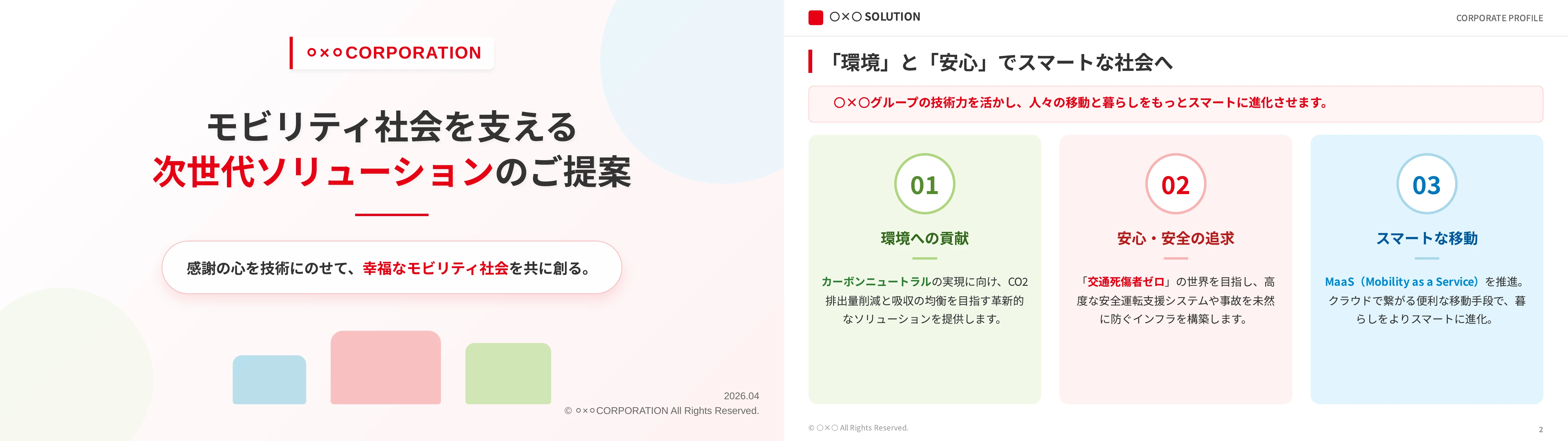
The first is the service overview deck. It generates a sales deck for prospective customers covering what the service is, what makes it distinctive, and what it costs. It answers the situation where a team wants a fresh service overview for every meeting but has no time for design and ends up with text-only material. Uploading a service overview PDF, a company profile or a price list is enough to produce a sales deck quickly.
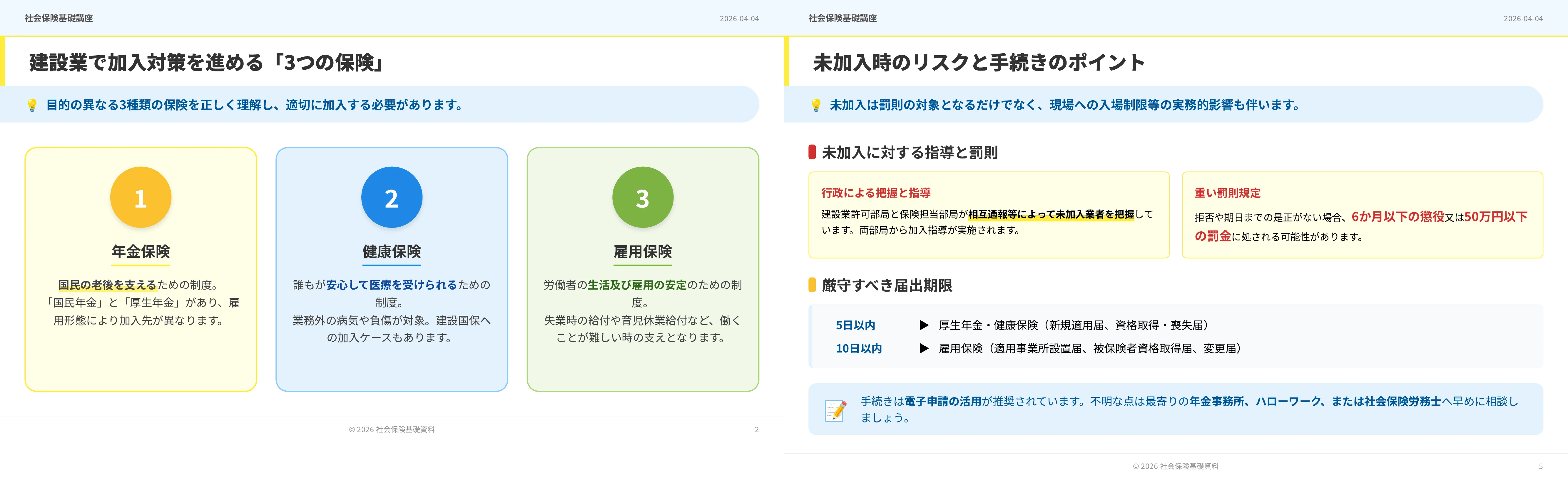
The second is the seminar and webinar deck. It generates presentation slides for seminar attendees, covering industry topics and the company’s services. It answers the situation where a team wants to keep producing slides for a monthly seminar but cannot keep up alongside its main work, which limits how often events run and how good the content is. Uploading a training text or a white paper PDF produces the presentation slides right away.
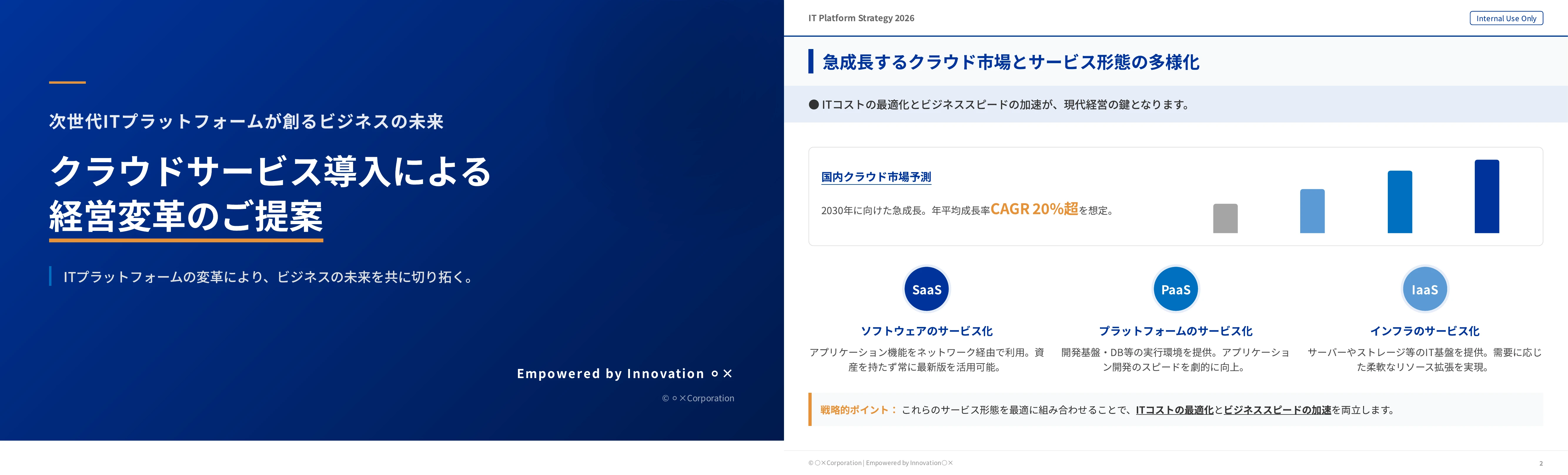
The third is the company-wide sales deck with per-representative variants. It takes one shared service overview deck and adapts it for individual sales representatives and individual customers. It answers the situation where a team wants every representative to work from the same base deck, but individual edits introduce inconsistency in design and messaging. Uploading an internal policy PDF or a business report PDF produces a consistent sales deck that can be rolled out to every representative.
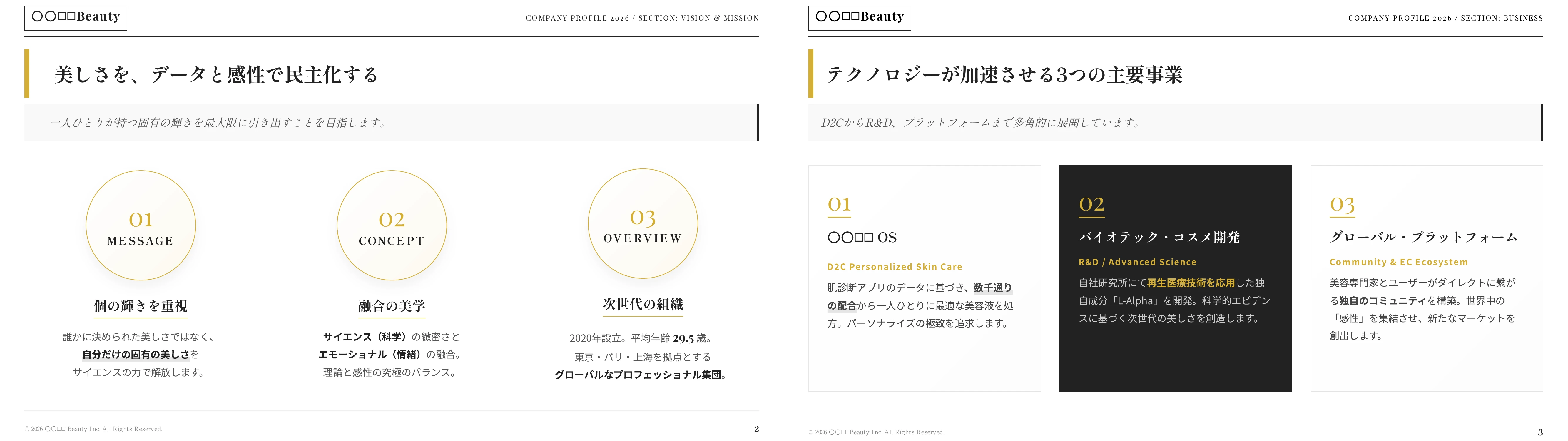
The fourth is the recruiting deck. It generates slides for job seekers covering the company profile, its business, and the details of the openings. It answers the situation where a team wants to keep the material used at recruiting sessions and casual interviews up to date, but rebuilding the slides every time the business or the job details change takes real effort. Uploading a company profile PDF and the job description streamlines both the first version and every later update.
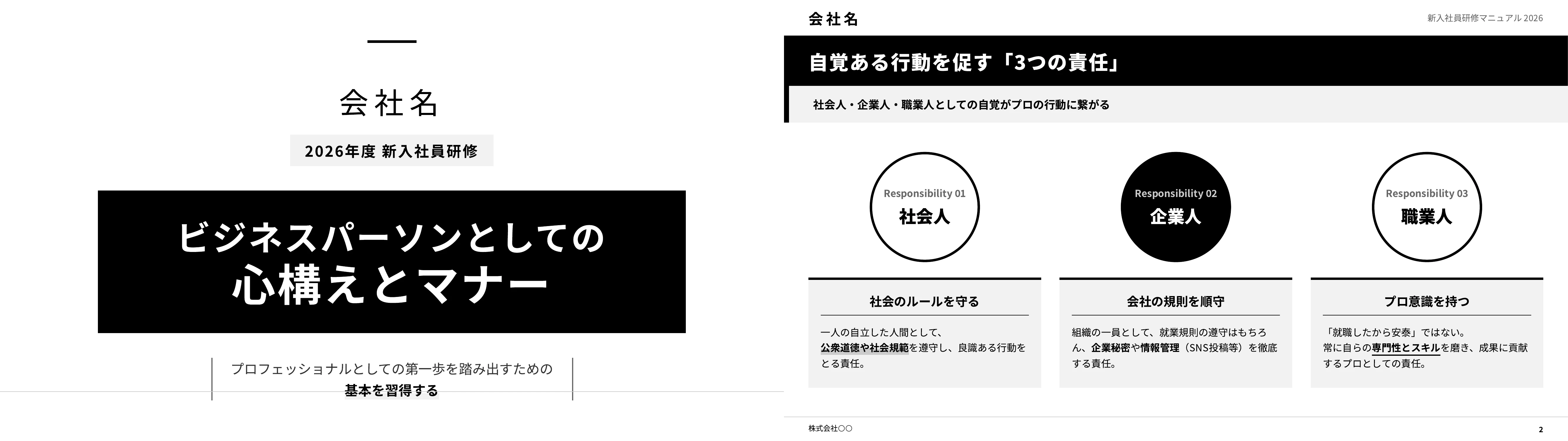
The fifth is the internal training deck with per-department variants. It adapts a company training curriculum to the context of each department for all employees. It answers the situation where a team wants to tailor one training program by department, but rebuilding the slides department by department takes so much work that the company-wide rollout falls behind. Uploading a training curriculum PDF produces department-specific training slides in a single pass.
What comes next
NoLang will continue to strengthen the features that reduce the document and content production load at BtoB companies and make sales and marketing work more efficient. Mavericks plans to keep expanding the sample slides by industry and by task, reflecting feedback from service-sector and IT companies.
Footnotes
-
Smart Slide, “Survey on the realities of sales work 2021” (in Japanese; 400 sales and sales-planning professionals, conducted October 2021) ↩
-
Market rates for outsourced document production services (as of 2025, comparison of several services) ↩
-
Tokyo Shoko Research, “Survey of corporate trends on labor shortages” (in Japanese; April 2024, 4,619 valid responses) ↩
-
Ministry of Economy, Trade and Industry, “Survey on IT talent supply and demand” (in Japanese; published 2019, commissioned to Mizuho Information & Research Institute) ↩