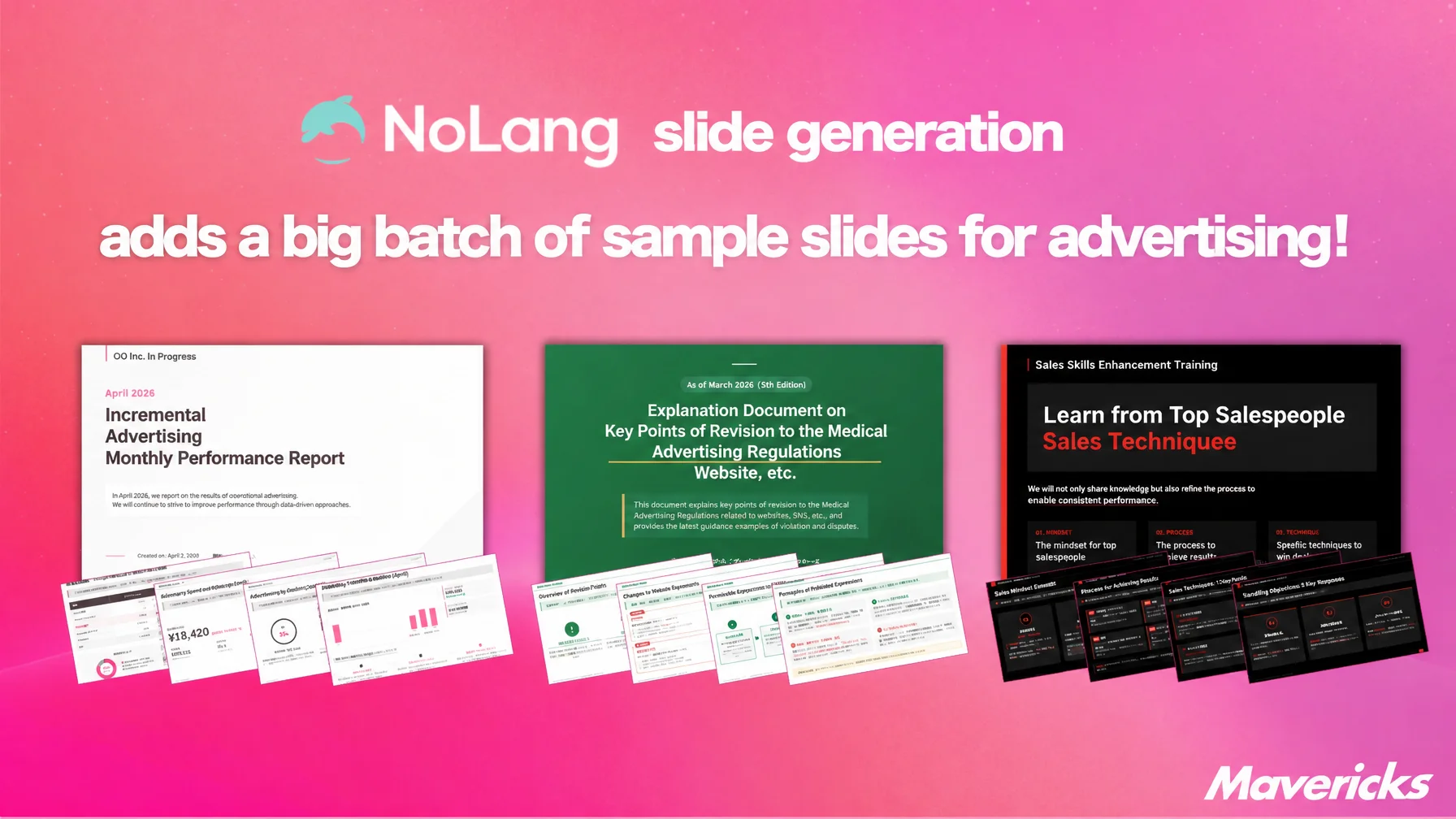
Mavericks, Inc., the Japanese company behind the AI video generation service NoLang, has added new sample slides for the advertising and creative industry to the Slide Generation feature of NoLang. The templates cover five situations that come up constantly in the industry: client proposals, monthly reports, briefings on changes to advertising rules, client-by-client variations, and internal training materials. Users upload existing documents such as a briefing sheet PDF or an ad performance report, and NoLang generates a structured set of slides and, from the same flow, a video with narration. No specialist design skills are required, so agencies and creative studios can produce proposals, reports, and training content in a fraction of the time they spend on them today.
Ad spending keeps growing, and slide work keeps squeezing creative time
Advertising and creative teams produce documents constantly: proposals for clients, monthly campaign reports, briefings when regulations change, and internal training materials. Total advertising spending in Japan reached 7.673 trillion yen in 2024, up 4.9% year on year and a record high for the third year running, with internet advertising at 3.6517 trillion yen, up 9.6%1. As the market grows, agencies handle more clients and more ad platforms, and the document workload grows with them.
Preparing proposals and reports is the heaviest part of that load. In a 2021 survey of 400 sales and sales-planning staff, “creating documents” was named the single most time-consuming task by 30.5% of respondents, costing 619 hours per person per year, or roughly 1.67 million yen in labor cost2. A 2025 survey of 1,000 sales staff on how they prepare for client meetings found “preparing proposal documents takes too much effort” to be the top issue, cited by 44.7%3. A survey of 83 advertising agency executives put “skill gaps between staff and difficulty developing people” and “workflows that are not standardized” at the top of their organizational issues, pointing to quality that varies with the individual4. Because advertising and creative work builds each proposal from scratch, these costs are especially visible.
The staffing available to absorb that work is tightening every year. In a 2023 survey of 15,000 working professionals on overtime by job type, producers, directors, and planners in publishing, advertising, web, and video averaged 42.2 hours of overtime per month, the highest of any job category5. Teikoku Databank found in January 2025 that 53.4% of companies felt a shortage of full-time staff, the highest level since the pandemic6. Teams that want to spend their hours on creative work are instead adjusting slide layouts and compiling reports.
To address this, NoLang has added sample slides for the advertising and creative industry to its Slide Generation feature.
One flow from existing documents to slides and video, now built for advertising
The Slide Generation feature of NoLang takes source material such as text or PDFs and automatically builds slides with headings, diagrams, and charts, then exports them as a video with narration. Everything happens in a single service. Work that previously required a document tool and a separate video tool, each with its own learning curve, now runs end to end in one place. Briefing sheet PDFs and ad performance report PDFs can be used as source material directly, so the documents an agency has already accumulated become proposals, reports, and training content.

The new sample slides are built specifically for advertising and creative work. Choosing a sample slide as a template gives the user a design and structure that already matches the intended use. To build a client proposal, for example, the user picks the matching sample slide and uploads a briefing sheet PDF or a PDF of past results; NoLang organizes the key points into slides that can be used as they are for a client proposal or a presentation video. The samples are intended for advertising agencies, PR firms, creative agencies, and similar teams, and they produce high-quality proposals, reports, and training content without specialist design skills.
Four sample slides covering proposals, reports, and training
Here are four representative examples from the sample slides added for the advertising and creative industry.
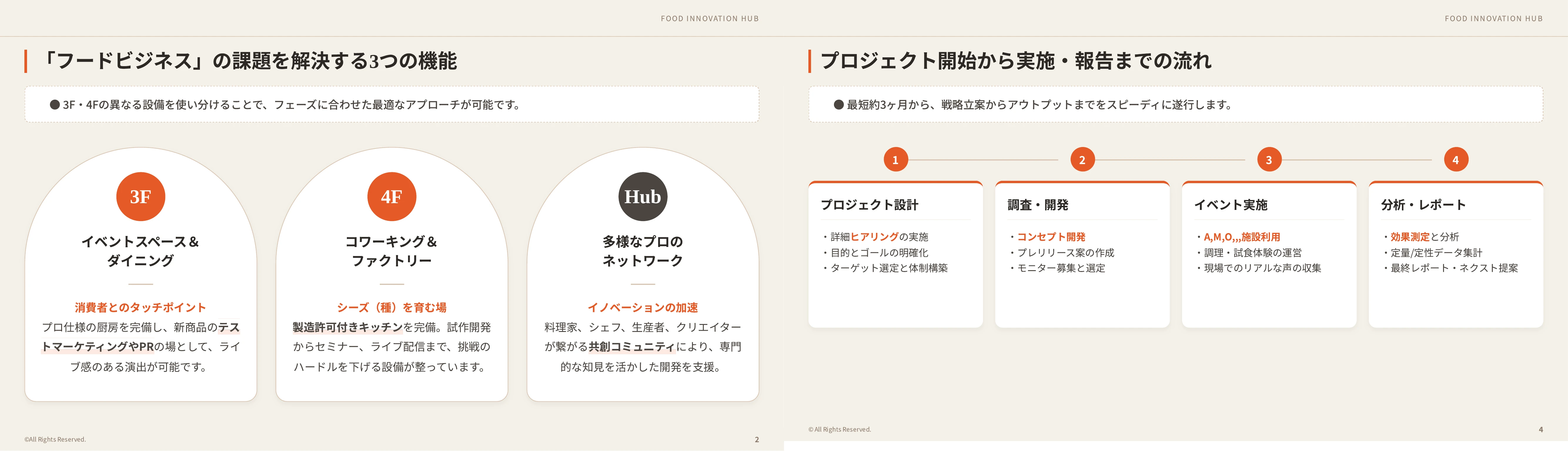
The first is the client proposal slide. It generates a proposal deck covering the plan, schedule, and estimate for the client contacts and decision-makers who will review it. Teams have to prepare a proposal deck for every pitch and every new project, yet they want their hours to go into the plan and the creative, which leaves little time for slide design. With a briefing sheet PDF, a PDF of past results, and planning notes as source material, NoLang produces a deck that organizes everything a proposal needs, in a short time. That shortens the preparation for pitches and new business and frees up more capacity for the planning and creative work itself.

The second is the monthly report slide. It generates a deck that reports campaign performance to the client in charts and figures. Reports have to go out for every client every month, and the more clients an agency has, the more time reporting takes away from improving the campaigns themselves. With an ad performance report PDF or research data as source material, NoLang builds a monthly report deck that makes the results visible. That reduces the reporting workload and leaves more time for analysis and improvement proposals.
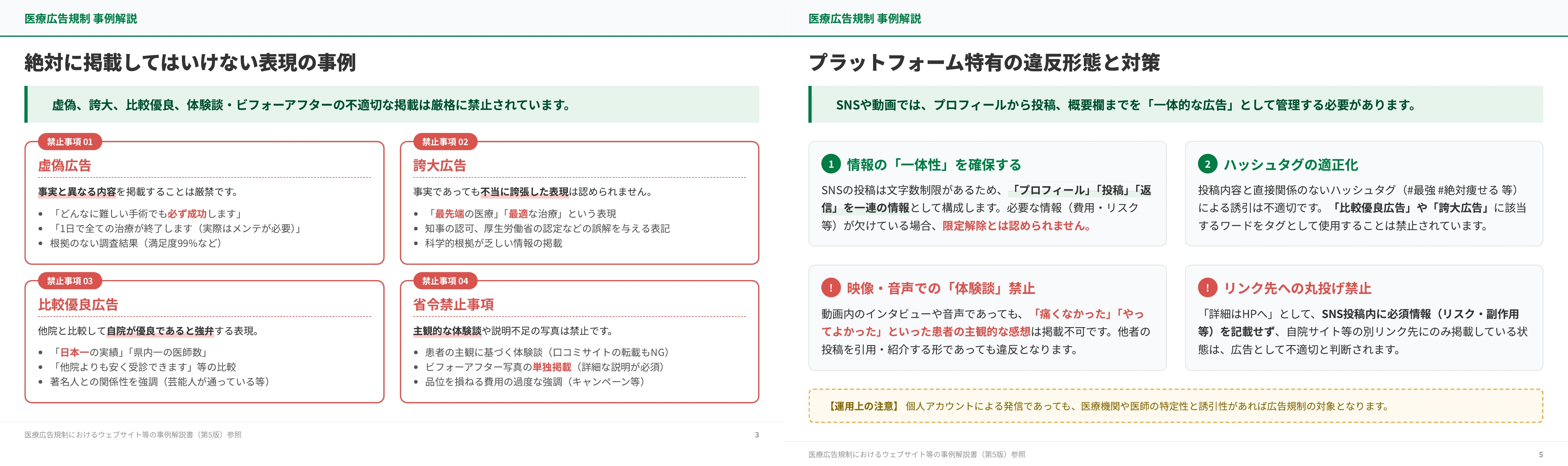
The third is the slide for briefing clients on changes to advertising rules. It generates a deck that explains changes in official documents clearly, with sources cited, for the advertisers themselves. Every time advertising regulations or industry rules change, an agency has to prepare an explanation for all of its clients, and pulling the key points out of official documents and reorganizing them into slides takes real effort. With the official document PDF as source material, NoLang produces a briefing deck that lays out what has changed, in a short time. That gives the agency a way to inform every client quickly and accurately when rules change.
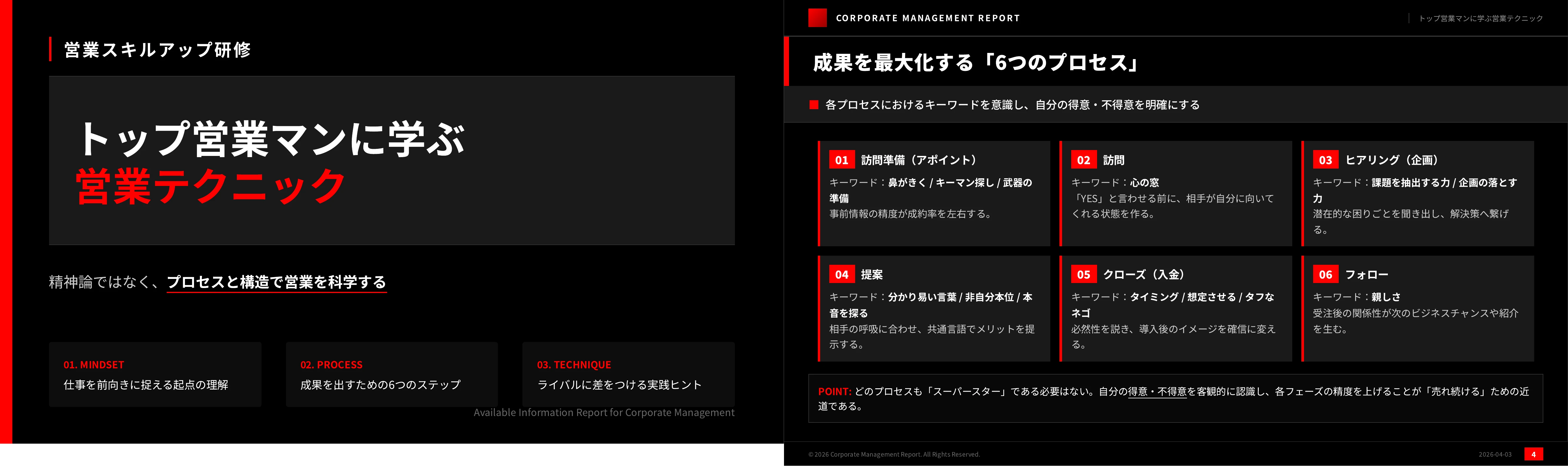
The fourth is the internal training slide. It generates training decks that share industry knowledge with in-house staff such as sales people and planners. Teams want to keep training material for regular study sessions up to date, but client work comes first and internal documents rarely get attention. With an industry report PDF or internal documents as source material, NoLang produces training decks ready for a study session. Even under the pressure of client work, teams can keep their training content current and keep knowledge sharing and skill development going internally.
Looking ahead
NoLang will continue to strengthen the product to reduce the burden of preparing proposals, reporting, and running training in the advertising and creative industry, and to make client-facing work more efficient. Mavericks also plans to keep expanding the sample slides by business type and by task, reflecting feedback from people working in the field.
Footnotes
-
Dentsu, “Advertising Expenditures in Japan 2024” (published February 27, 2025, in Japanese) ↩
-
Smart Slide, “Survey on Working Conditions in Sales 2021” (400 sales and sales-planning staff, conducted October 2021, in Japanese) ↩
-
Hammock, “Survey on How Sales Staff Prepare for Client Meetings” (1,000 staff in sales and sales-planning departments, conducted October 2025, in Japanese) ↩
-
Shirofune, “Survey of 83 Advertising Agency Executives” (conducted March 2020, in Japanese) ↩
-
Persol Career (doda), “Average Overtime Hours by Job Type in 2023” (15,000 working professionals, published January 2024, in Japanese) ↩
-
Teikoku Databank, “Survey on Corporate Trends Regarding Labor Shortages” (January 2025, in Japanese) ↩