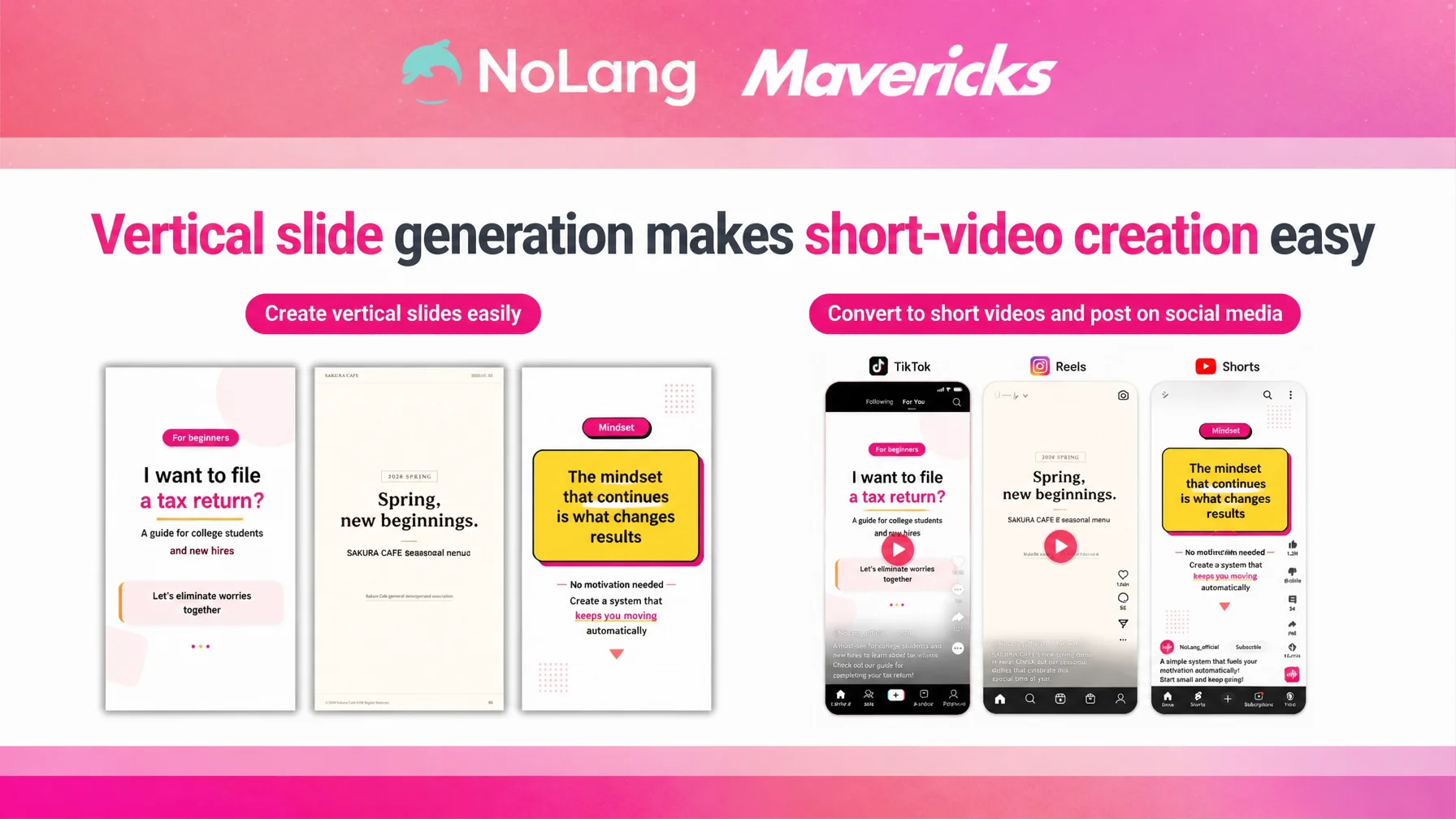
Mavericks, Inc., the Japanese company behind the AI video generation service NoLang, will add vertical 9:16 slide generation to NoLang’s slide generation feature, sized to fill a smartphone screen for TikTok, Instagram Reels, YouTube Shorts and similar platforms. The update is scheduled for release at the end of April 2026. With it, NoLang can automatically build slides that fit a phone screen exactly, starting from text or a PDF document. Generated slides can then be finished in three editing modes, Text Editing, AI Editing and Insert Page, so users with no video editing or design background can produce social carousel posts, vertical digital signage and smartphone-oriented training material at volume.
Demand for smartphone-screen content is growing, and production workload is the bottleneck
As people consume information mainly on smartphones, the vertical 9:16 format led by TikTok, Instagram Reels and YouTube Shorts has become a primary channel for corporate communication. A survey by Japan’s Ministry of Internal Affairs and Communications also shows that time spent online via mobile is increasing across every age group1, so audiences encounter full-screen smartphone content more often each year.
Vertical video advertising has already spread among companies. A November 2025 survey by PLAN-B Inc. found that 58.7% of companies had already run vertical video ads, and roughly 60% of those companies rated them as more effective than other forms of web advertising2. A separate survey by GLAPentertainment, covering 2,972 people in their 20s to 40s, found that more than 70% of TikTok users watch for 10 minutes or more in a single session, and that 65.7% said a short video had sparked their interest in a product or a place3. Short-form content read on a phone screen is not only an awareness channel; it also moves attitudes and purchases.
At the same time, the most common problem companies cite is that creative production takes too much work to sustain at volume, named by 49.0% of respondents, and about 62% outsource production to an external partner or run a hybrid of in-house and outsourced work2. Continuously producing phone-sized material suited to TikTok, Reels and Shorts is a heavy burden for many companies.
NoLang’s slide generation is expanding to the vertical 9:16 size
To address the difficulty of producing vertical content for corporate social media, NoLang’s slide generation feature will add vertical (9:16) slide generation for TikTok, Instagram Reels, YouTube Shorts and similar platforms, scheduled for release at the end of April 2026.
From text or a PDF document, the AI automatically generates slides that fit a smartphone screen exactly. Users can give design instructions such as “a bright, playful design that stands out in a social feed” or “a friendly, hand-drawn style for recruitment communication,” as well as content and structure instructions such as “state the conclusion on the first slide and explain the reasons from the second onward, on the assumption that people swipe through it.”
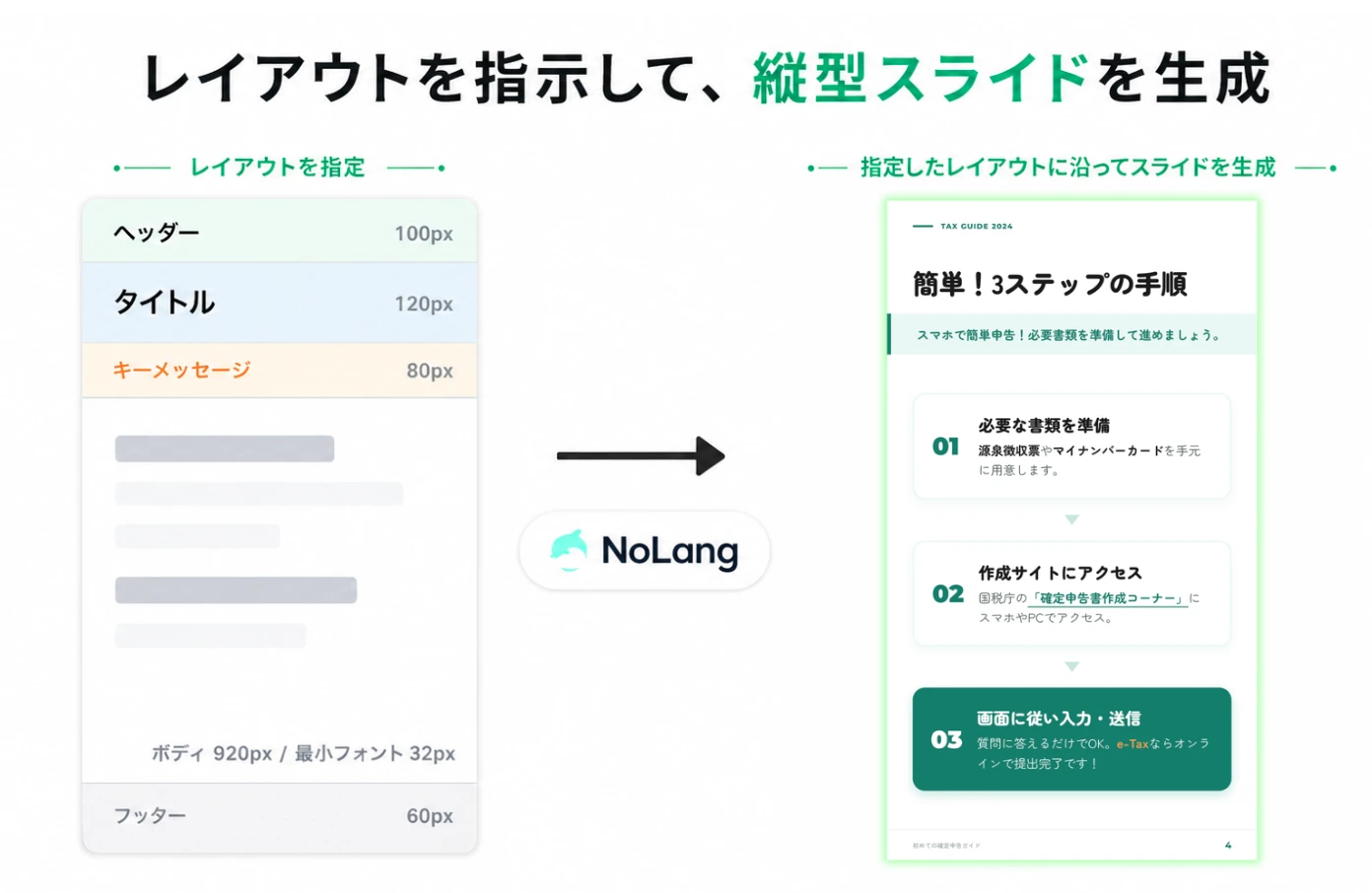
Detailed layout settings are also available before generation starts. A slide is built from five blocks: Header, Title, Key Message, Body and Footer. Each block can be shown or hidden, and its height can be adjusted in pixels. This removes much of the post-generation rework and produces vertical slides that match the company’s brand tone and preferred information density.
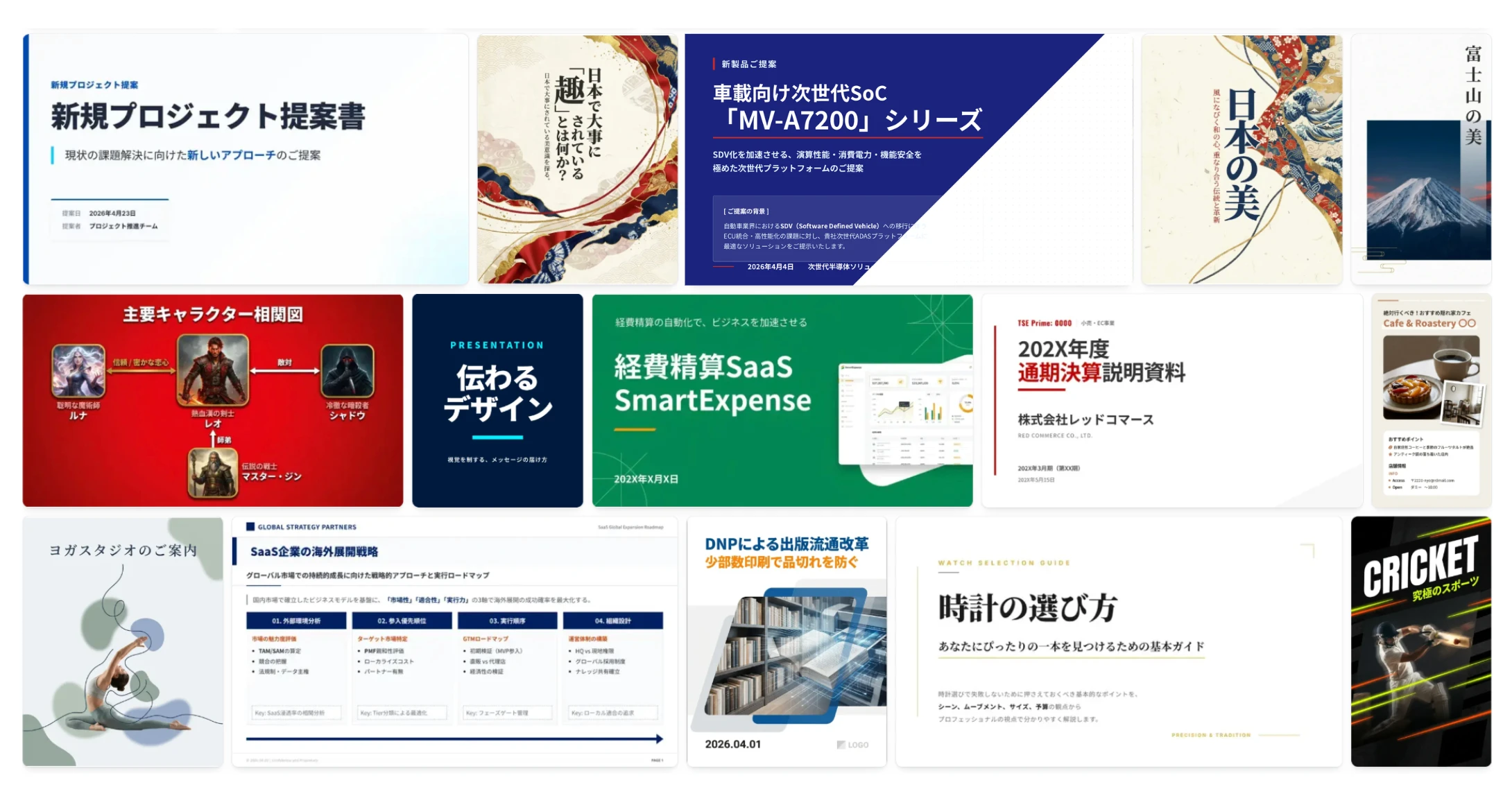
NoLang’s slide generation is also optimized for Japanese-language content. It is tuned for the legibility and line spacing of Japanese type and for layout and color patterns that suit Japanese business and social media conventions, so it offers a range of designs for the Japanese market that AI slide tools built overseas do not fully reproduce. The result reads naturally to a Japanese audience and fits domestic communication and marketing contexts as-is.
Finished vertical slides can also be handed straight to NoLang’s video generation feature and exported as a vertical short video. Clicking the Video Generation button on the slide screen passes the completed vertical slides into the video generation screen as the input document for the document explanation mode, producing a 9:16 short video with AI narration, subtitles and an avatar.
Vertical slides can also be finished in three editing modes
Generated slides can be edited with the same tools as horizontal slides, in three modes: Text Editing, AI Editing and Insert Page.
In Text Editing mode, users click a text element in the slide and replace any text directly, including the title, body and key message. Minor changes such as fixing a typo or updating a figure take effect immediately in the browser.
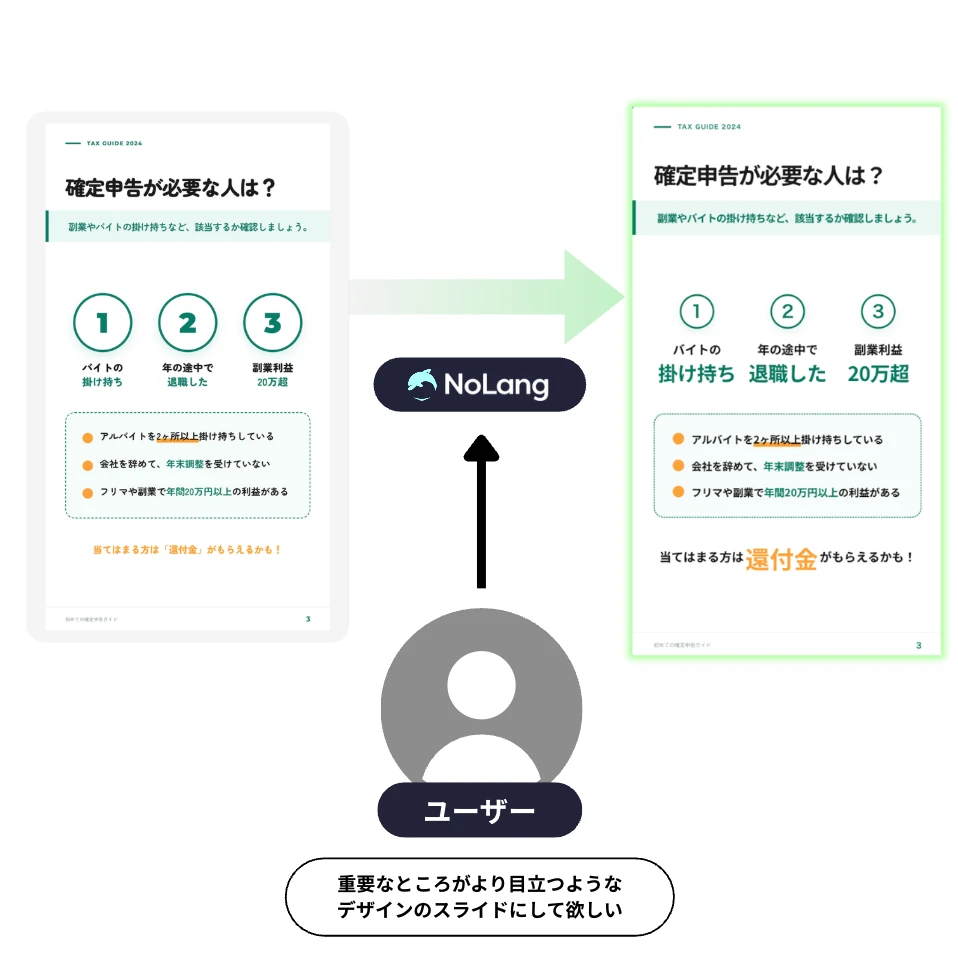
In AI Editing mode, users enter an instruction in plain language, such as “change the color of the word NoLang to green,” “remove the unnecessary triangle in the upper left,” or “make the slide simpler: cut the volume to 80% and enlarge the text,” and the AI rewrites the design and wording of that page. Details can be adjusted while the layout still fits a phone screen.
In Insert Page mode, the AI adds a new page before or after an existing one, following the context. An instruction such as “create a summary slide covering the key points of the PDF document” or “create a slide that explains the previous page in more detail” is enough to insert a page that keeps the same tone.
Use cases spread across social posts, carousels, signage and training
Phone-sized slide generation opens up a wide range of uses. Because a finished vertical slide deck can be passed directly into the video generation screen as the input document for the document explanation mode, one deck can be published both as still images for a social carousel and as a narrated vertical short video.
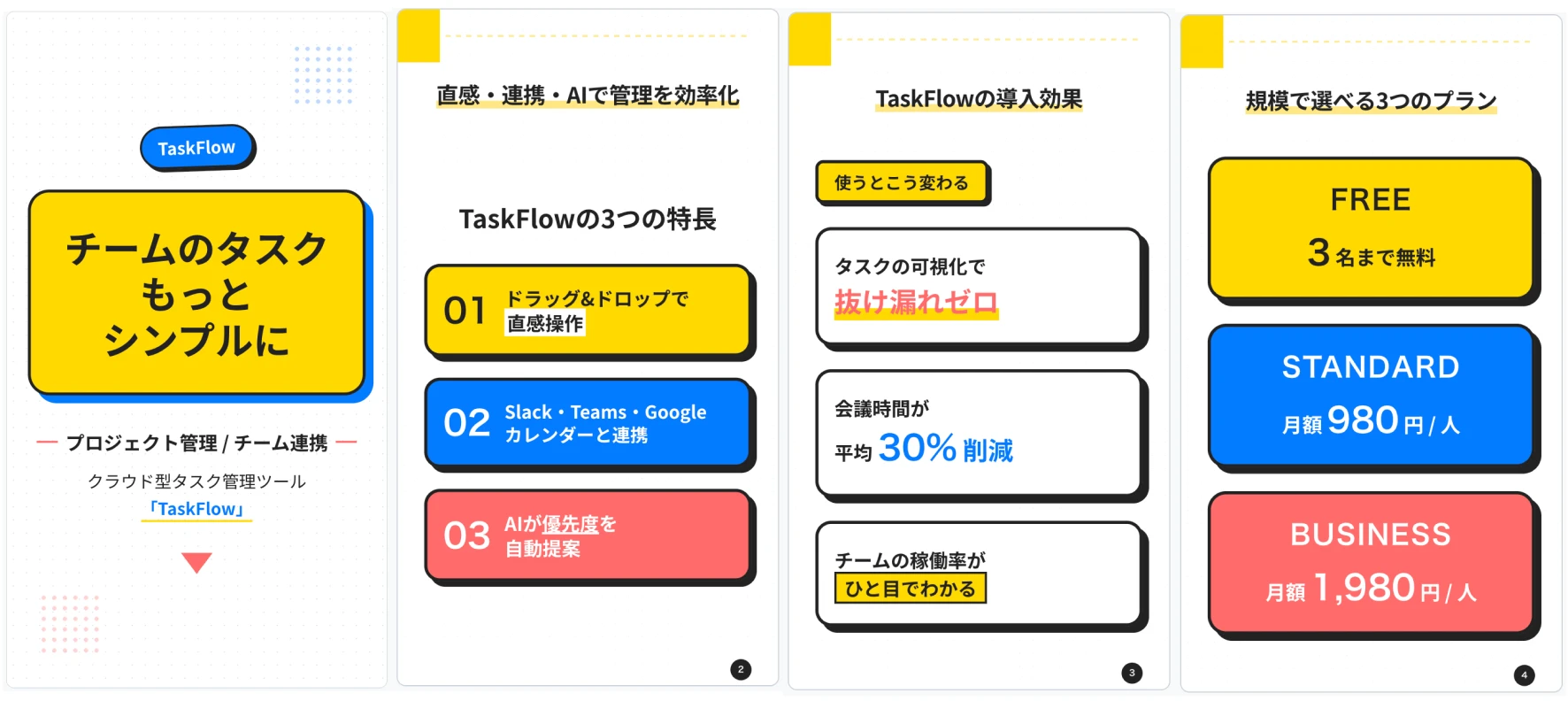
The first use is short-form social posting on TikTok, Instagram Reels and YouTube Shorts. Service introductions, know-how explainers, case studies and recruitment communication can be built as full-screen smartphone slides in as little as a few minutes and posted to social media. Turning the same content into a video adds AI-generated narration, subtitles and an avatar timed to the page transitions, so audio and subtitles carry information that a still-image carousel alone cannot, which also helps retention.
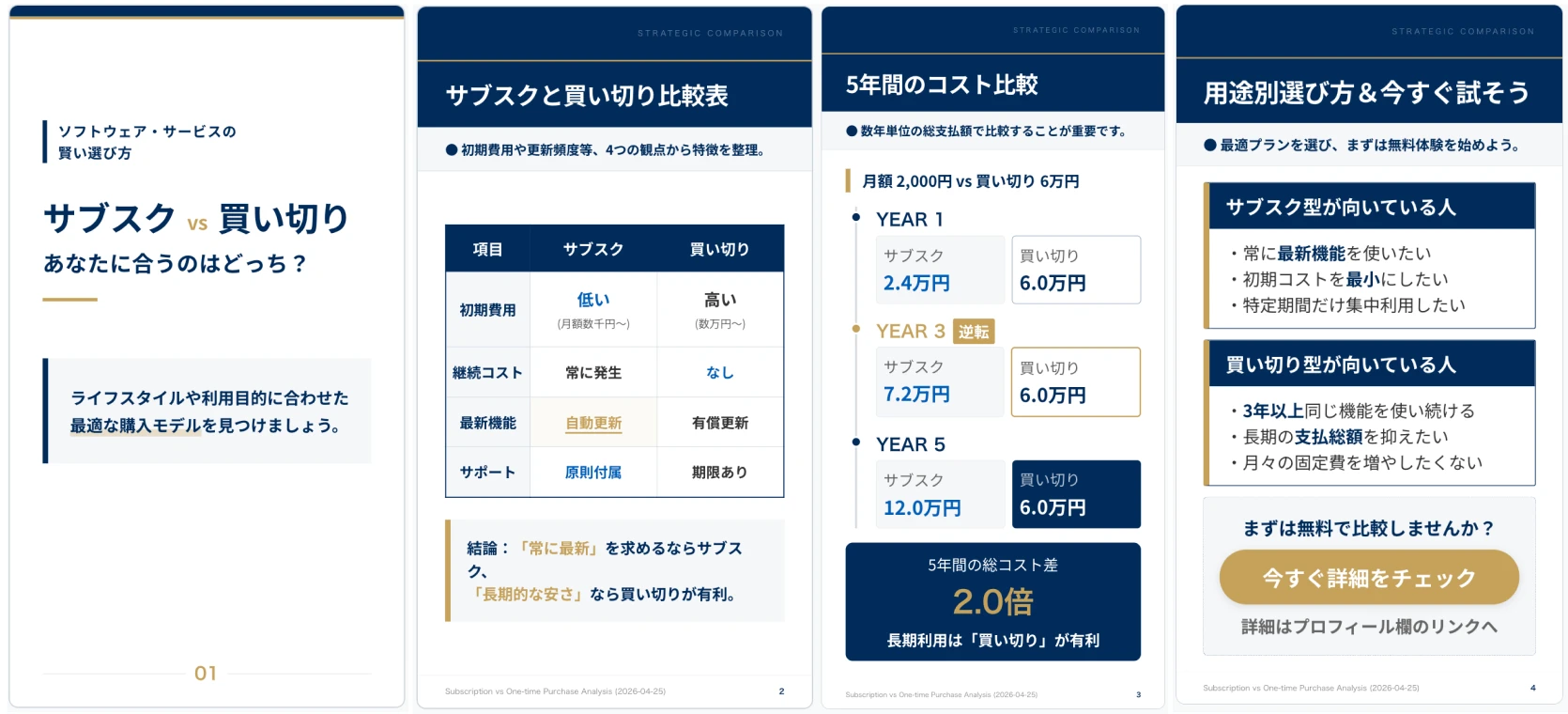
The second is image posts on Instagram carousels, X (formerly Twitter) and Threads. Posting several phone-sized slides in sequence supports storytelling: article summaries, comparison tables and step-by-step explanations can be delivered at a size that fits naturally into a social feed. Turning the same vertical slides into video lets a company reuse an angle that performed well as a carousel for Reels or TikTok, maximizing reach by running one asset across several channels.
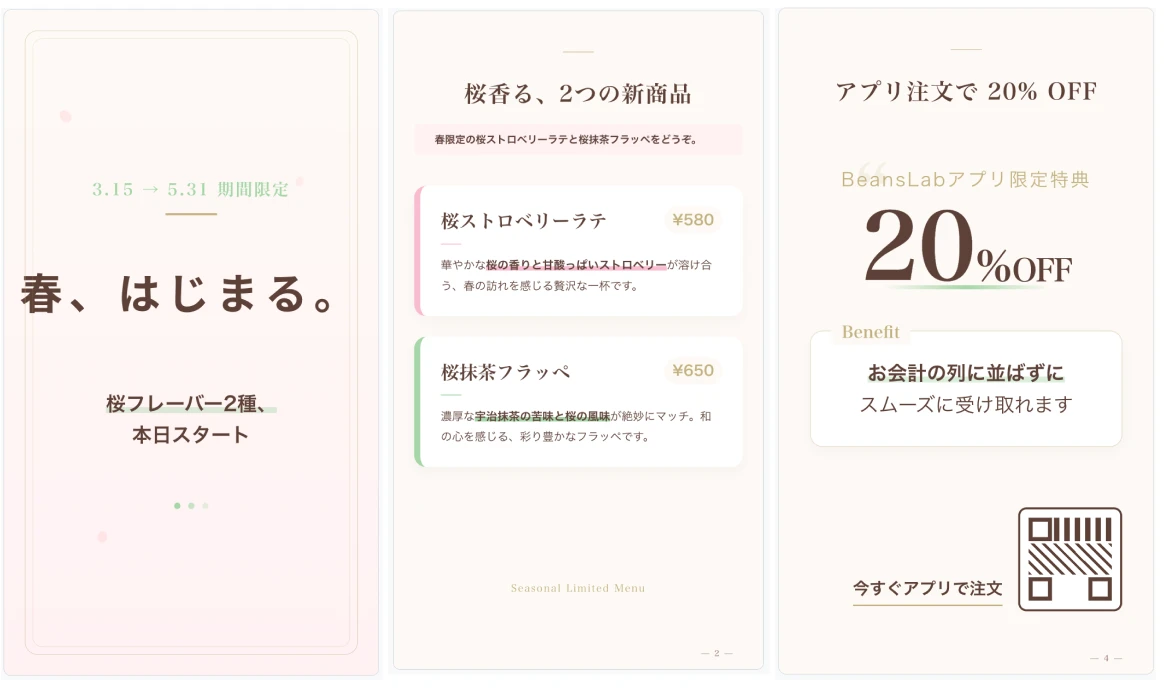
Third, the slides can be deployed to smartphone-optimized digital signage and in-store displays. Menus, campaign announcements and company introductions can be shown on the vertical displays and tablets installed in commercial facilities, office receptions and stores. Store staff can swap the content themselves daily or weekly, keeping up with sales and stock changes, which helps avoid lost opportunities by keeping the message timely for visitors. Playing the vertical slides as a looping video makes it easier to catch the eye of passersby who would overlook a still slideshow, and enabling narration lets an unstaffed reception desk or a late-night storefront actively explain product features and campaigns to visitors.
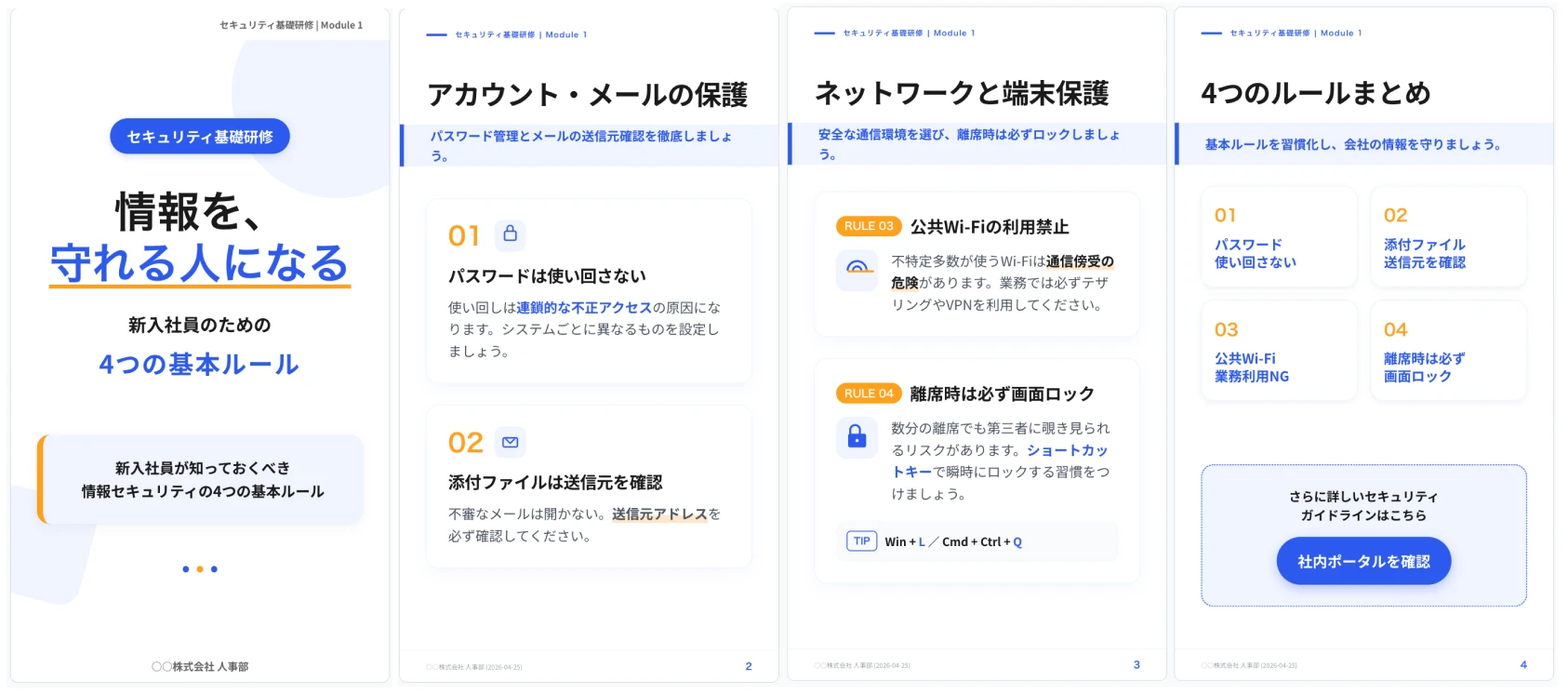
Internal training and manual distribution is a further use. Training material and work manuals meant to be read on a phone can be created at a size that fills the smartphone screen, making them easy to work through in spare moments such as a commute or a break. Converting them to video with AI narration and subtitles helps learners who struggle with long written manuals to follow the content by ear, while subtitles allow study with the sound off, for example on a commuter train.
Looking ahead
Mavericks, Inc. will continue to provide, through the AI video generation service NoLang, an environment in which the people responsible for communication can take existing information assets such as text and PDFs and expand them into a variety of formats themselves, helping to remove bottlenecks in corporate content production and communication.
Footnotes
-
Ministry of Internal Affairs and Communications, “Survey Report on Usage Time of Information and Communications Media and Information Behavior, FY2024” (in Japanese) ↩
-
PLAN-B Inc., “Survey on the state of vertical video advertising” (in Japanese; 196 advertising managers, surveyed online November 21-26, 2025) ↩ ↩2
-
GLAPentertainment, “Usage and purposes of vertical short videos” (in Japanese; 2,972 respondents in their 20s to 40s) ↩