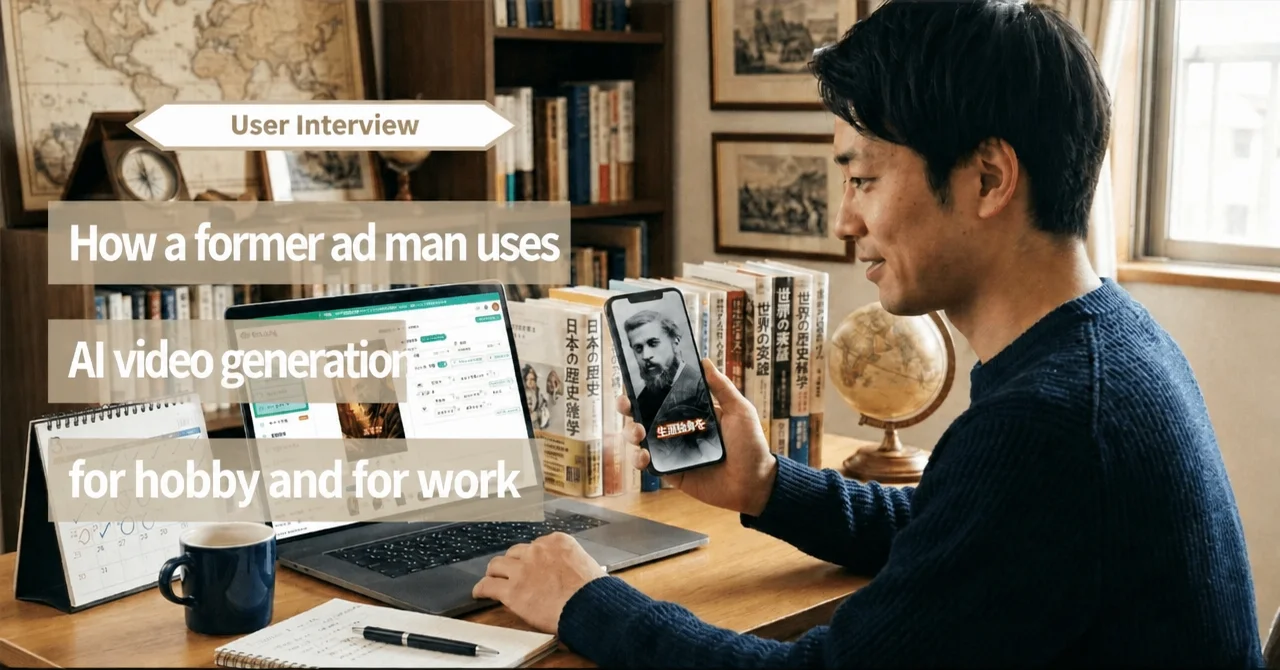
Back in his advertising agency days, Hashimoto worked in a world where a single illustration cost hundreds of thousands of yen and one promotional video cost millions.
Always strongly drawn to AI and the web, Hashimoto began looking for things he could do remotely when COVID-19 made it hard to meet people in person,
and today he makes vertical videos on history, historical figures and social thought entirely by himself, at a pace of three a day, posting them to YouTube every day.
“What used to cost millions of yen, I can now do all on my own.”
We asked Hashimoto, who keeps finding that gap fascinating and keeps chasing what is newest, about how he uses NoLang.
How Hashimoto came to use NoLang
― Could you tell us the background to how you started using NoLang?
One trigger was COVID, when we ended up in a situation where you couldn’t meet people face to face.
I was originally at an advertising agency, and now I run what is basically a one-person company.
So I started thinking I wanted to build something I could do remotely.
At the same time, I’d always had a huge personal interest in AI and the web. I thought ChatGPT was fascinating from the moment it started, and I was using it from the early days.
― So you’ve always had that interest in AI and the web. What were you doing at first?
At first I was doing something like a trivia diary on note.
I wrote about my experience from my agency days and my own failures, like a diary.
Alongside that I was also experimenting with the image generation AI of the time. A year and a half on one, then about a year on another, so I kept it up for around two years in total, I suppose.
That whole time I kept thinking “I want to do YouTube too,” and at the end of last year I finally launched a channel.
I started it as a place to experiment, part hobby and part business.
― So you launched the YouTube channel at the end of last year. What motivated you to start?
To put it more fully, because I was at an advertising agency, advertising used to cost a huge amount of money.
Commissioning a single illustration would routinely cost 50,000, 100,000 or 200,000 yen, and making one promotional video was a world of millions of yen.
And now one person can do all of it. I found that gap really fascinating.
I’d also been involved with anime and manga content for many years, and there was an era when tens of millions or even hundreds of millions of yen went into video production for expos.
Wondering whether I could turn content into money, I felt I couldn’t move forward unless I tried it myself, so I’ve been running one experiment after another.
NoLang is what I arrived at along the way.
The flow behind three shorts a day
― What kind of videos are you making now?
I make roughly one-minute vertical videos on themes like history, historical figures and social thought. I’m doing three a day.
I love history, so there’s a hobby side to it, and there’s also the fact that I want to say a thing or two about society today (laughs)
▼Here is a video Hashimoto has actually posted
― Three a day is quite a pace. How do you work through it?
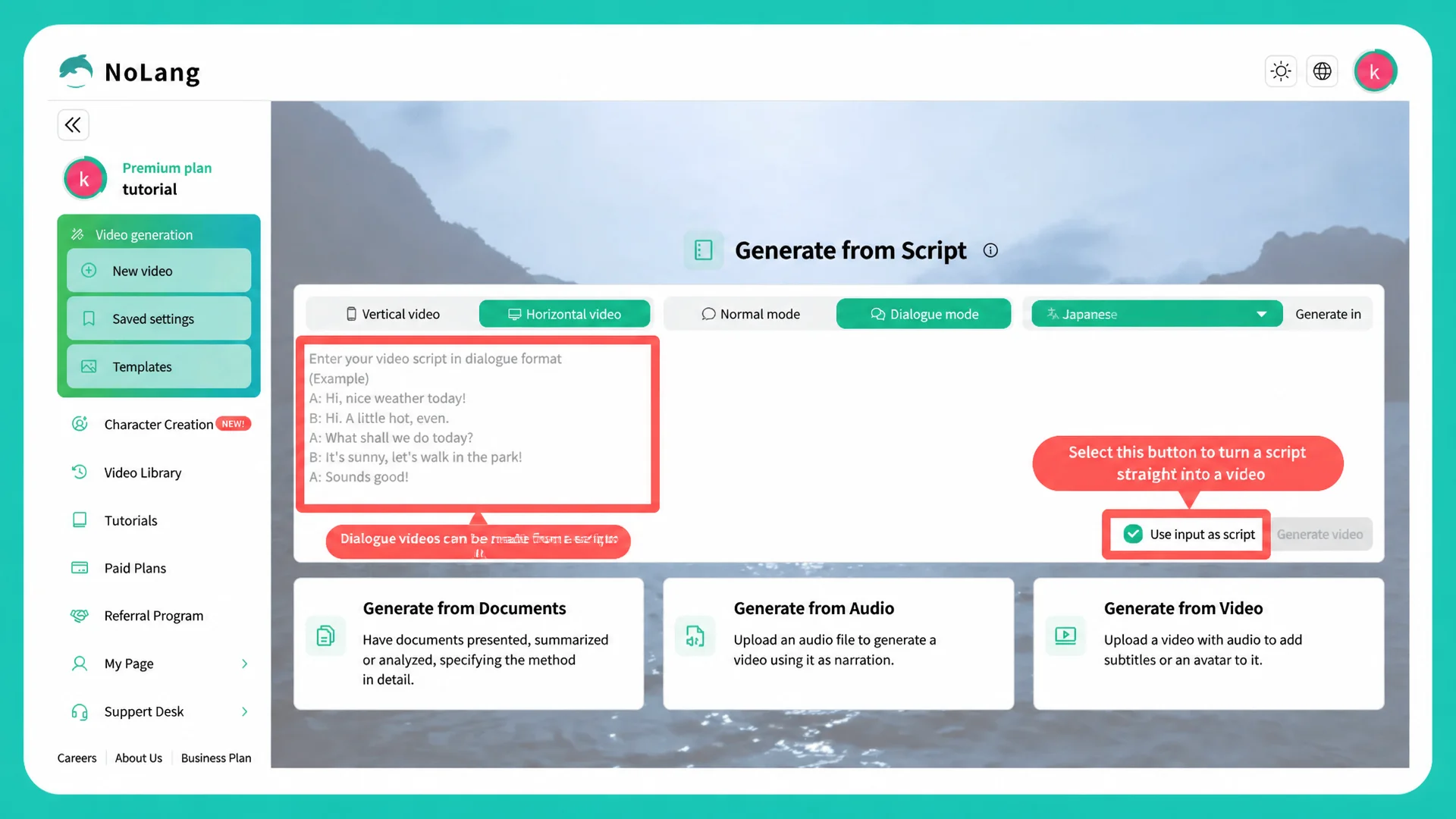
I customized ChatGPT and built myself a setup where, to put it simply, the script is finished just by answering yes, yes, yes.
You only answer a few things in a custom GPT and the script is done.
After that I make a few small edits, and when I put that script straight into NoLang, that basically gives me a finished video.
― That’s a very efficient flow.
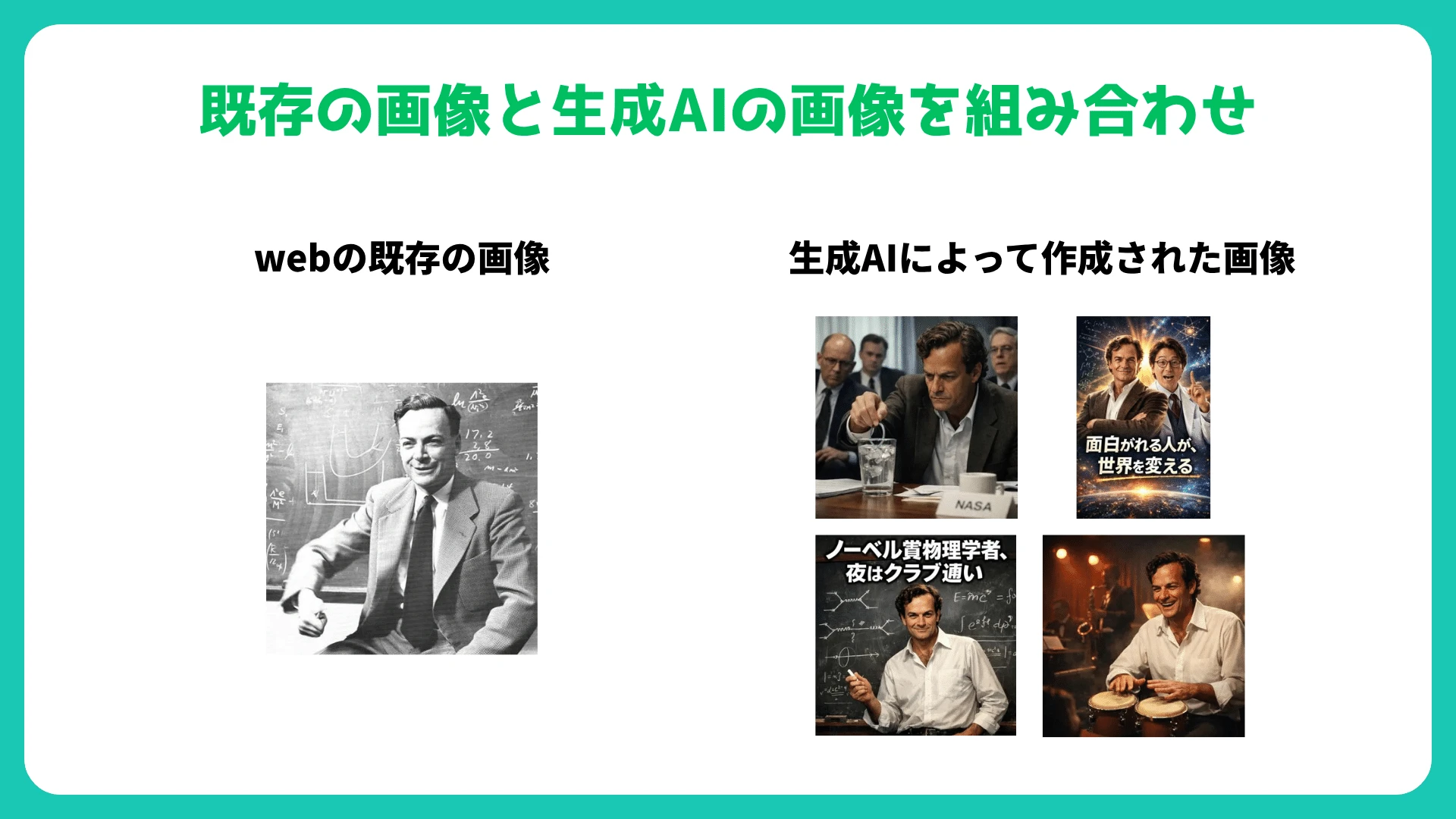
It is. Though if I just put the script into NoLang, the images inevitably come out ordinary, so for some of them I use images made with the image generation feature of ChatGPT.
Leaving the script to NoLang and generating only the images myself in ChatGPT to swap in — that’s my current production style.
― Was there trial and error before you settled on that style?
There was. Early on I tried doing something like a baby series, and when cats were the trend I rode that too, and I tried all kinds of genres.
I tried several other tools as well, but NoLang is where I finally landed.
― You chose NoLang after trying various tools. What was the deciding factor?
Number one is that you can do everything in one place, from editing to image generation.
There is other software like it, but NoLang was the easiest to use.
In my case a video gets finished by writing the script in ChatGPT and handing it to NoLang, so I’ve cut the time production takes quite a lot.
Also, since I started using NoLang, I can feel that the image quality has improved compared with the early days.
At first there were times when Chinese signage would show up in an image, but my impression is that it has improved a great deal recently.
Being able to keep making videos every day is thanks to that efficiency.
Using NoLang for work
― Are there situations besides YouTube video production where you use NoLang?
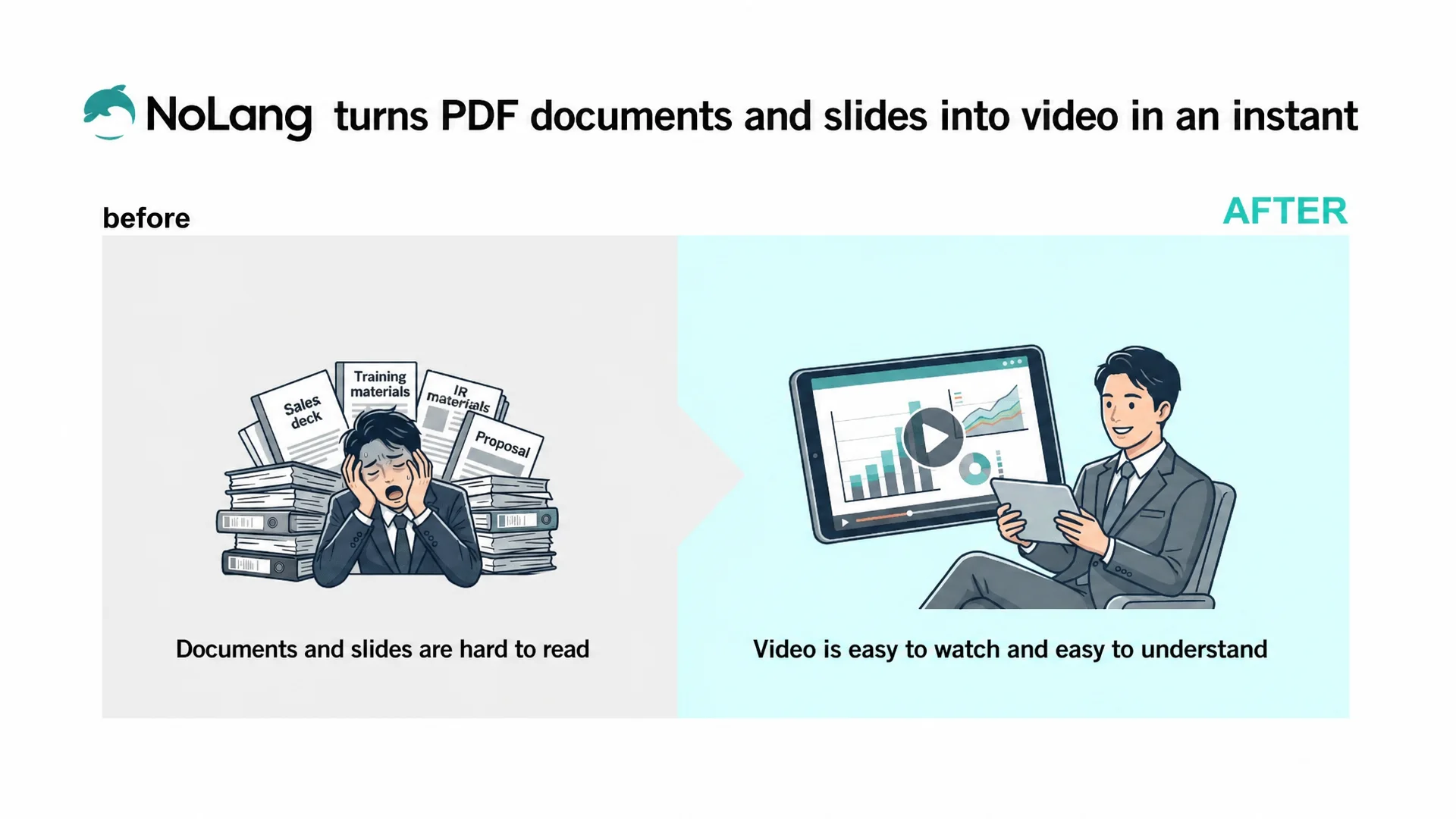
Recently I’ve started using the mode where you upload a proposal document and it turns straight into an explainer video.
For work, when I load in a presentation proposal, out comes a video that explains it.
I thought that was amazing.
― In what situations do you use it?
For example, if I put an advertising agency presentation proposal into NoLang, it becomes a video that explains it just as it is.
It looks like it could be used for things like remote briefing sessions, so I’m thinking of making more and more use of it from here.
― So that’s a different use from the videos for your YouTube channel.
That’s right. The YouTube videos are part hobby and part business, but in terms of applying it to work, this presentation use is more direct.
I’m still exploring it, but I’m thinking of making more and more use of it from here.
Where the channel goes from here
― By the way, how big is the channel you run now?
It’s come up to a little over 1,000 people.
I do think it would be fine to have tens of thousands or hundreds of thousands (laughs), but I also know I need to study how to grow it from here.
― What are you thinking about for running the channel going forward?
When I was talking with people from other countries, I got told things like “why don’t you put it out in English?”, so I’m thinking of expanding into English-language videos this year.
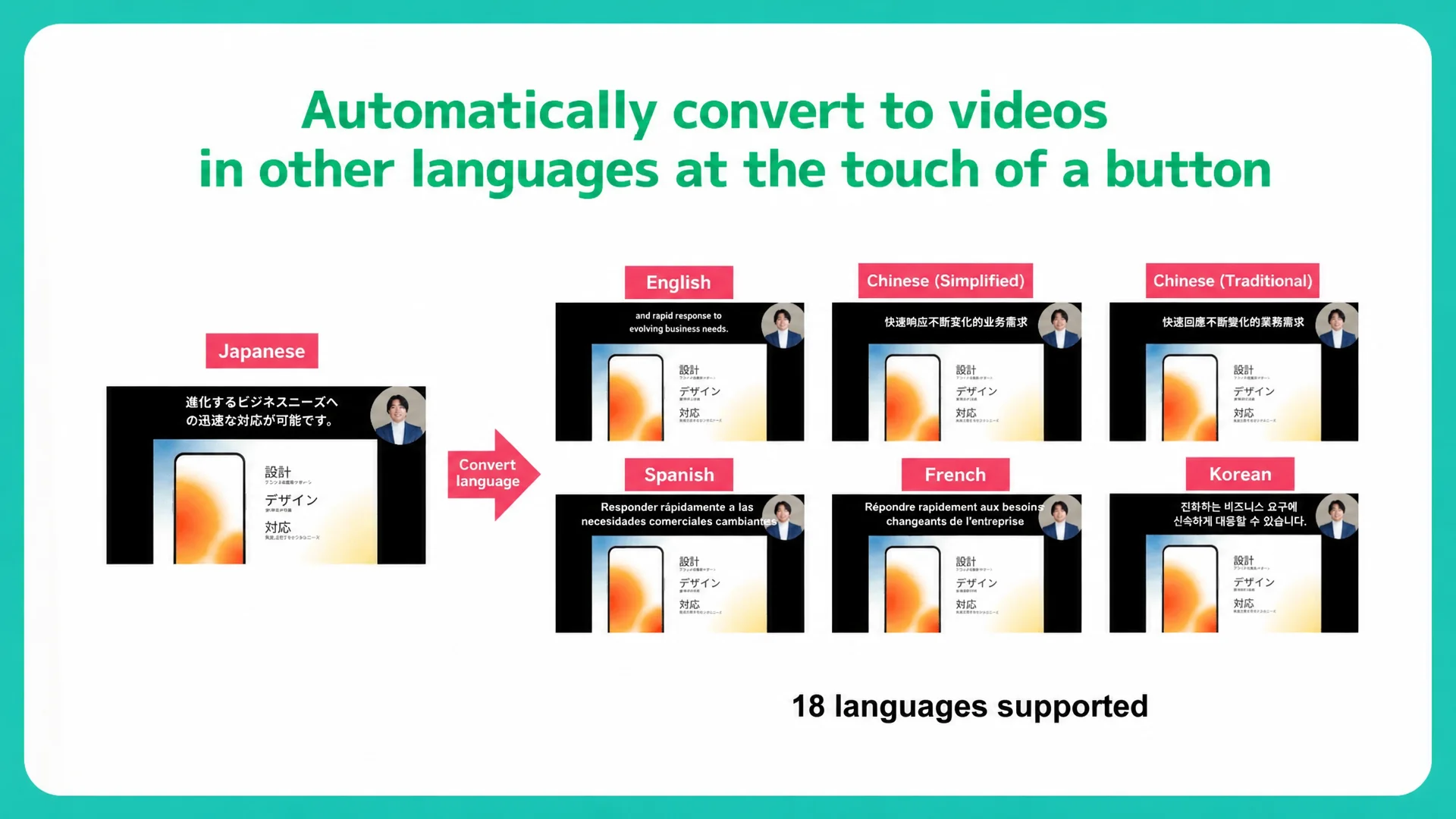
I think content about history and historical figures would find demand in English too.
Expanding vertical videos to TikTok and Instagram is only a matter of time, and I intend to do it.
Right now I’m doing this part as a hobby and part for profit, so my time is limited, and I plan to move ahead by setting priorities
― Thank you very much for sharing such valuable stories with us today. We’ll keep supporting you so that posting videos on YouTube, TikTok, Instagram and other social media becomes easier and simpler. We look forward to continuing to work with you!
[Editor’s note]
50,000 or 100,000 yen for a single illustration. Millions of yen for one promotional video. After hearing the figures Hashimoto took for granted in his agency days, his story about making three videos a day with NoLang looked different again.
Building a script with a custom GPT, generating only the images in ChatGPT and swapping them in, then finishing the video in NoLang. That production flow looks simple at first glance, but it rests on more than two years of continually trying different tools and genres.
And the words “I can’t move forward unless I try it myself” seem to capture Hashimoto’s stance on using AI.
A YouTube channel that started as a place to experiment, part hobby and part business, has now grown to the point where an English rollout is in view.
We’re very much looking forward to seeing where Hashimoto’s video production goes next, and how the channel grows.
▼Hashimoto’s YouTube channel is here


Unauthorized use, reproduction or duplication of the text and the specific content published in this article is strictly prohibited.