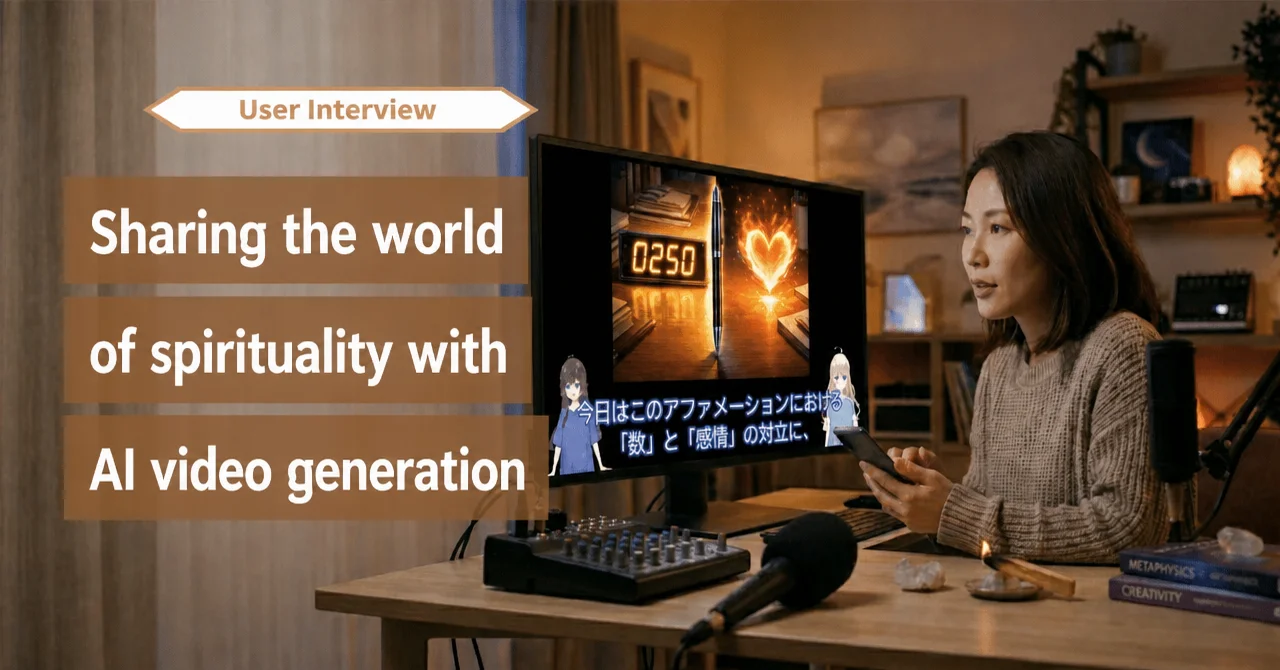
Kokoro works as an administrative clerk at a school, and in her own time she makes videos about spirituality and psychology.
An audiobook she listened to — with its message of “live with positive emotions” — left a deep impression on her, and she now creates “videos that help you picture a version of yourself doing well in your own occupation.”
As she kept making videos, she arrived at an idea that goes beyond her own channel: turning her prompts into templates so that anyone can make the same kind of video.
We asked Kokoro about how she uses NoLang and about what she wants her videos to give people.
From a single book to making videos
― What kind of work do you do day to day?
I work as an administrative clerk at a school.
I handle all sorts of things: ordering supplies for the students and the teachers, payroll, even managing the buildings.
― Could you tell us what led you to start making videos with NoLang?
When I asked around for book recommendations for the school library, someone told me about a book called “Chikyu Daibakuro.”
Apparently it was popular about two years ago, and it’s full of spiritual ideas.
That’s how I learned there are so many books like that out there, and since I listen to a lot of audiobooks, as I listened to more of them I started thinking, “wow, this is a world where everyone is saying amazing things” — and it got interesting to me.
That’s when I thought, “maybe I’ll try making explainer videos about this.”
― So it started from a chance encounter. Why did you choose spirituality and psychology as your themes?
Well, when I listen to audiobooks, a lot of them say things like “if you think this way, things go well” or “live with positive emotions.”
Working at a school and dealing with people in all kinds of positions, I came to feel really strongly that this way of thinking matters.
So I started wanting to make videos on those themes, as a way of passing that mindset on to other people.
The reassurance of working in Japanese
― Once you decided to make videos, how did you find your way to NoLang?
First I asked the AI tools I use every day, like ChatGPT and Copilot: “I want to make this kind of video, can you recommend a site?”
The first thing that came up was Domo AI. I tried it, but because it’s a foreign service, the people it generates end up looking foreign.
Even when I said “please make the background Japanese,” the feel of it was a bit off, so I decided it wasn’t for me.
― What did you do from there?
I kept looking, and I was told, “this one is made in Japan, so the interface is in Japanese and it should be easy to use” — and that was NoLang.
Being able to work in Japanese was reassuring for me.
When I looked up how to do something, the information came up in Japanese too, so I didn’t get lost as easily.
― So being able to use it in Japanese was the deciding factor. What was your impression once you actually started using it?
At first I was trying to make short videos, but when I entered one minute, the video that came out was longer than a minute, and trimming the script to adjust it was a bit of work (laughs).
I didn’t know how much to cut, so I’d play it back a few times, check, and edit as I went.
But as I used it more, I got pretty used to it.
Now I make videos in the mode where you enter text to generate the video, and I have it set so the AI automatically generates images that match the content.
Picturing your ideal self in a video
― What kinds of videos are you making with NoLang specifically?
Right now I mainly make horizontal videos.
For the theme, I’m thinking of it as “videos that help you picture a version of yourself doing well in your own occupation.”
Actually, audiobooks often bring up the idea that “picturing a successful future makes things go well.”
They talk about living with positive emotions.
So I thought, for example, a scene of a nurse working with real energy, or a teacher getting along well with students — I wanted to make videos that make it easy to picture “myself doing well” in each occupation.
― Videos that let you picture yourself doing well in your own occupation — that’s a unique theme. Do you have particular preferences about the format of the videos, too?
I use a format where two anime-style girl avatars have a conversation.
One of them says “this is what I’m struggling with,” and the other answers “here’s a way to look at it” — that kind of exchange.
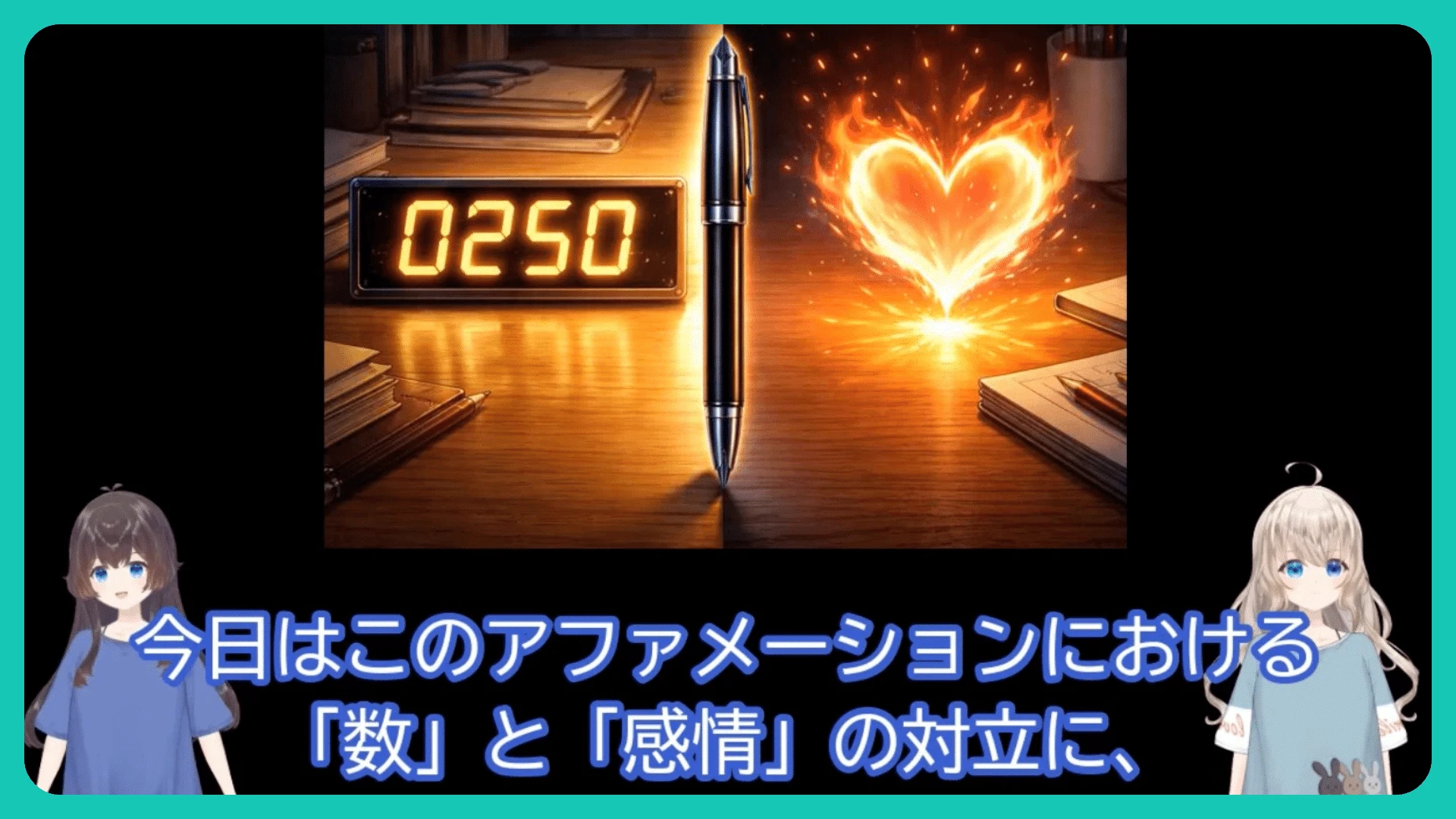
I really like that conversational format, so that’s why I use it.
For the avatars, I tried various ones out of NoLang’s library of more than 100 avatars, and settled on the style I use now.
Also, when I make a video, if I put the occupation into the prompt, the AI comes up with several lines of dialogue suited to scenes from that occupation.
Using the generated lines in the video as they are has become my routine now.
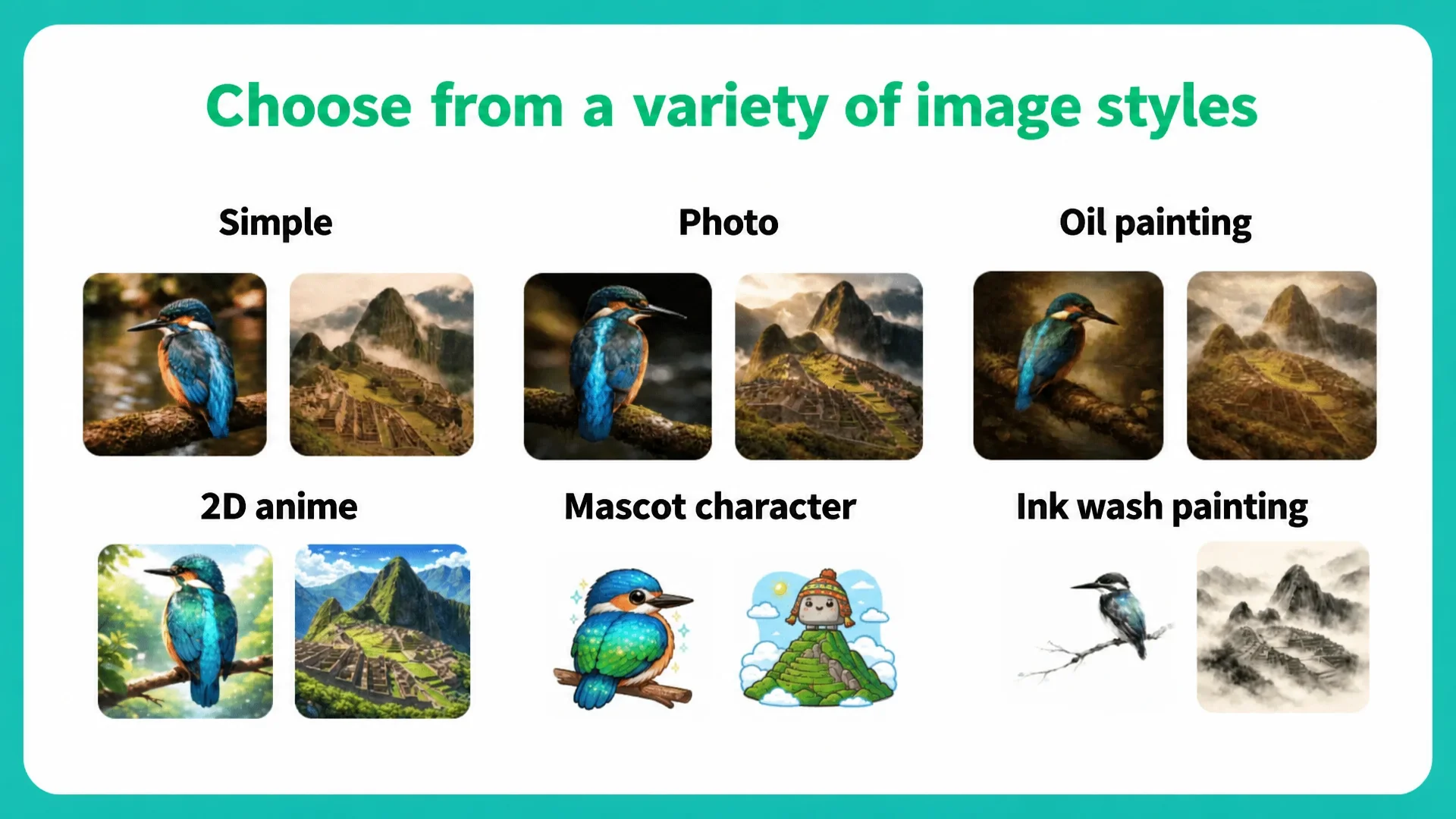
I have image generation turned on as well, so it generates images that match the content.
Changing the style changes the feel of the images that come out, so I try out different ones and go with whatever I like.
I don’t have a handle on all of the features yet, so right now I’m making videos through a lot of trial and error.
Toward prompts anyone can use
― How would you like to use it going forward?
I’m planning to upload videos to YouTube, and along with that I want to share “here’s how I made this video with NoLang.”
I think it would be interesting if I could turn the “prompt you fill in with an occupation” that I’ve been testing into a template, so other people could make the same kind of video.
Something like, “put in this prompt and you can make a video of yourself doing well in your own occupation.”
― That would also help spread the word about how to use NoLang.
That’s right. I’m still going back and forth on whether to put it in the description or inside the video itself (laughs).
I’d be really happy if the people who watch it thought, “okay, I’ll give it a try too.”
The more occupations I cover, the more people it will resonate with, I think, so I’m planning to start by making a lot of sample videos.
I haven’t been using NoLang all that long, but I’ve already gotten used to the feeling of putting in a prompt and having a video come out,
and I’m thinking of uploading my first video to YouTube this weekend.
I’m doing this alongside my job at the school, so I also want a setup that takes as little effort as possible.
If I keep the prompt as a template, I think I can turn them out one after another — a nurse version, a teacher version, a sales version.
The more occupations there are, the more people can see it as being about them, so it’s something I really want to keep doing.
― Thank you so much for sharing so many valuable stories with us today. We’ll keep developing NoLang so that you can use it for a long time to come, and we look forward to staying in touch.
▼ Kokoro’s YouTube channel (in Japanese)


[Editor’s note]
A chance meeting with a single book led to something completely new: making videos. Hearing how Kokoro got started, we were reminded that encounters like this are lying around everywhere in everyday life.
What stayed with us most was the idea of “delivering the way I made my videos, not just the videos themselves.”
By adding occupations — a nurse version, a teacher version, a sales version — the videos become something more people can receive as being about them.
That instinct to spread the making itself feels like a perspective only Kokoro could have, after years of dealing with people in every kind of position.
Even though she has only just started using NoLang, her words — “maybe I’ll upload my first video this weekend” — carried a real sense of momentum.
We’re very much looking forward to seeing what videos come next.
About Kokoro
YouTube channel: Spiritual Exploration Room (kokoro探求), in Japanese
https://www.youtube.com/@kokoro探求
The text and specific content published in this article may not be used, reproduced or reprinted without permission.