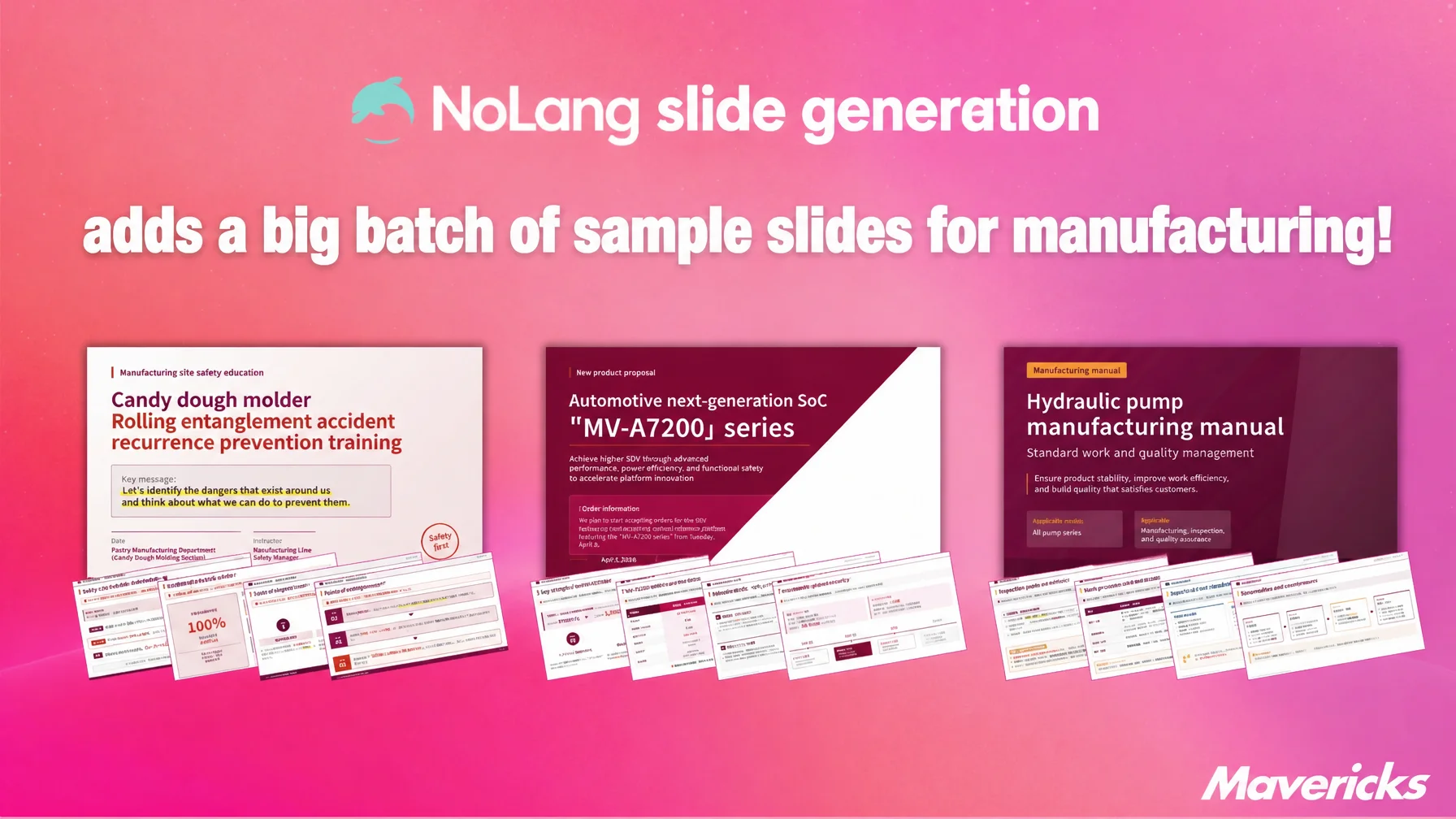
Mavericks, Inc., the Japanese company behind the AI video generation service NoLang, has added a new set of manufacturing sample slides to the slide generation feature. Users upload existing materials such as Word work instructions, PDF manuals, SOPs and safety manuals, and NoLang automatically generates explanatory slides with process diagrams as well as training videos. The samples cover five scenarios, from explaining work procedures and splitting long training sessions into shorter modules to safety education and multilingual training for overseas sites. They are designed to reduce the workload of documenting and sharing shop-floor knowledge, passing on skills and keeping safety education running with limited staff.
The growing burden of work instructions and training materials on a shrinking workforce
In manufacturing, documenting shop-floor knowledge and rolling it out to workers happens constantly: new product launches, production line changes, equipment upgrades, safety education, compliance training and expansion to overseas sites. At the same time, the staff available for this work is stretched thinner every year, and many sites can no longer keep up with organizing and sharing what their people know.
The first problem is the cost of producing manuals and training materials. Every new product launch or line change requires work instructions and manuals to be updated, and teams routinely rebuild Word-based procedures into slides or prepare long training sessions. According to Japan’s Ministry of Health, Labour and Welfare Basic Survey on Human Resources Development (fiscal 2018), 86.5% of manufacturing establishments reported problems with passing on skills, the highest share of any industry, which makes building a system for transferring skills and know-how a major challenge1. The 2024 White Paper on Manufacturing Industries adds that only about 60% of manufacturers run planned on-the-job training, while the fine details of shop-floor work depend on the experience and feel of veteran workers and are hard to convey in text or diagrams2. Documented materials such as work instructions, manuals and training decks therefore determine whether operations stay consistent, yet in many cases no one is assigned to them full time and they are produced alongside someone’s main job.
The workforce that should absorb this documentation burden is under increasing pressure. The 2024 White Paper on Manufacturing Industries reports that the number of manufacturing workers aged 34 or under fell by about 6.9 points compared with 2002, intensifying competition for young talent2. The employee surplus and shortage diffusion index for small and medium-sized manufacturers hit minus 20.4 in 2023, a shortage as severe as before the COVID-19 pandemic3. Even as staffing tightens, the range of material that needs to be prepared keeps widening: the Ministry of Health, Labour and Welfare’s occupational accident statistics put manufacturing casualties at 26,676 in 2024 (final figures), still high among all industries, so safety education has to be updated and distributed continuously4.
Manufacturers need to keep work instructions, training materials and safety education current with limited staff while also transferring skills and supporting overseas sites. To address this, NoLang has added new manufacturing sample slides to its slide generation feature.
See the training video automation solution Read the guide to making training videosFrom existing manuals and procedures to slides and video in one pass, now with manufacturing samples
The NoLang slide generation feature turns source material such as text and PDFs into slides complete with diagrams, charts and headings, and then outputs them as a narrated video. Everything from building the slides to producing the video happens in a single service, replacing a workflow that previously required a separate document tool and video production tool, each with its own learning curve. Word work instructions, existing PDF manuals, SOPs (standard operating procedures), safety manuals and ISO documents can be used directly as source material, so the documents already accumulated on the shop floor can be turned into briefing decks, training content and safety education materials.
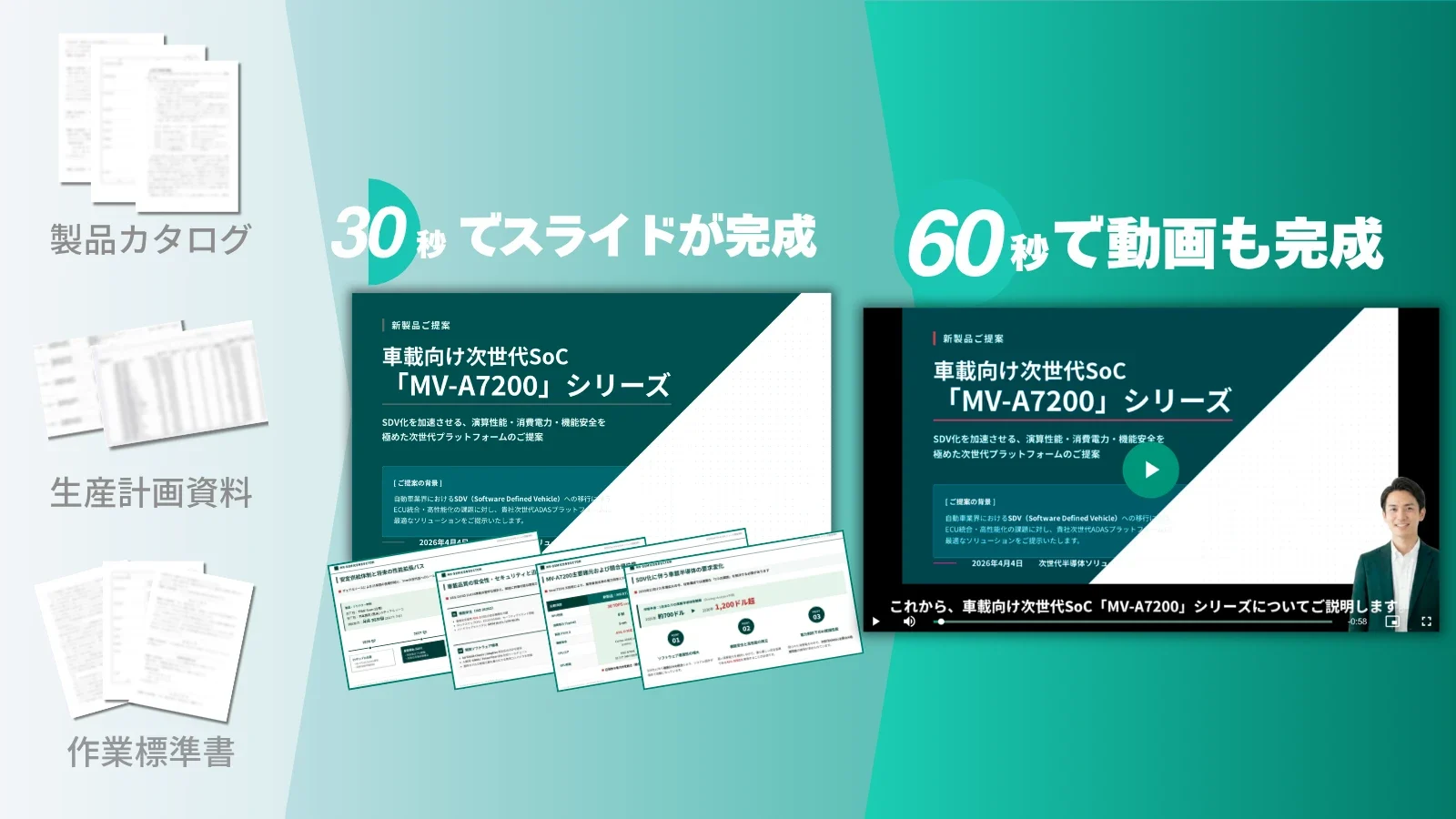
Manufacturing-specific sample slides have now been added to this feature. Selecting a sample slide as a template lets users start with a design and structure that matches their purpose. For example, to prepare a briefing deck on work procedures for a new product launch, users pick the matching sample slide and upload a Word work instruction or an existing PDF manual, and NoLang generates a process diagram slide deck with the key points organized. The result can be distributed on the shop floor as briefing material or used as a training video for new operators.
The samples cover a range of shop-floor situations, so high-quality work procedure briefings and training content can be produced without specialist design skills.
Five sample slides covering everything from work procedures to safety education and overseas training
Here are five representative use cases from the manufacturing sample slides added in this release. Each addresses a common need on the shop floor for manual maintenance, training or safety education.
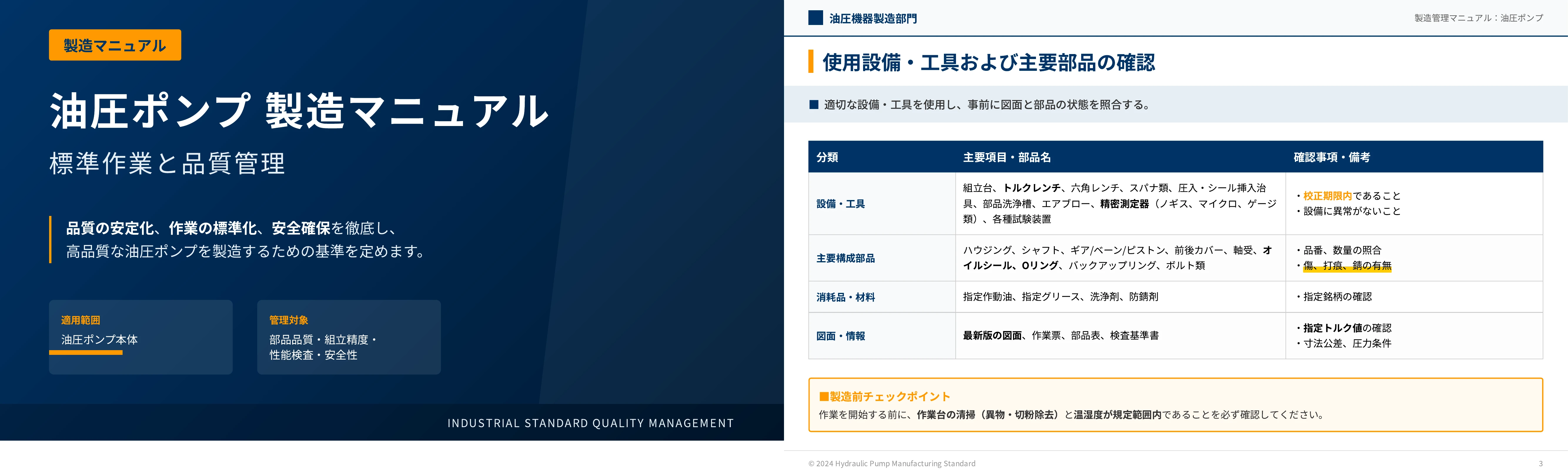
The first is the manufacturing manual slide deck. Aimed at operators and new hires in production departments, this sample converts a manual written in Word into slides with a diagram for each process step. It answers a familiar problem: every new product launch or line change calls for briefing material, rebuilding a Word procedure into slides takes time, and teams cannot keep up with 10 to 20 requests a month. By simply feeding in the PDF or Word work instructions, users can produce a briefing deck with process diagrams in a short time and speed up rollout when a product launches or a line changes.
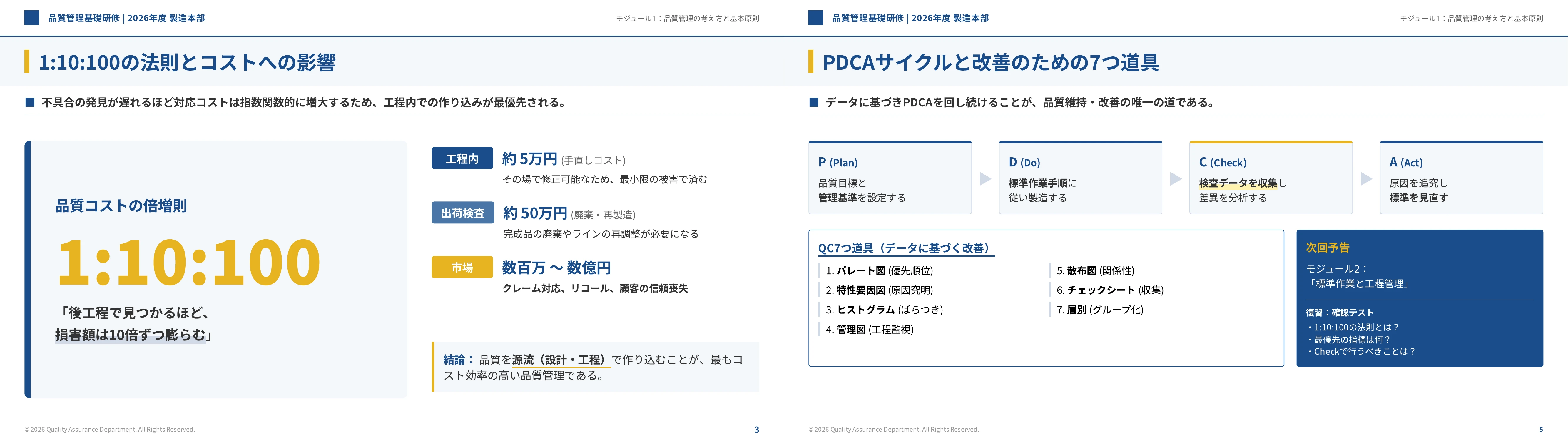
The second is the slide deck for long training sessions. Where it is hard to set aside a long block of time, long sessions are difficult to run and teams want to mass-produce material split into shorter parts, but building the slides takes considerable effort. Feeding in a training PPT or PDF produces short, split training decks that are easier to take on the shop floor, and it can be done continuously, cutting production effort substantially when a training program is revised.
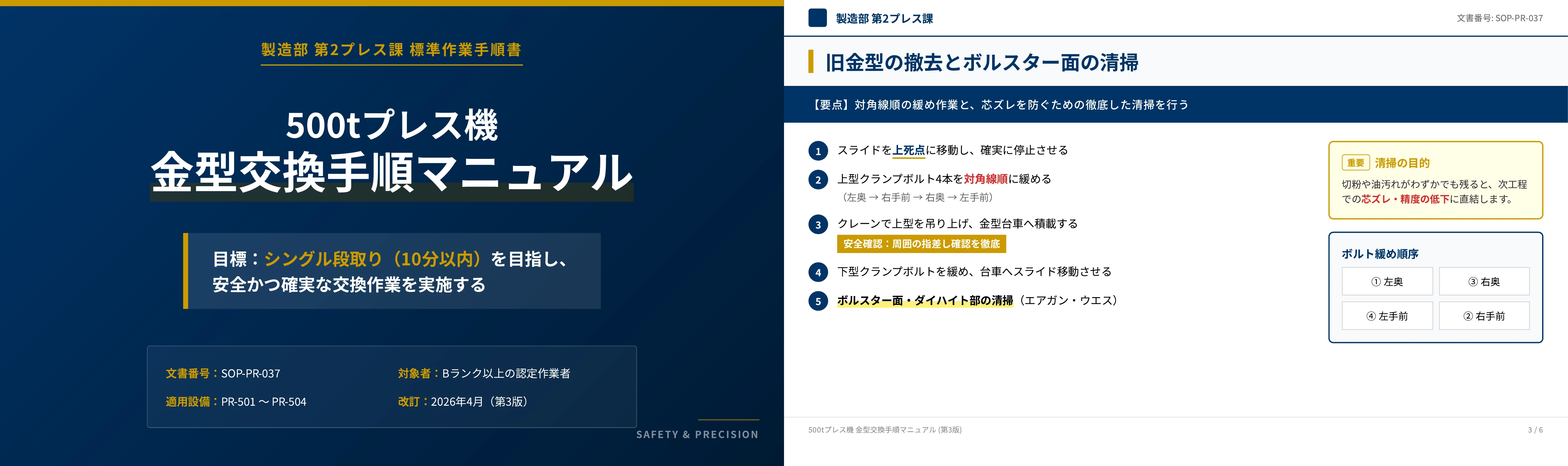
The third is the slide deck for study sessions and manuals. Aimed at employees across departments, this sample turns internal study sessions and manuals into editable slides. It addresses sites that have a large backlog of manuals they want to turn into video but cannot organize into slides fast enough, leaving shop-floor knowledge stuck in place. Feeding in existing PDF manuals or SOPs efficiently produces ready-to-edit slides and speeds up internal sharing of shop-floor knowledge.
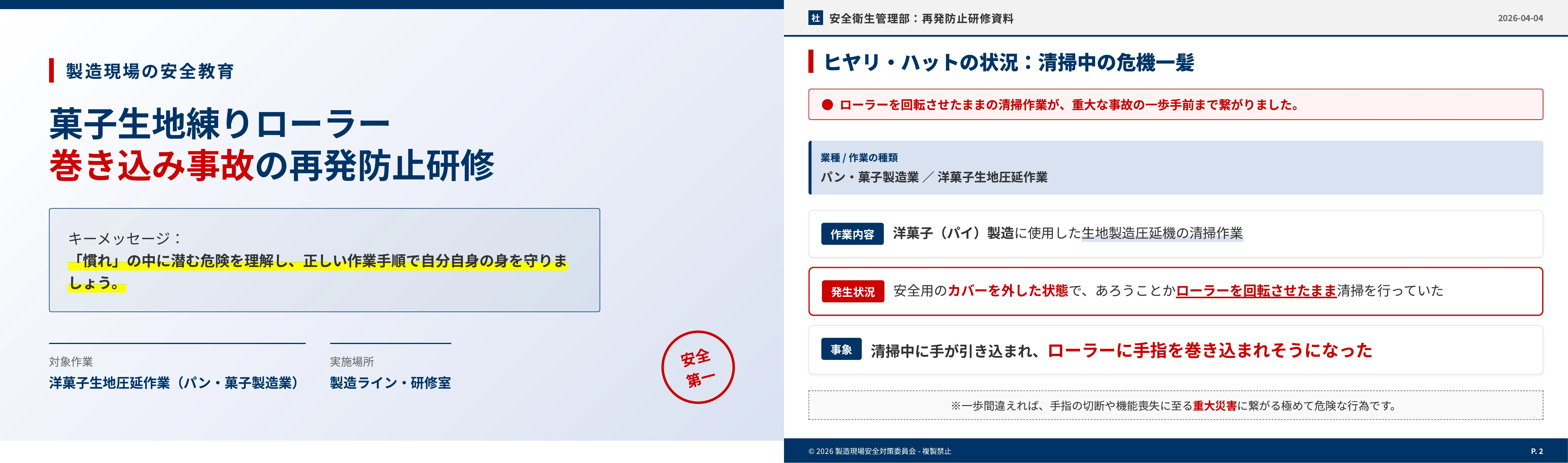
The fourth is the safety education slide deck. Aimed at all operators, this sample generates slides covering hazard prediction activities, near-miss cases and safety rules. Supervisors want to keep the safety material used at morning meetings and new-hire onboarding up to date but have limited time for making slides, so updates stall. Feeding in a safety manual PDF or an accident report produces slides that can be used at morning meetings, safety conventions and new-hire safety education on an ongoing basis, keeping the safety education cycle running to help prevent workplace accidents.
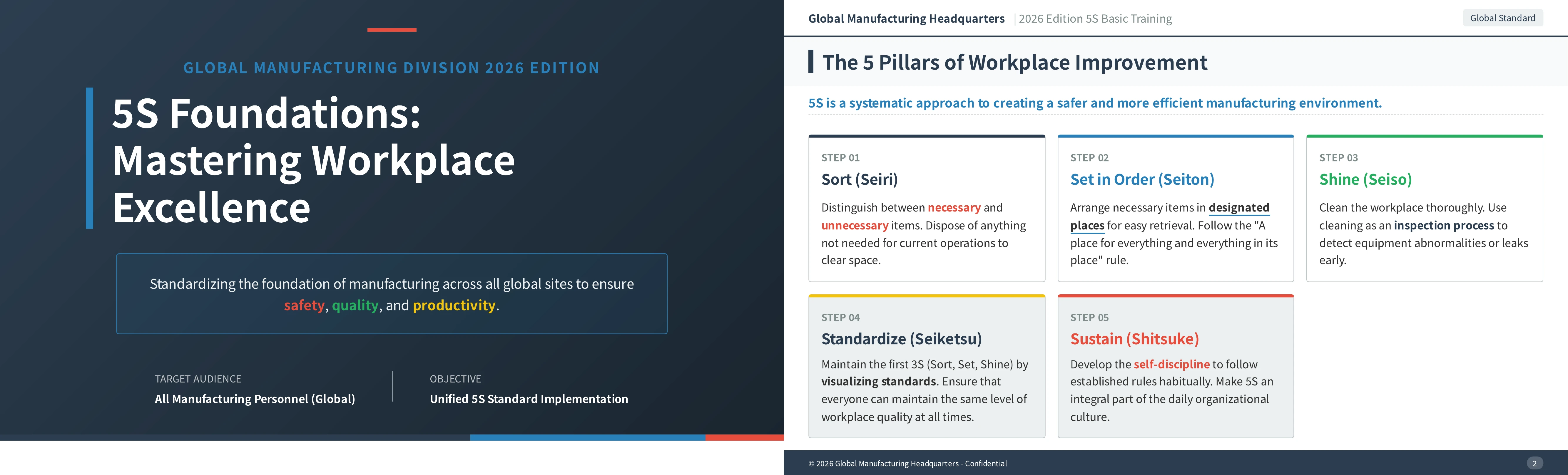
The fifth is the multilingual training slide deck for global sites. Aimed at operators at overseas locations, this sample generates multilingual versions of Japanese training slides. Rebuilding material language by language is a heavy burden and quality tends to vary between sites. Feeding in a Japanese training PDF efficiently produces multilingual training decks, sharply reducing the effort of preparing training content when expanding overseas and helping keep quality consistent across sites.
What comes next
NoLang will continue to strengthen the features that reduce the burden of organizing and distributing shop-floor knowledge, sustaining safety education and supporting training at global sites. Sample slides and video templates for specific industries and tasks, shaped by feedback from the shop floor, will be expanded over time.
Footnotes
-
Ministry of Health, Labour and Welfare, Basic Survey on Human Resources Development, fiscal 2018 (establishment survey on skill transfer by industry, in Japanese) ↩
-
Ministry of Economy, Trade and Industry, Ministry of Health, Labour and Welfare, and Ministry of Education, Culture, Sports, Science and Technology, 2024 White Paper on Manufacturing Industries (published May 2024, in Japanese) ↩ ↩2
-
Small and Medium Enterprise Agency, Survey on SME Business Conditions (manufacturing, employee surplus and shortage DI, 2023-2024, in Japanese) ↩
-
Ministry of Health, Labour and Welfare, Occupational Accident Statistics (2024 final figures, in Japanese) ↩