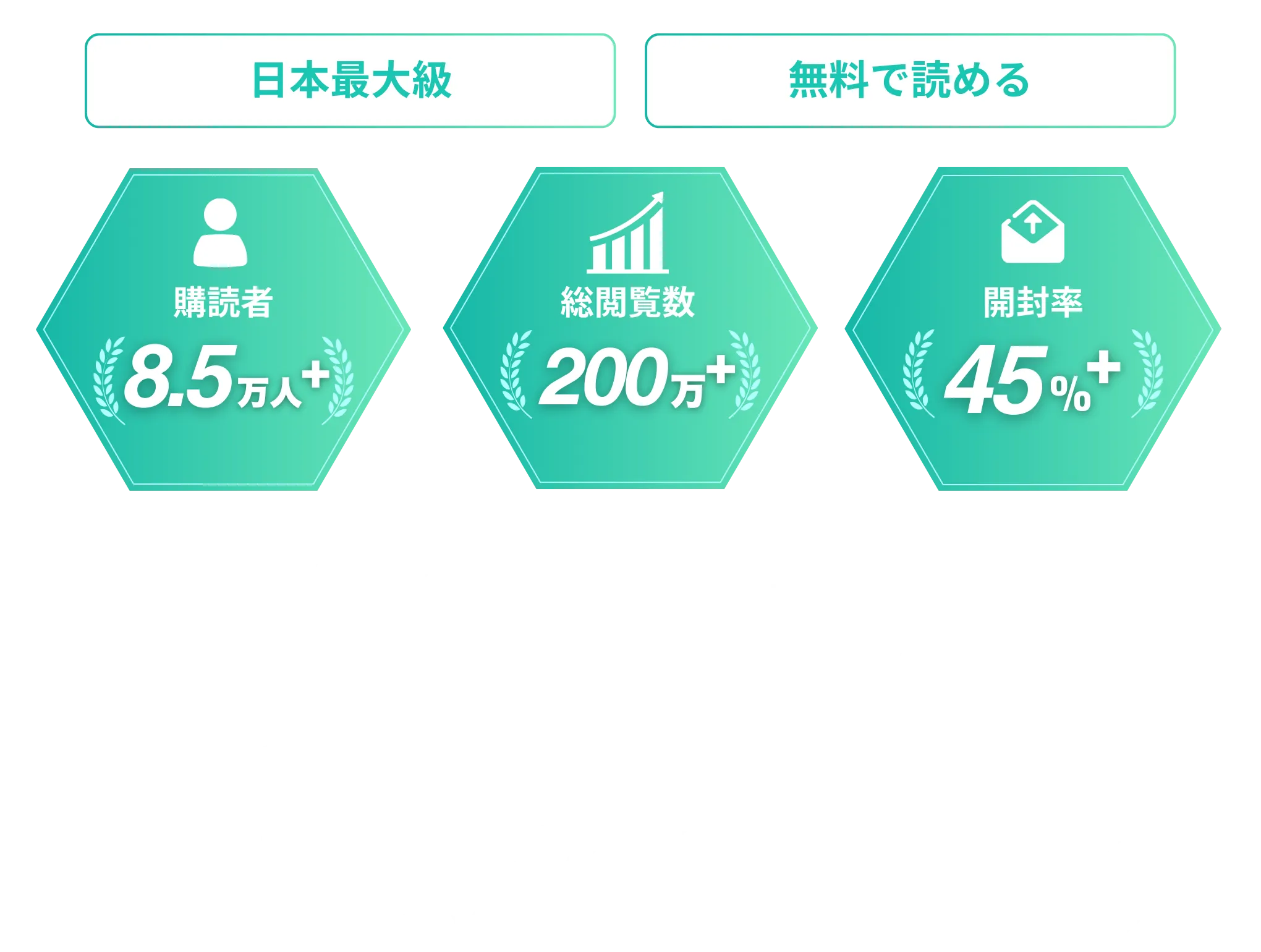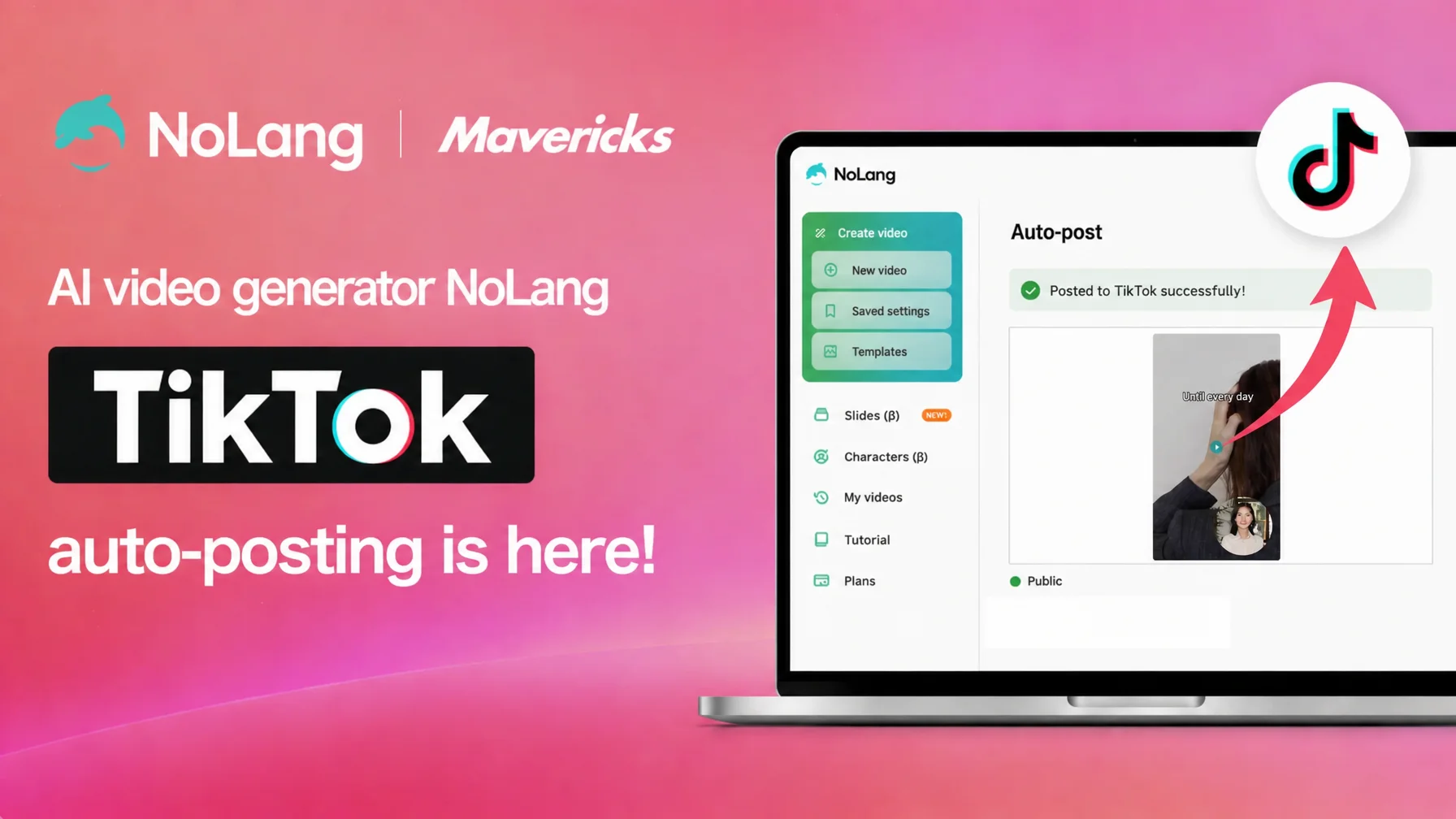
Mavericks, Inc., the company behind NoLang, one of Japan’s largest AI video generation services1, has released a TikTok integration that posts videos generated in NoLang directly to TikTok. Everything from AI video generation to publishing and post settings on TikTok now happens inside NoLang. The integration also applies TikTok’s commercial content disclosure label automatically, so company accounts can run promotions in line with TikTok’s rules. Businesses can use TikTok for communication and marketing without specialist video production skills or outsourcing budgets, which cuts both production cost and day-to-day operational work.
TikTok reaches 42 million monthly active users in Japan: a growing market, a staffing problem
Japan’s vertical short-form video advertising market reached about 90 billion yen in 2024, up 171.1% year on year, and is projected to reach 116.3 billion yen in 2025 and 208.8 billion yen in 20282. TikTok leads that growth. Monthly active users in Japan have passed 42 million3, doubling in roughly three years, which is about one in three people in the country. More than 480,000 companies now advertise on TikTok3. It is no longer a platform for young audiences alone; it has become a way to reach a wide range of age groups and a fixture in corporate marketing plans.
Running short-form video strategically is a different matter. In a survey of 2,134 people responsible for corporate social media, about half named a lack of internal resources as their biggest problem4. Outsourcing a single short video, including planning, shooting and editing, typically costs between 50,000 and 300,000 yen, so keeping to a regular posting schedule is expensive5. Companies have to make the videos and then keep publishing and managing them. Those two burdens, production cost and operational workload, are what stop most of them.
To address this, NoLang today launched its TikTok integration, which posts videos directly to TikTok. Bringing AI video generation and TikTok publishing settings into a single platform reduces both production cost and operational workload. Small and mid-sized businesses and sole proprietors who cannot fund specialist video skills or outsourcing can now use TikTok for their own communication and marketing.
From video generation to TikTok posting, all inside NoLang
The TikTok integration posts a video generated in NoLang straight to TikTok without leaving the screen. Until now, publishing a generated video meant downloading the file and uploading it again through the TikTok app or a browser. That manual round trip is gone.
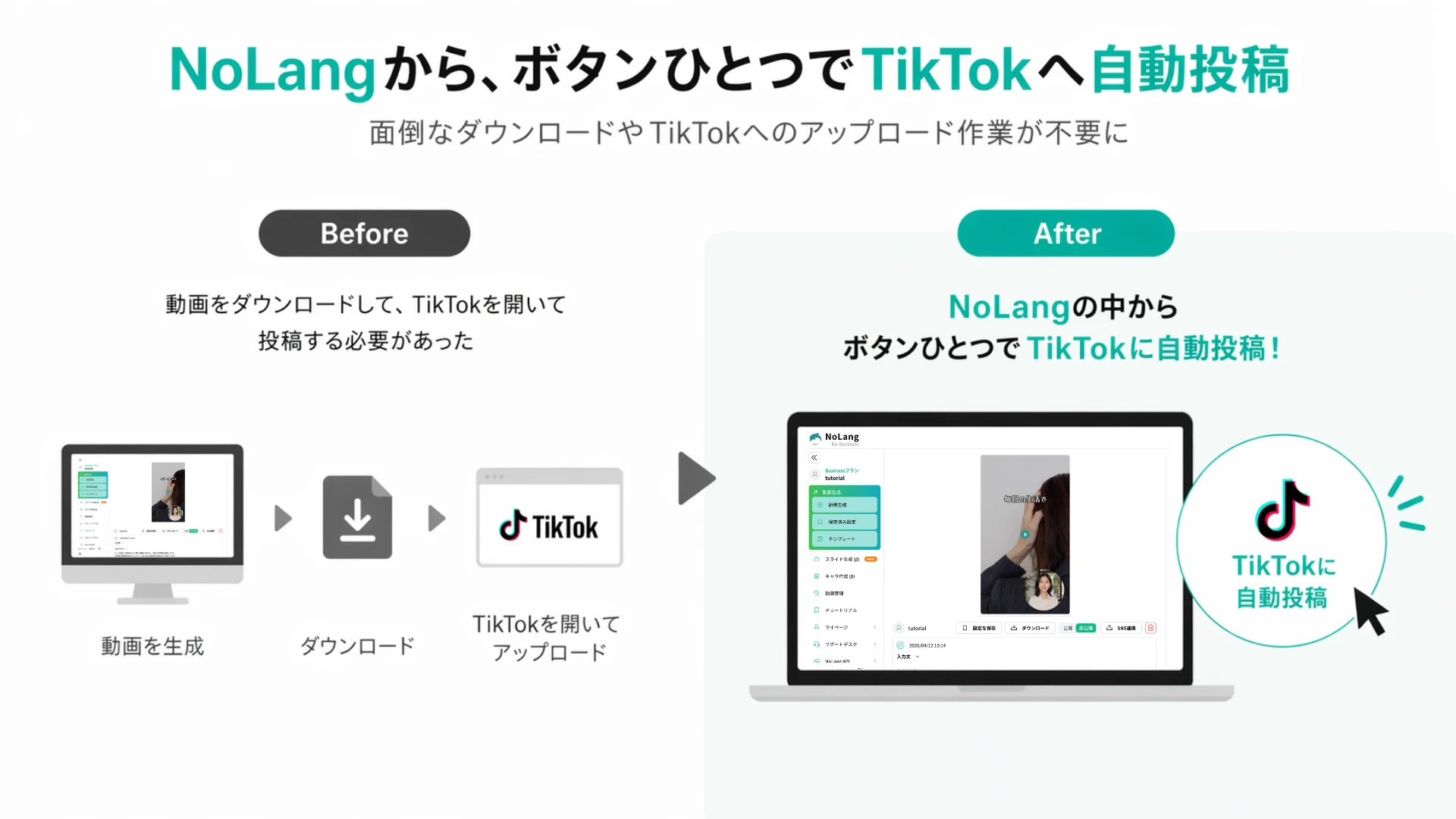
NoLang also ships a large library of templates for vertical short-form videos suited to TikTok and similar platforms, ranging from short-form formats to business use. Swapping in your own text and assets is enough to produce a vertical short video for TikTok quickly, with no video production expertise. A video made this way can then be posted to TikTok from the same NoLang screen, so template selection, video generation and publishing all happen without switching tools.
Reaching high-intent buyers: four ways to use TikTok with NoLang
The TikTok integration draws on TikTok’s reach and its capacity for content to spread, and fits several business situations.
The first is news and trend explainers. NoLang can generate a video that summarizes a web page from its URL alone. Enter the URL of an industry news article, and a short explainer covering the main points is ready in minutes. Combined with the TikTok integration, a current topic can be turned into a short video quickly and put in front of a wide audience through TikTok’s recommendation algorithm. Timely publishing at scale becomes possible without video production skills.
The second is product and service introductions. The TikTok integration includes commercial content disclosure, which automatically adds the label stating that a post promotes your own brand or is a paid partnership with a third party. Promotional videos can be published in line with TikTok’s rules, which makes the platform safer to operate for a company account. TikTok users spend roughly twice as much per year as the average user of other social platforms, about 116,000 yen6, making it an effective channel for reaching people with high purchase intent.
The third is educational and how-to content. NoLang’s AI summarizes and structures complex information into a video, which TikTok’s vertical format delivers to viewers easily. Procedures and concepts that are hard to convey in text are easier to grasp visually, which improves how far information travels and how well it is understood.
The fourth is multilingual publishing. NoLang supports 18 languages in total, so the same content can be generated in several languages and posted to TikTok, reaching its 1.59 billion users worldwide. That opens up communication beyond Japan, including inbound promotion and other work aimed at international audiences.
How to use the TikTok integration in NoLang
The TikTok integration is available on the NoLang Premium plan and the Business plan. Posting a video takes the following steps.
- Use the social media linking button on screen to select TikTok as the upload destination and connect your TikTok account. This is required only the first time; once authentication is complete, the account details are kept automatically and no further linking is needed.
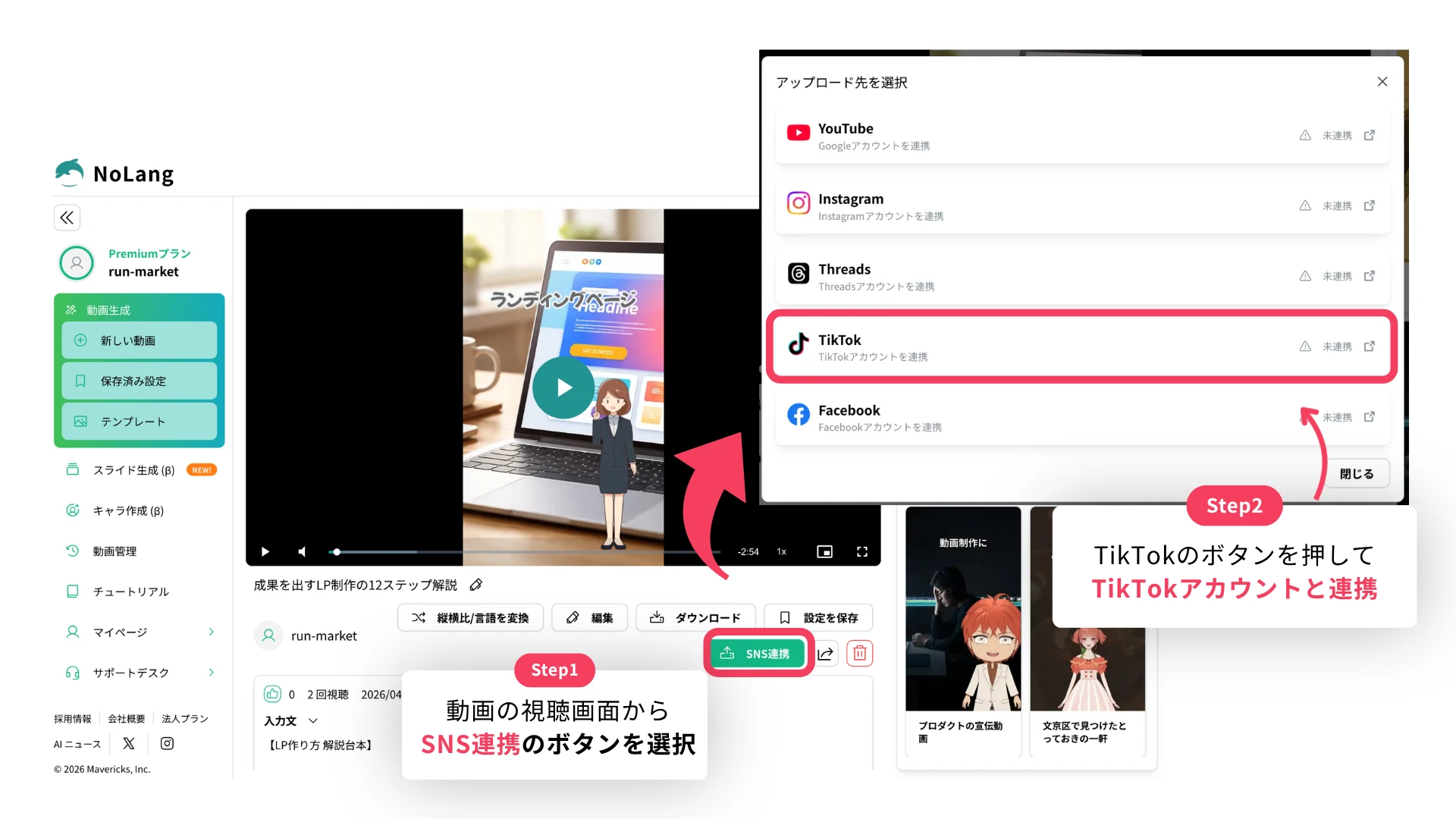
- Enter the title, visibility and interaction settings, then click Upload to publish the post.
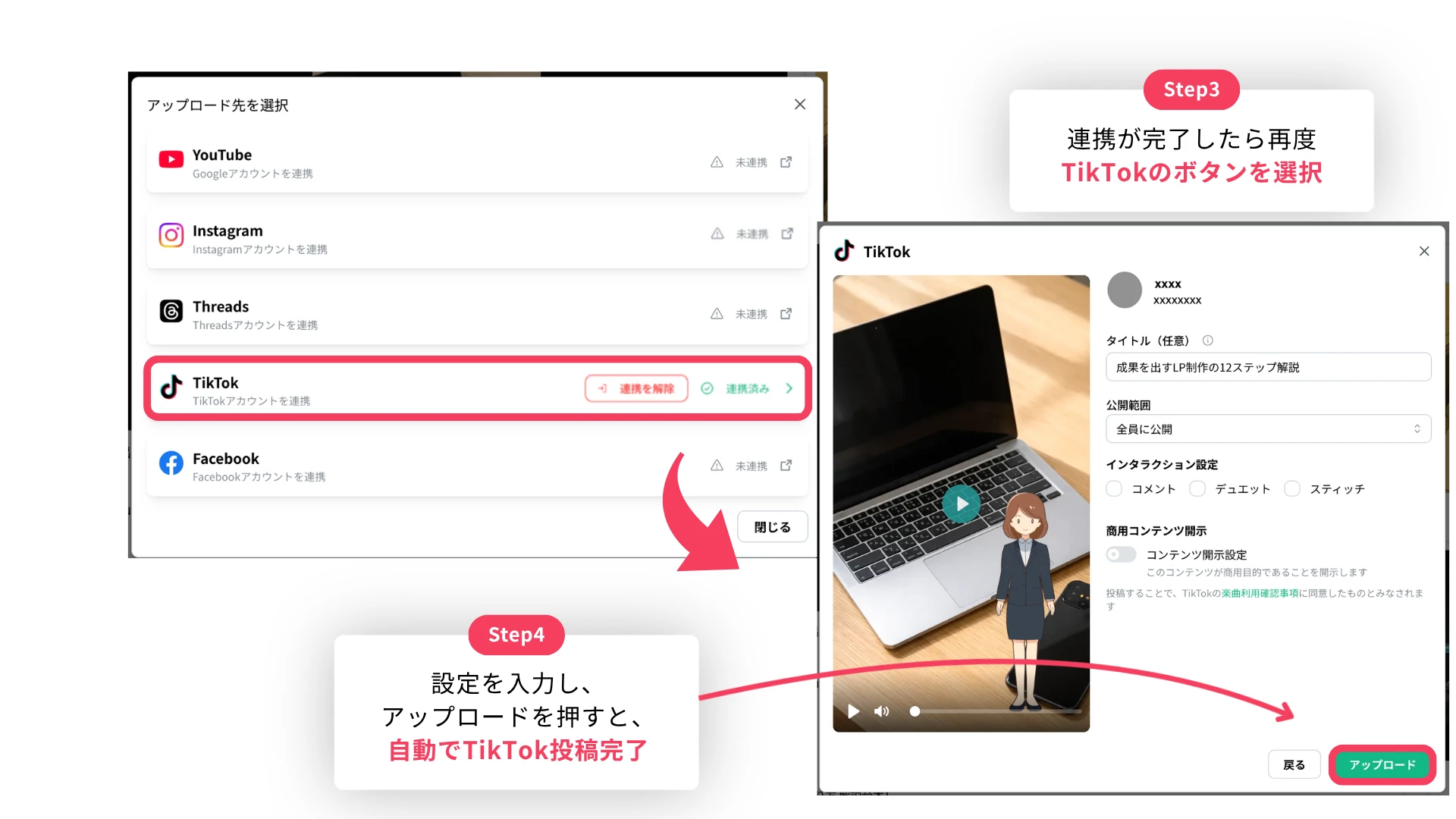
Because generation and publishing both happen on the NoLang screen, there is no moving between tools, and a video reaches TikTok in a short time.
What comes next
NoLang will continue to ship updates that widen how customers can use video. Mavericks is building NoLang into a platform that supports the whole path from video generation to social media publishing and on to performance measurement and improvement suggestions, in support of corporate video marketing.
Footnotes
-
Based on the number of registered users of AI video generation services in Japan. As of December 2025, Mavericks research ↩
-
Cross Marketing, “The rapid expansion of the short-form video market” (October 2025, in Japanese) ↩
-
Nikkei, “TikTok passes 42 million monthly active users in Japan” (announced by ByteDance, reported November 2025, in Japanese) ↩ ↩2
-
KnowledgeBox, “Survey on corporate social media operations and results” (2,134 corporate social media marketers surveyed, May 2025, in Japanese) ↩
-
VideoWorks, “Typical outsourcing costs for short-form video production” (in Japanese) ↩
-
comnico, “Short-form video and purchasing behavior: a 600-person survey report” (600 people aged 18 to 69 nationwide, October 2025, in Japanese) ↩