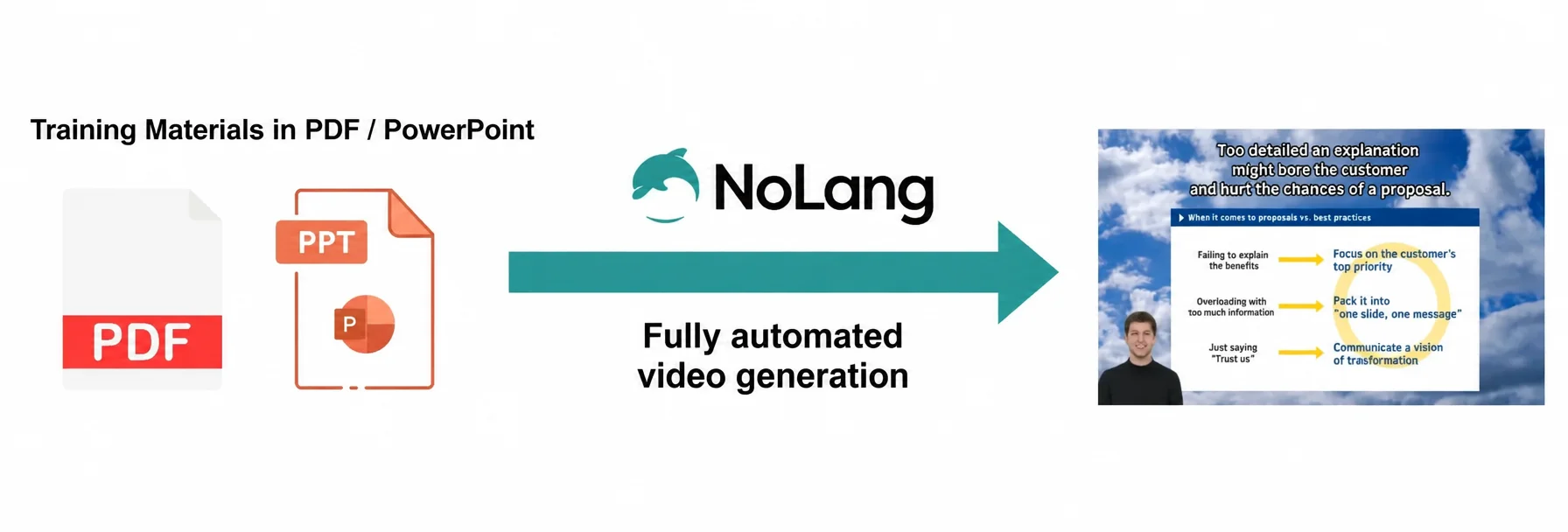
Mavericks, Inc., the Japanese company behind the generative AI product NoLang, has added a feature that builds a complete training video from existing training documents, fully automatically, in the AI video generation service NoLang. The feature responds to growing corporate demand for video in employee development and reskilling. It addresses two problems at once: text documents alone rarely make learning stick, and producing video costs both money and time. The result is stronger support for employee development, the foundation of sustainable corporate growth.
Labor shortages are driving demand for video in corporate training
Many companies now face severe labor shortages and rising hiring costs. About 70% of executives and HR staff report that new-graduate recruiting has become more expensive.1 Employment is also becoming more fluid, so upskilling and retaining current employees matters more to companies than ever before.
Against that backdrop, the corporate training services market in Japan is projected to grow 4.6% year on year to 613 billion yen in fiscal 2025. E-learning accounts for a rising share of that market, up from 12.9% in 2019 to 20.2% in 2024, which shows how much demand for video in training has grown.2
Research supports the format as well. In a university introductory economics course with more than 500 students, students who watched the videos were about 20 percentage points more likely to answer mid-term test questions correctly than students who did not.3
Producing high-quality training video that actually improves learning, however, has required specialist know-how and equipment, and the resulting production costs have been a major obstacle for many companies.
NoLang, the Japanese AI video generation service with the largest domestic user base
With NoLang, anyone can upload an existing PDF or PowerPoint document and create a high-quality training video immediately, at any time. That removes the obstacles that have held back employee development until now.
See the training video automation solution Read the guide to making training videos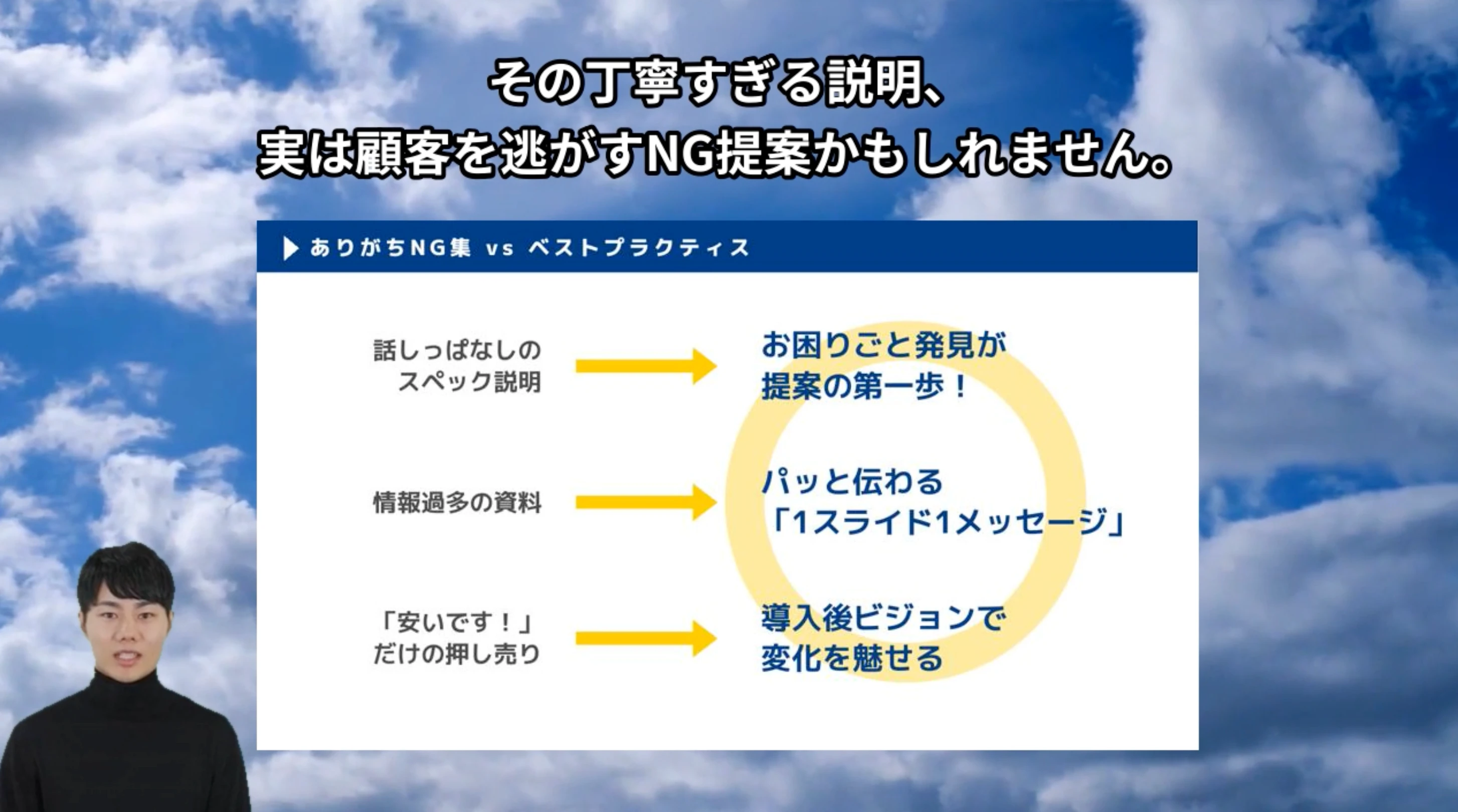
What NoLang brings to training DX
1. Instant video generation from existing documents
Upload a PowerPoint or PDF training document to NoLang and the AI generates a high-quality training video right away. All the training team has to do is prepare the documents it already owns. Existing document assets are put to use rather than wasted, and the heavy workload and cost of filming, editing, and hiring narrators drop to zero.
2. AI avatars and automatic captions that maximize learning
NoLang can produce videos with an avatar and captions (subtitles), so the material reaches learners through both sight and sound. Compared with text-only documents, that sharply improves how well learners understand the content and how much of it they retain, which maximizes the effect of the training.
3. Editing that keeps up with content changes
A finished video can still be edited and updated easily, through intuitive controls and without specialist skills. Training content can therefore be brought up to date immediately when laws or internal rules change, which helps maintain and strengthen compliance.
In use today
NoLang is already being adopted in medical education. Its ability to turn academic papers and medical information into explanatory videos of just 30 seconds has drawn attention, and the videos are used as preparatory material for medical students and as supplementary material in lectures. Igaku-Shoin’s Igakukai Shimbun Plus featured such examples in its series on practical uses of AI that are changing clinical settings.

What comes next
Mavericks will continue to develop NoLang, extending beyond training video to lead the use of video across corporate communication as a whole, with the aim of becoming the infrastructure for transmitting knowledge that supports individual reskilling and the sustainable growth of society.
Footnotes
-
Source: Mikiwame, “Survey on rising recruiting costs” URL: https://mikiwame.com/ (in Japanese) ↩
-
Source: Yano Research Institute, “Survey of the corporate training services market” (in Japanese) ↩
-
Source: Massimiliano Tani, Maurizio Manuguerra, Samia Khan (2022) “Can videos affect learning outcomes? Evidence from an actual learning environment.” ↩